
Lizard Leather
When you enter the world of exotic leather goods, the choices can be overwhelming. You have the aggressive luxury of Alligator, the distinct quill bumps of Ostrich, and the ruggedness of Stingray. But what if you want something that sits perfectly in the middle? Something that offers the durability of an exotic skin but maintains the slim profile required for a minimalist lifestyle?
Enter lizard leather.

At Wild & King, we often call handmade lizard leather the "Architect’s Choice". It is structured, precise, and incredibly detailed, yet it never shouts for attention. For those seeking a wallet that balances durability with an ultra slim profile, lizard skin is not just an alternative, it is often the superior choice.
In this guide, we will dive deep into the characteristics of this material, comparing it with other exotics, and helping you decide if it is the right material for your next everyday carry.
What is Lizard Leather?
Technically speaking, lizard leather comes from various species of lizards, but in the high end leather craft industry, we focus primarily on two main types: the Ring Lizard (Varanus Salvator) and the Teju Lizard.
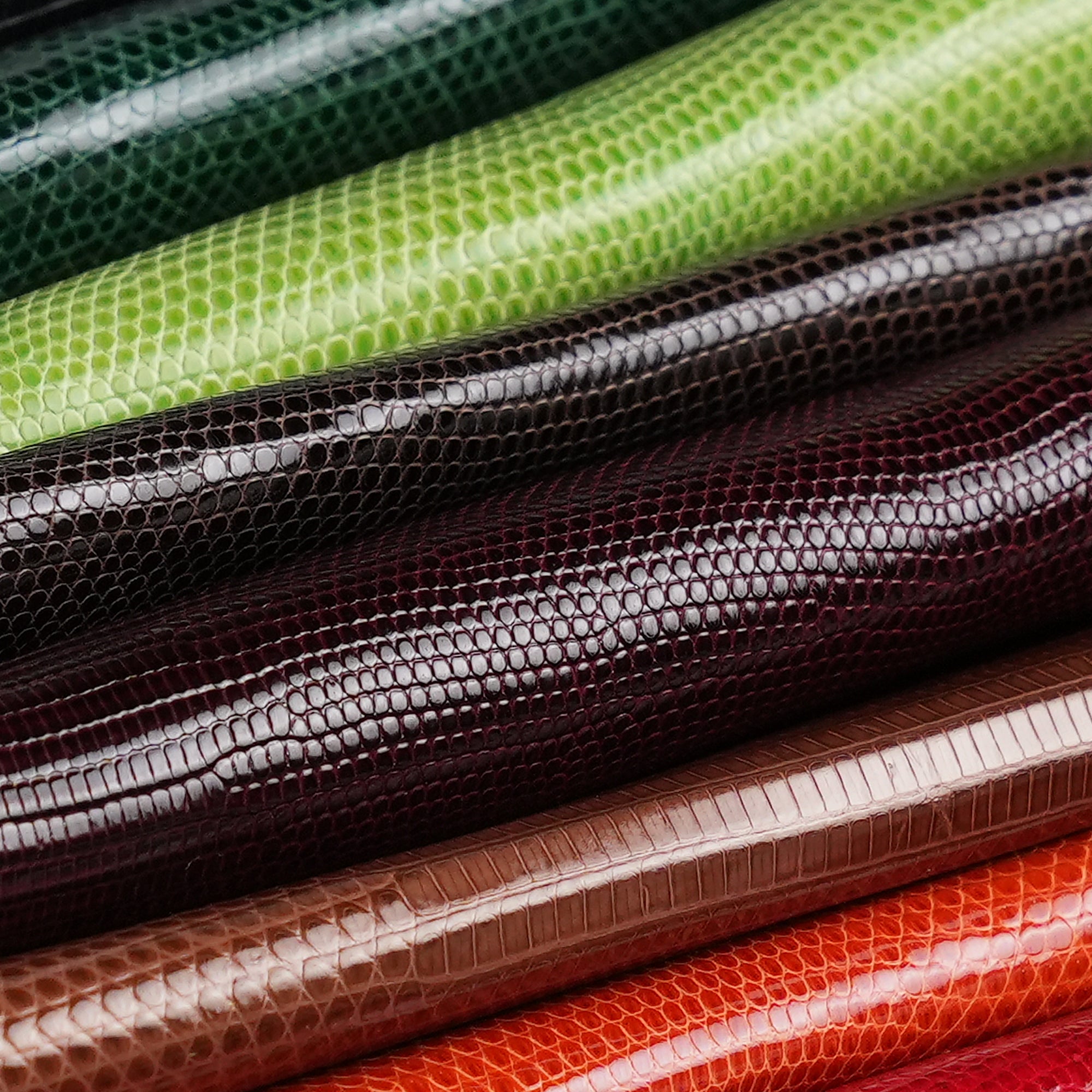
From an craftsman’s perspective, lizard skin is a fascinating paradox. It is defined by its small, tight scales that feel hard to the touch, almost like tiny tiles of ceramic armor. However, unlike crocodile or alligator skin, lizard scales contain very little calcium.
Why does this matter to you?
Calcium makes leather stiff and bone like. Because lizard skin lacks this calcification, it remains incredibly pliable and flexible despite its armored appearance. This unique biological structure gives you a material that is tough enough to resist scratches but soft enough to bend comfortably in your pocket from day one.
Key characteristics
We often refer to lizard leather as "Armored Silk" in our workshop. It sounds contradictory, but once you hold a handmade lizard leather wallet, you will understand. Here is why this material is a favorite among minimalists.
The tactile experience
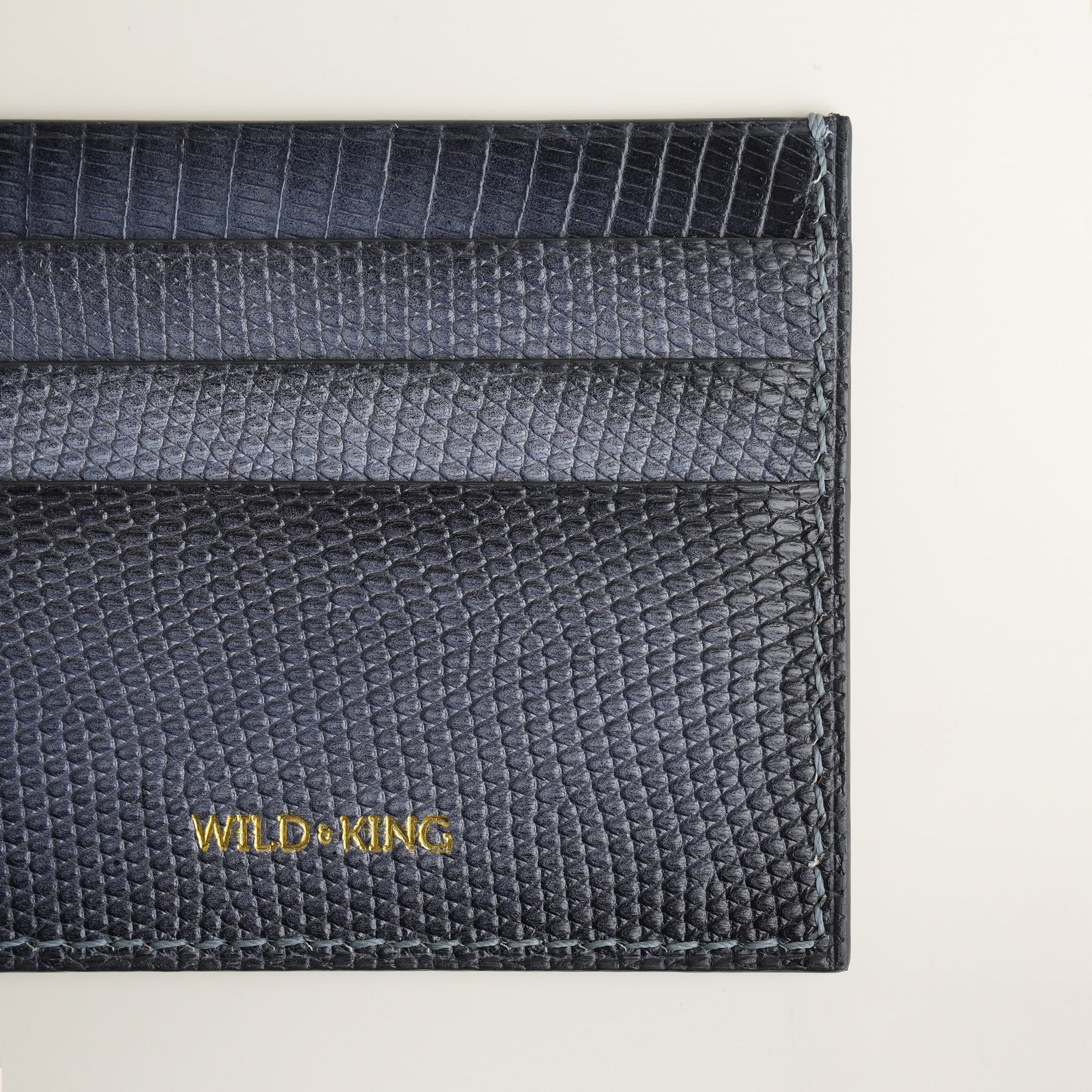
If you run your fingertips across a piece of high quality cowhide, it feels smooth and uniform. Lizard is different. It offers a "micro texture". You can feel the individual grains. It provides a satisfying, subtle "click" under your fingers.
-
Glazed Finish: Ideally smooth with a high gloss, feeling cool to the touch.
-
Matte/Nubuck Finish: Softer, warmer, and offering a velvety grip.
Naturally thin profile
This is the biggest selling point for our customers. Most exotic leathers (like Alligator or Stingray) are naturally thick. To make a slim wallet out of them, craftsmen have to "skive" (thin down) the leather significantly, which can sometimes compromise its structural integrity.
Lizard skin is naturally thin, typically ranging between 0.4mm to 0.6mm.
This means we can craft a bifold wallet or a card holder that remains razor thin without over thinning the leather. It retains its full natural strength while disappearing into your front pocket.
Scratch resistant shield
Do you carry your wallet in the same pocket as your keys? With regular smooth leather (like Box Calf), that is a recipe for disaster.
Lizard leather acts as a shield. The dense scale structure deflects minor scratches. While no leather is 100% scratch proof, lizard leather hides wear and tear exceptionally well. A scratch that would ruin the look of a cowhide wallet often blends seamlessly into the complex pattern of a lizard skin wallet.
Lizard vs Other Exotics leather
Choosing a luxury material is about finding the right balance for your lifestyle. We know you don't care about tensile strength numbers in a lab. You care about how it feels and performs in daily life.
Here is a breakdown of how lizard leather compares to the two giants of the exotic world: Alligator and Ostrich.
| Experience Criteria | Lizard Leather | Alligator Leather | Ostrich Leather |
| Scratch Resistance |
Excellent Hard scales act as armor. Best for key-heavy pockets. |
Good Very durable, but scratches are visible on the smooth glazed tiles. |
Medium Soft and supple, but the smooth areas between quills can scratch. |
| Slimness (Bulk) |
Ultra Thin (Winner) Naturally 0.4mm. Perfect for minimalist front-pocket carry. |
Thick & Rigid Requires heavy skiving. Often feels bulkier. |
Thick & Spongy Better for larger clutch wallets or bags. |
| The Vibe |
Understated Luxury Elegant, intricate, detailed. "Quiet Luxury". |
Power & Status Bold, recognizable, "I have arrived" statement. |
Unique & Quirky Distinctive polka dot look. Artsy vibe. |
| Aging (Patina) |
Retains Shine Glazed lizard keeps its look for years with little color shift. |
Softens & Deepens Becomes more flexible and the color gets richer. |
Darkens Quickly Absorbs hand oils fast, turns darker significantly. |
| Investment |
High Entry level Luxury. Best value for money. |
Ultra High High end Investment. The most expensive option. |
Very High Mid range. |
Wild & King Verdict: If you want a wallet to flash at a business dinner to show status, go for Alligator. But if you want a daily driver, a wallet that you can use heavily, throw in any bag, and stays slim in your pocket, Lizard Leather is the smartest choice. It is tougher than Ostrich and slimmer than Alligator.
Who should choose lizard leather?
At Wild & King, we believe in honesty. We want you to buy the product that fits your life, not just the most expensive one.
The perfect match for
-
The true minimalist: If you hate pocket bulge, this is your material. It packs the durability of a boot into the thickness of a credit card.
-
The detail oriented: Especially with Ring Lizard, the natural geometric patterns are mesmerizing. If you appreciate symmetry and fine details, you will love staring at this leather.
-
The "Unisex" user: Lizard leather has a very neutral, sophisticated appeal. It works perfectly for both men’s bifold wallets and women’s card holders or clutches.

Maybe not for you if:
-
You love the "Rugged" look: If you are a fan of Crazy Horse leather or vegetable tanned leather that scratches easily and changes color (patina) drastically in a month, Lizard might feel too "stable" for you. Glazed lizard stays shiny and consistent for a long time.
-
You want a "Soft" touch: While flexible, lizard scales are hard. If you prefer the buttery, warm feel of deer skin or soft calfskin, the "bony" feel of lizard might not be your preference.
The art of crafting Lizard
Creating a handmade lizard leather wallet is not as simple as cutting a piece of fabric. It requires a specific set of skills that our artisans have honed over years.
The edge finishing
Because lizard skin is made of scales, the cut edge is jagged and uneven. To create a smooth, painted edge (which we are famous for), our artisans have to sand and polish the edges multiple times more than they would with regular leather. This ensures that your wallet doesn't snag on your pocket lining.
The challenge of symmetry
With cowhide, you can cut anywhere. With lizard, specifically Ring Lizard, we have to play a game of geometry. We must align the natural rings of the lizard so they sit perfectly centered on the wallet. A deviation of just 2 millimeters can ruin the visual balance. When you buy a Wild & King lizard product, you are paying for this meticulous attention to detail.

How to care for your Lizard wallet
Despite being an exotic material, lizard leather is surprisingly low maintenance. You do not need to baby it, but you should follow these simple rules to keep it looking pristine for decades.
Avoid Excess Water
Lizard skin is more water resistant than suede, but it is not waterproof. If it gets wet, blot it dry with a clean cloth immediately. Never use a hairdryer or place it near a heater. High heat will cause the scales to curl and the leather to shrink irreversibly.
Conditioning
Once every 3 to 6 months is enough. Use a conditioner specifically designed for reptile skins (like Saphir Reptan). Avoid heavy waxes that can clog the detailed grain.
Cleaning the Scales
Dust can accumulate between the tiny scales. Use a soft horsehair brush to gently buff the wallet. This also helps restore the natural shine of the glazing.

Conclusion
Lizard leather is the unsung hero of the luxury world. It offers a rare combination of elegance, extreme durability, and a naturally slim profile that no other leather can match. It is the perfect material for the modern individual who values substance and style equally.
At Wild & King, we treat every inch of this material with the respect it deserves, ensuring that the wallet in your pocket is not just an accessory, but a piece of art that will last a lifetime.
Ready to feel the difference? Explore our exclusive [Lizard Leather Collection] and find the perfect minimalist companion for your daily journey.
Our Collection
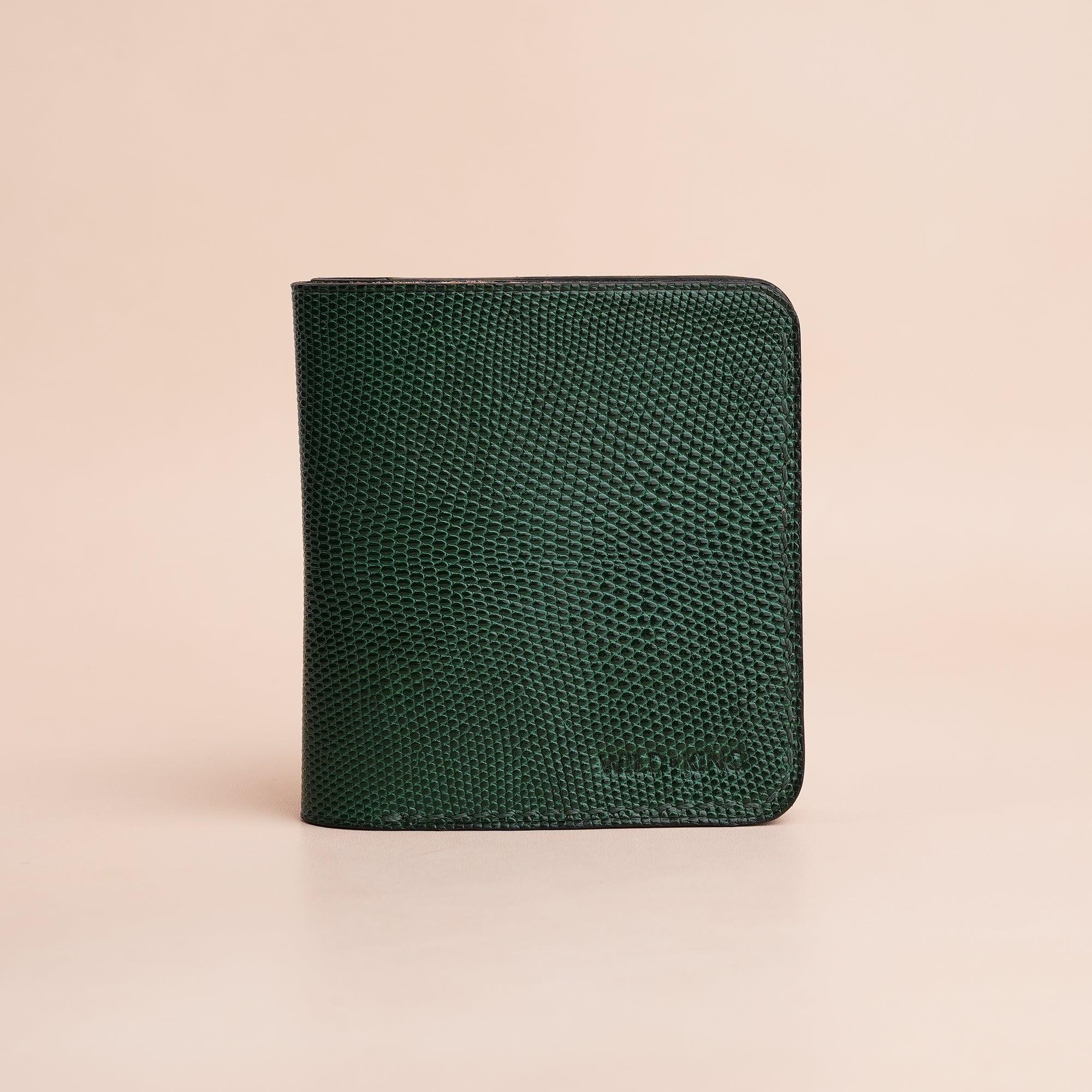
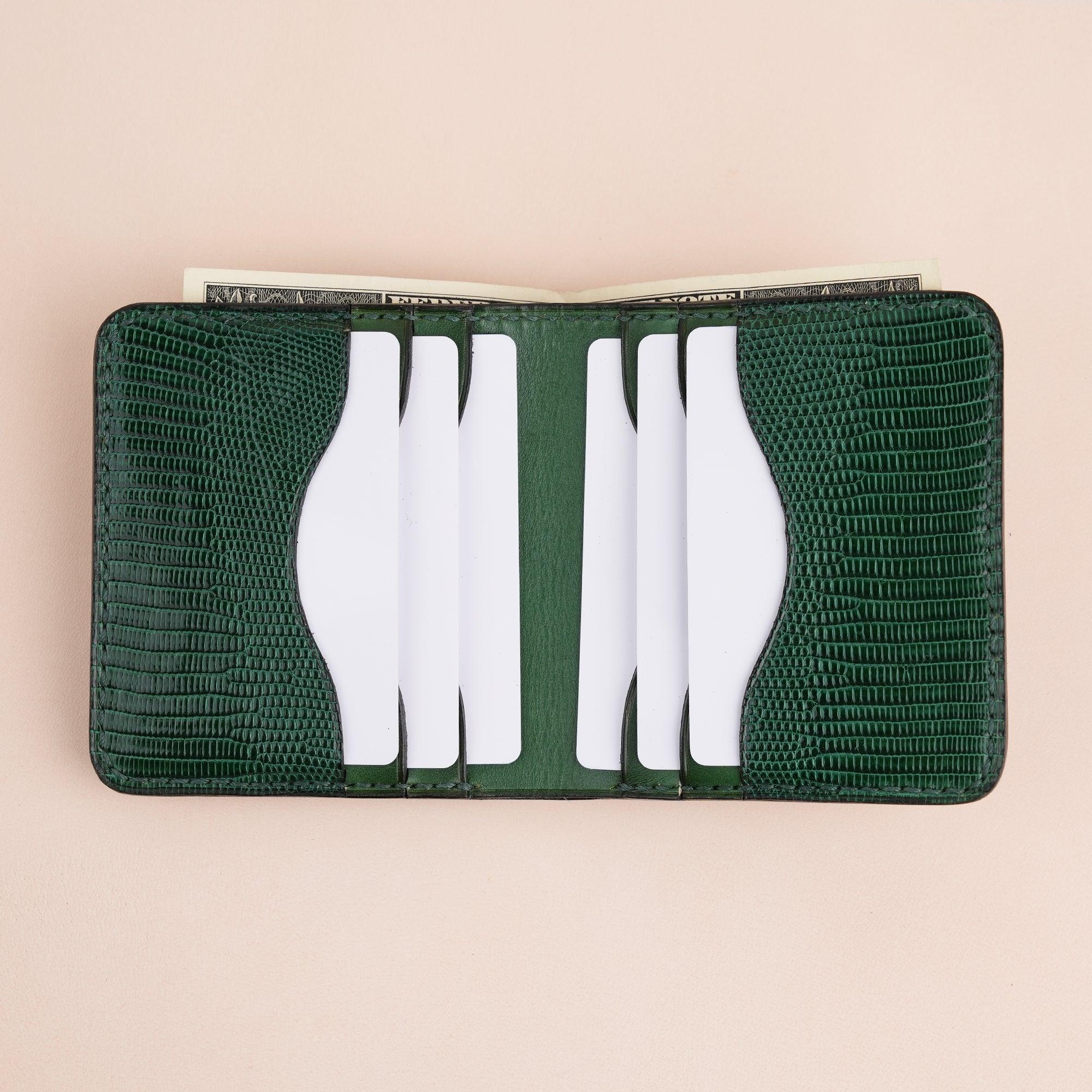
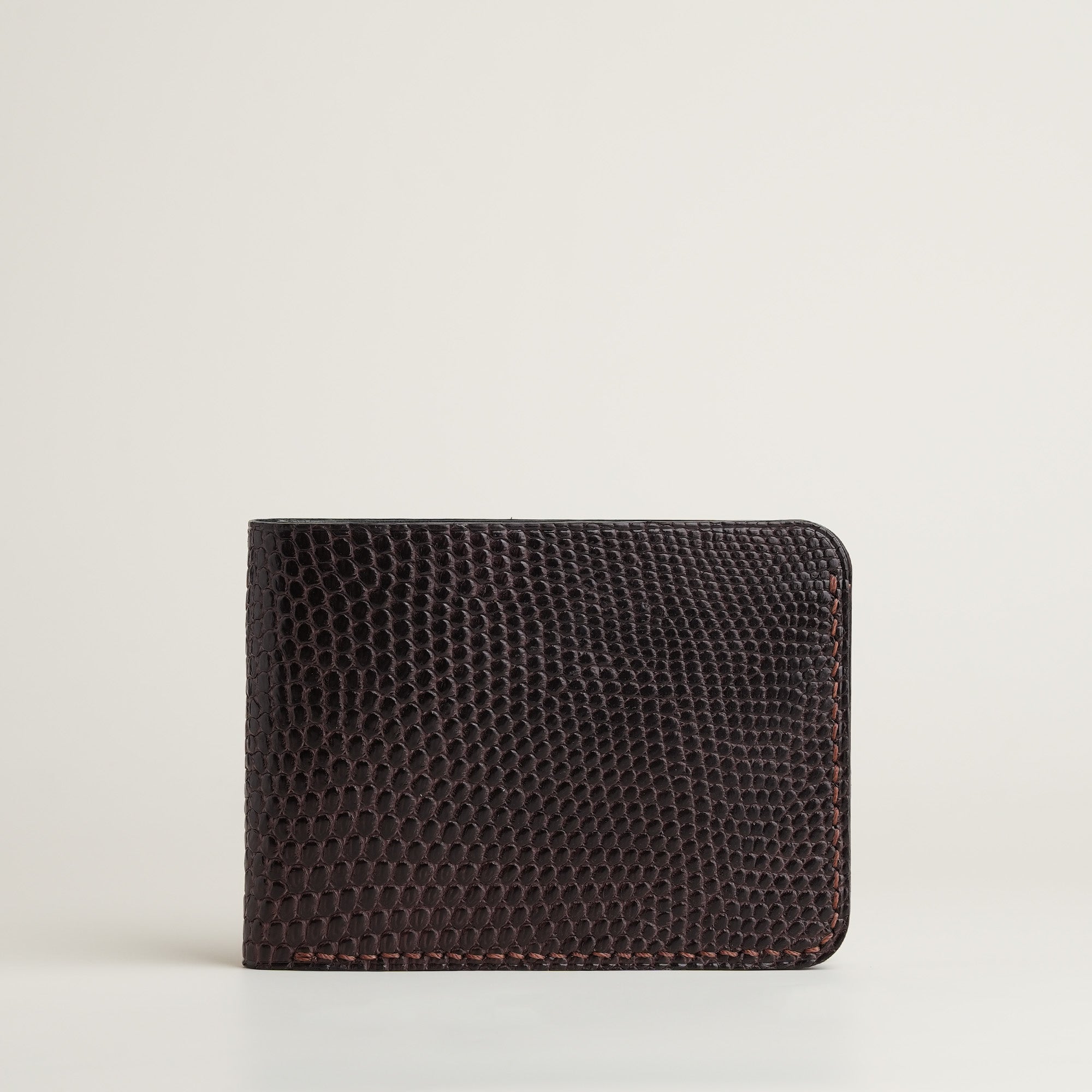
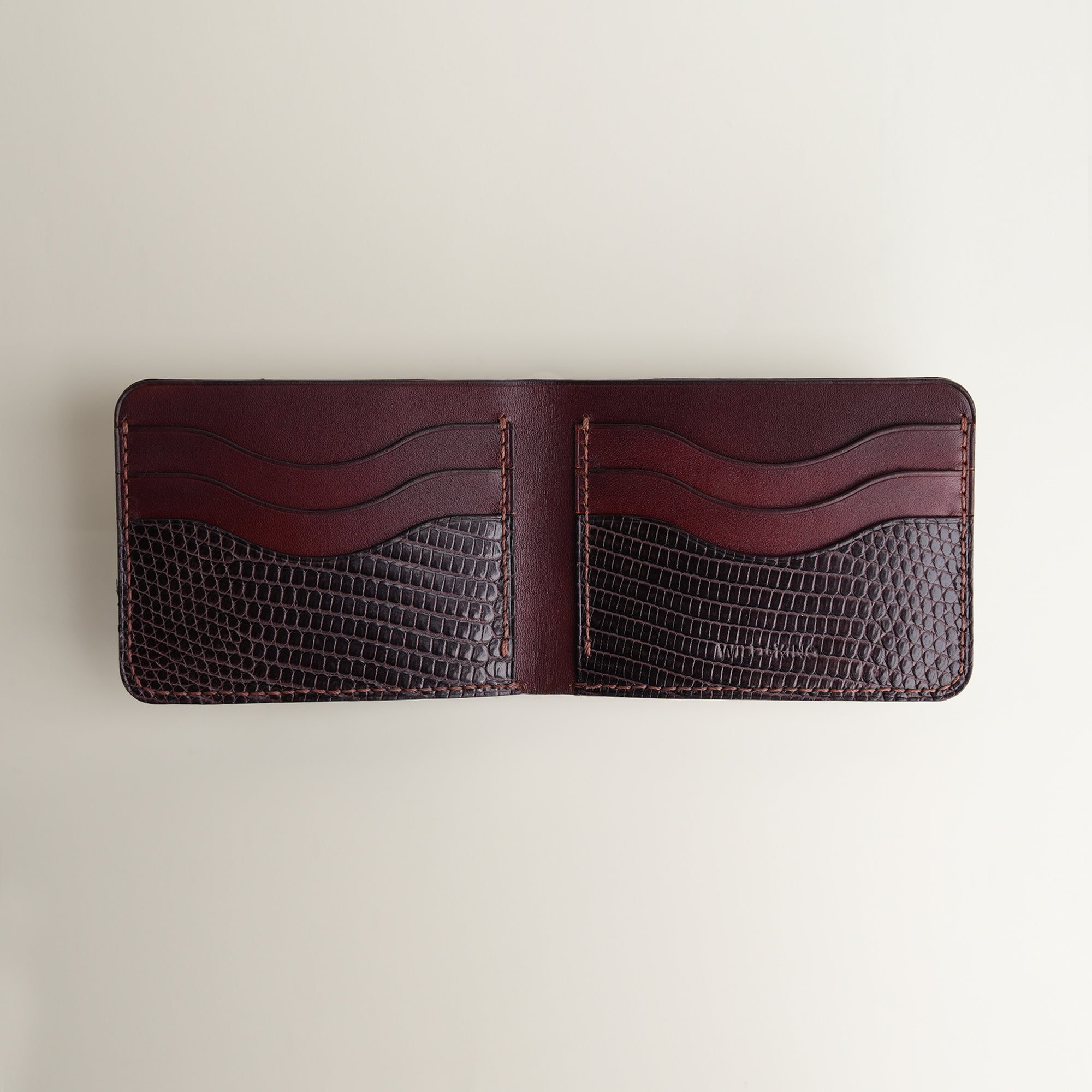
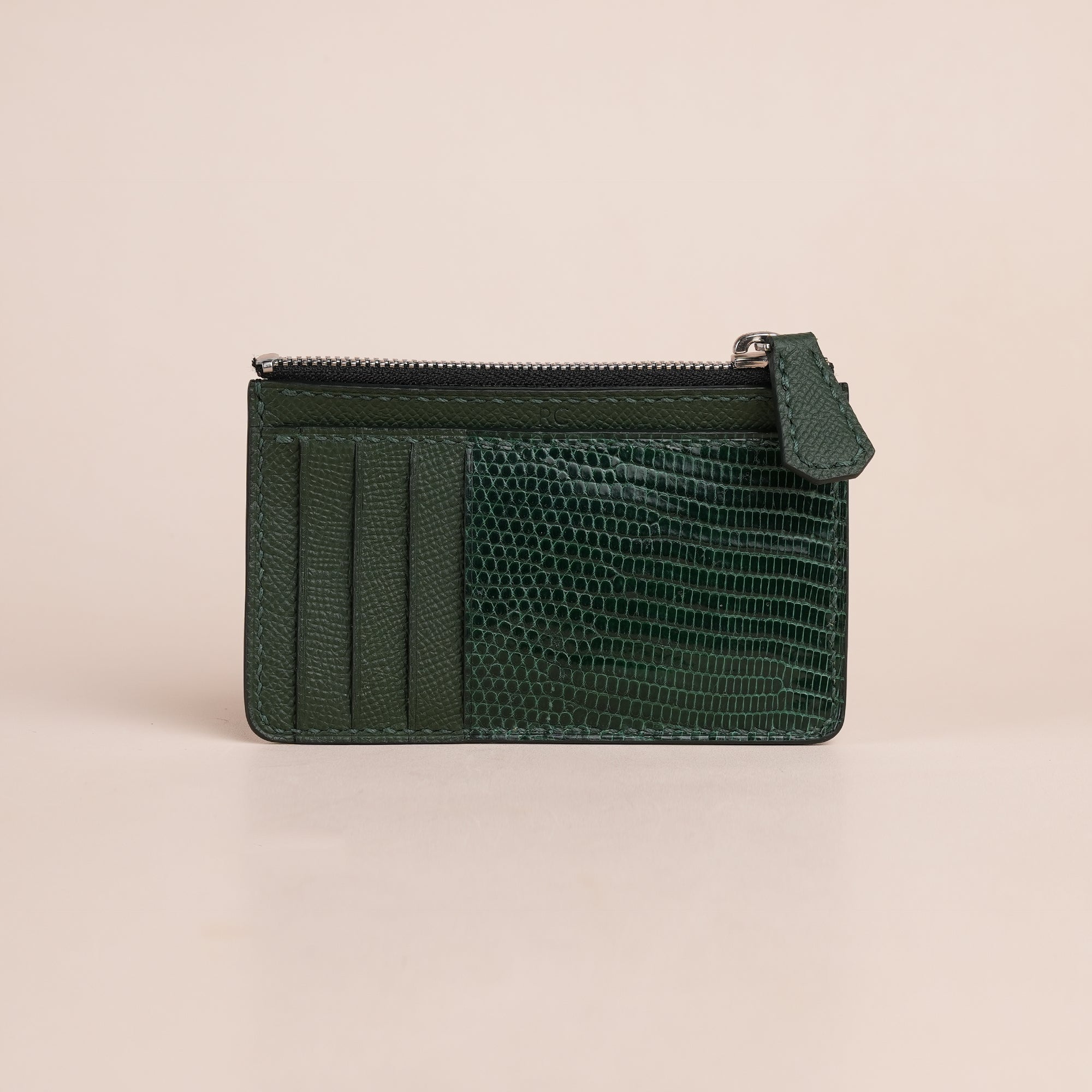
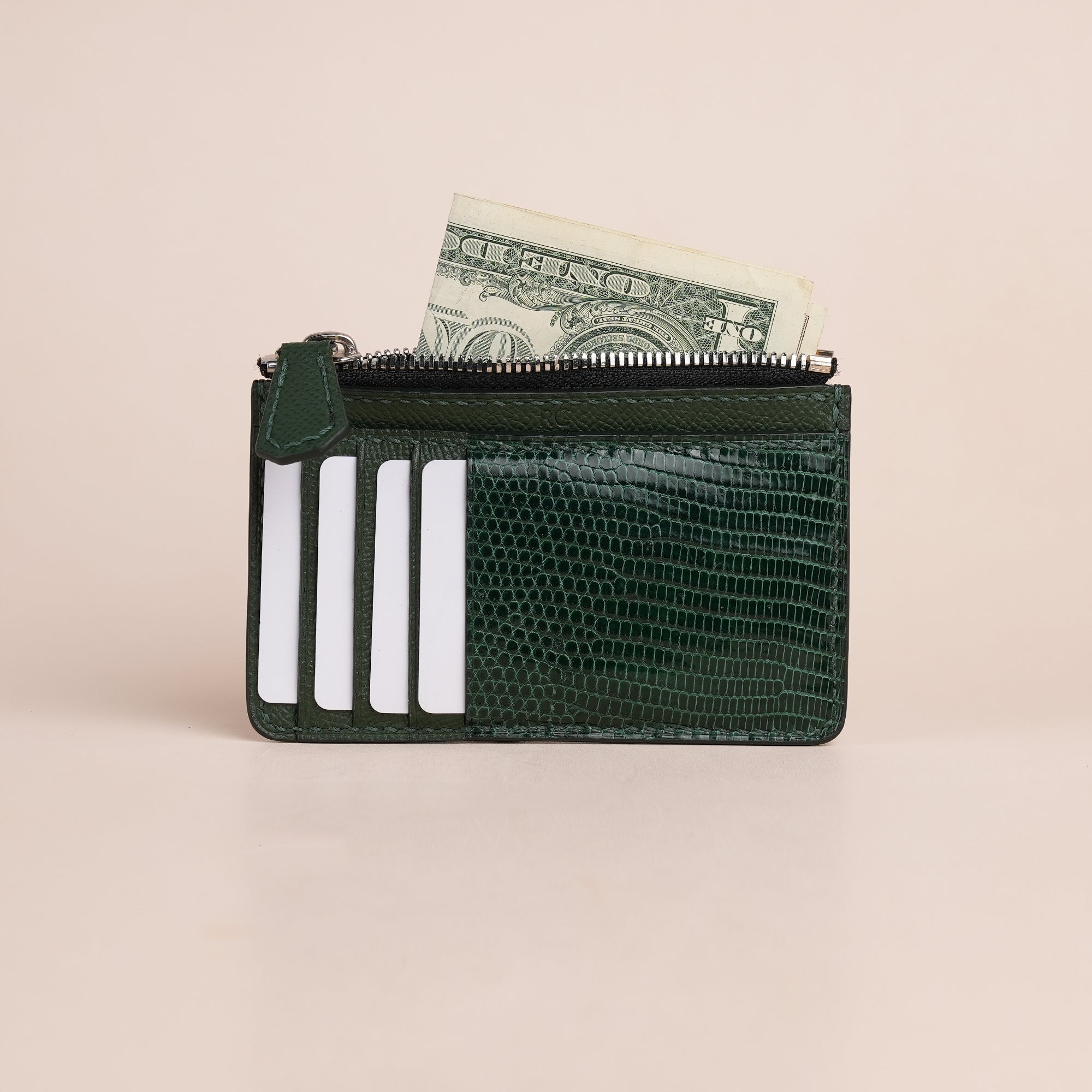
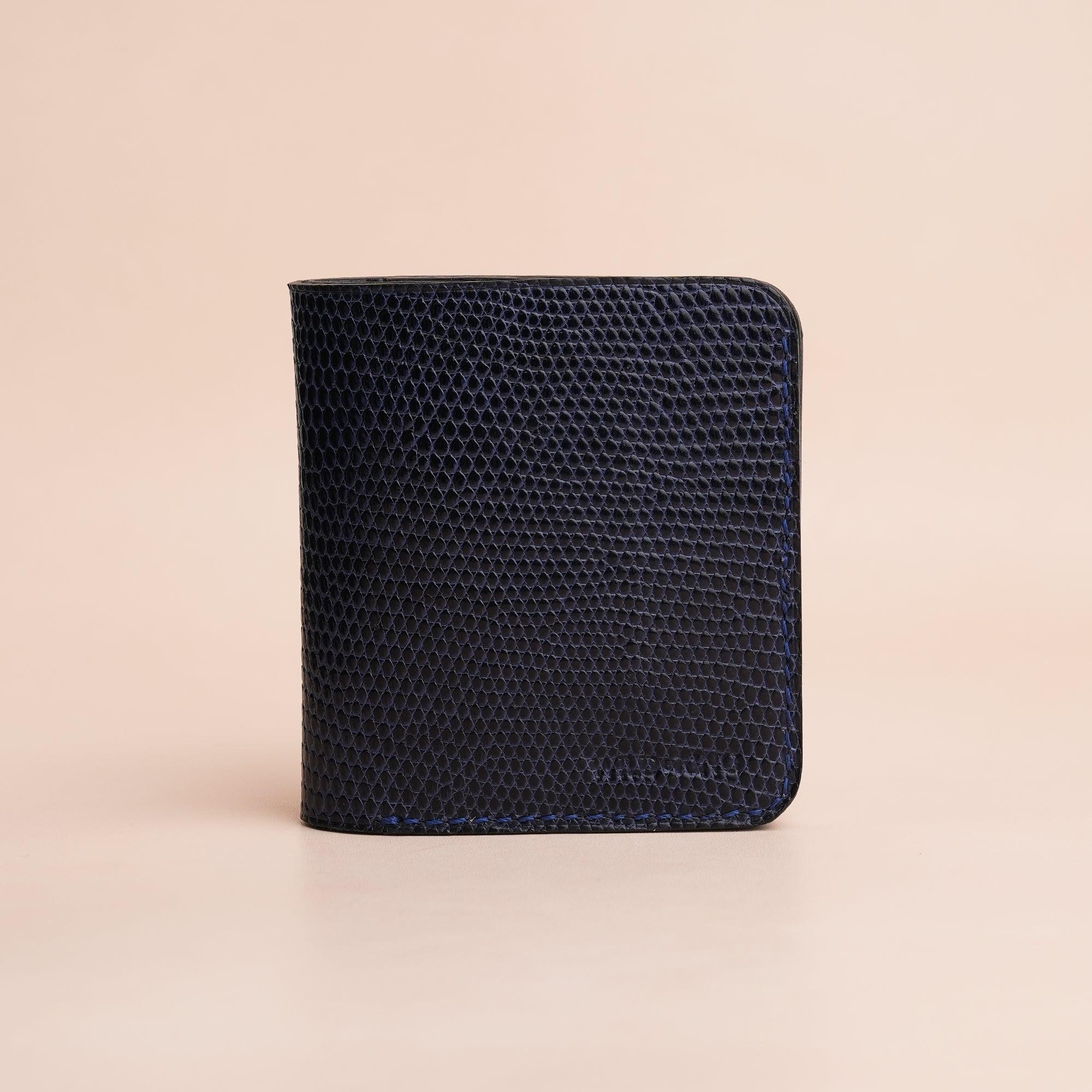
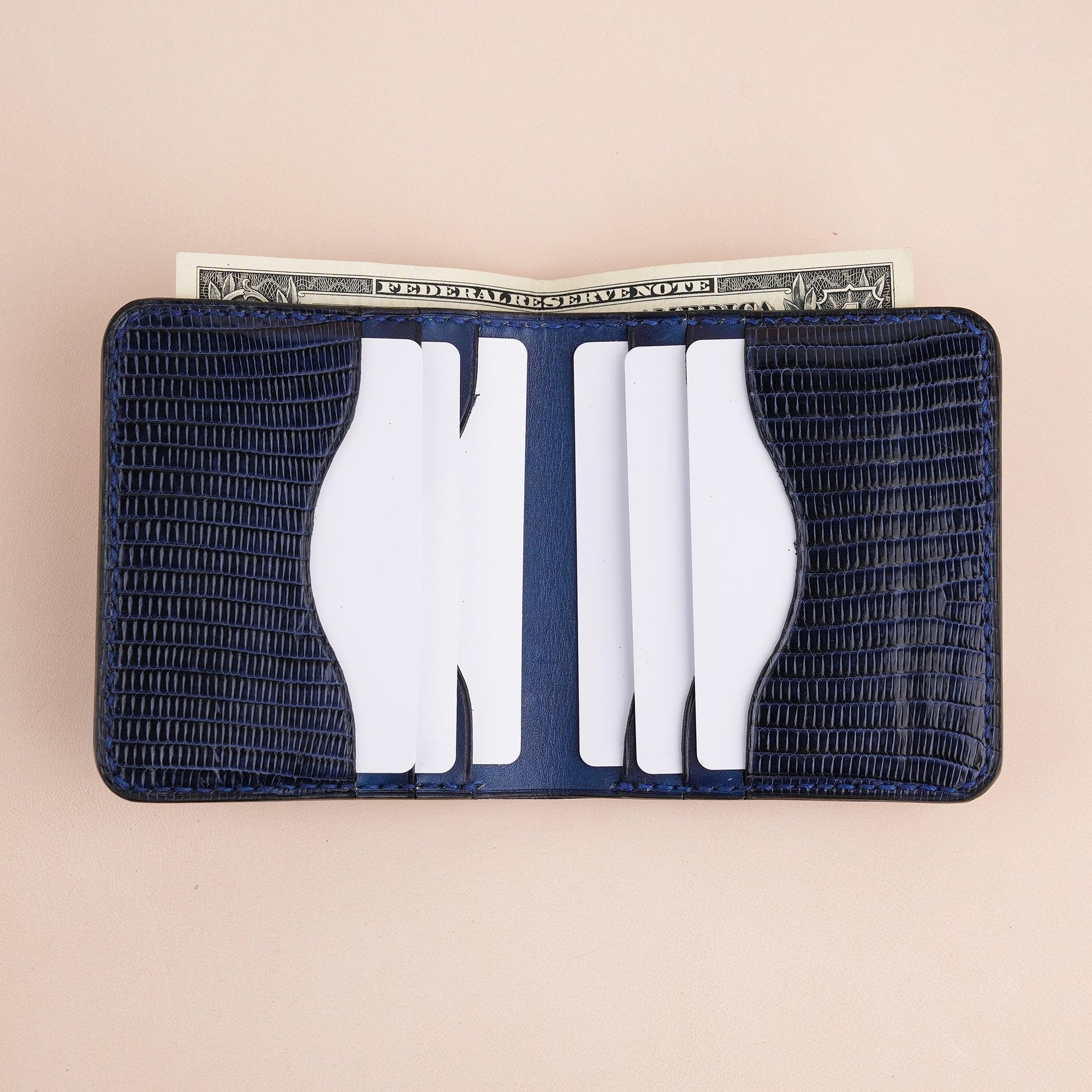
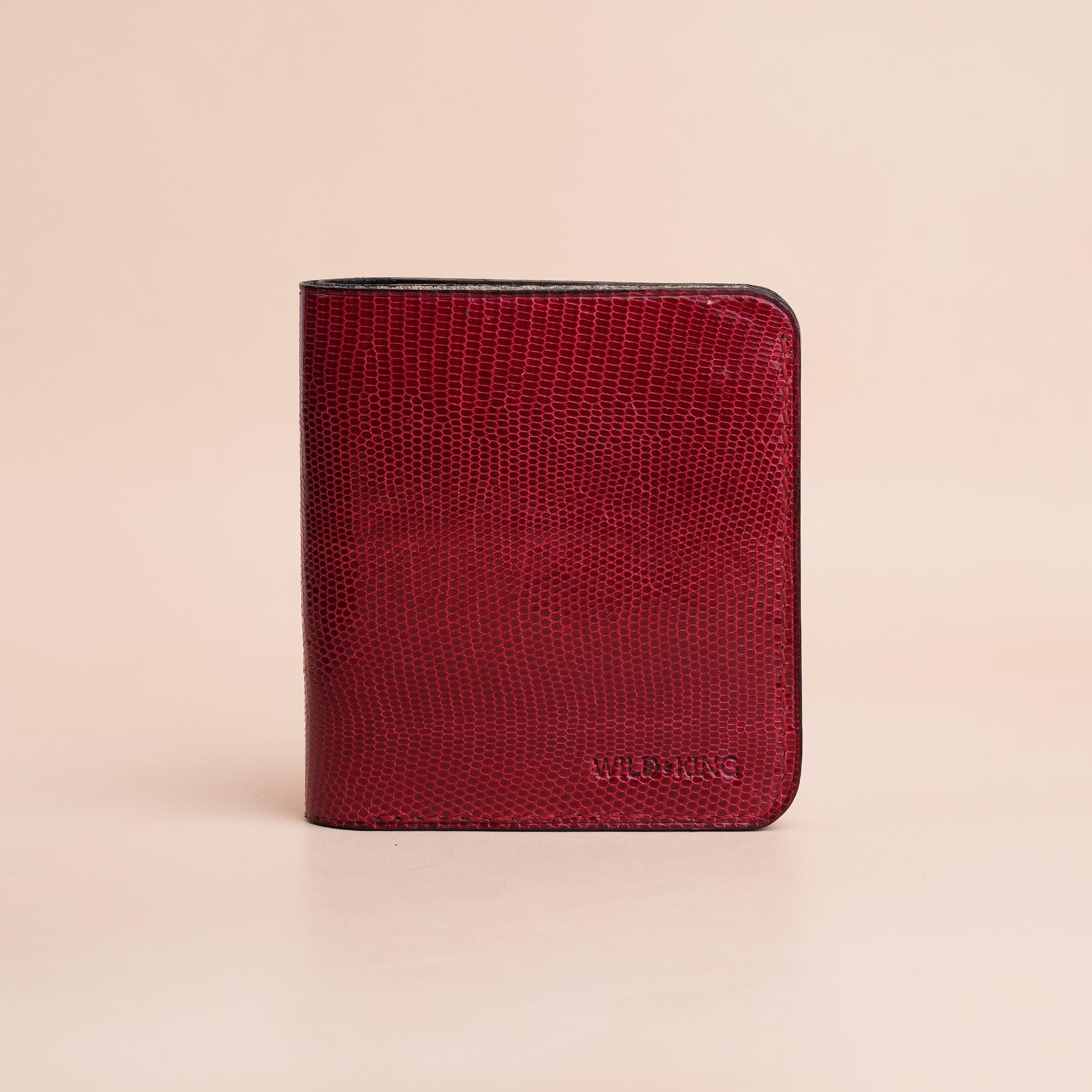
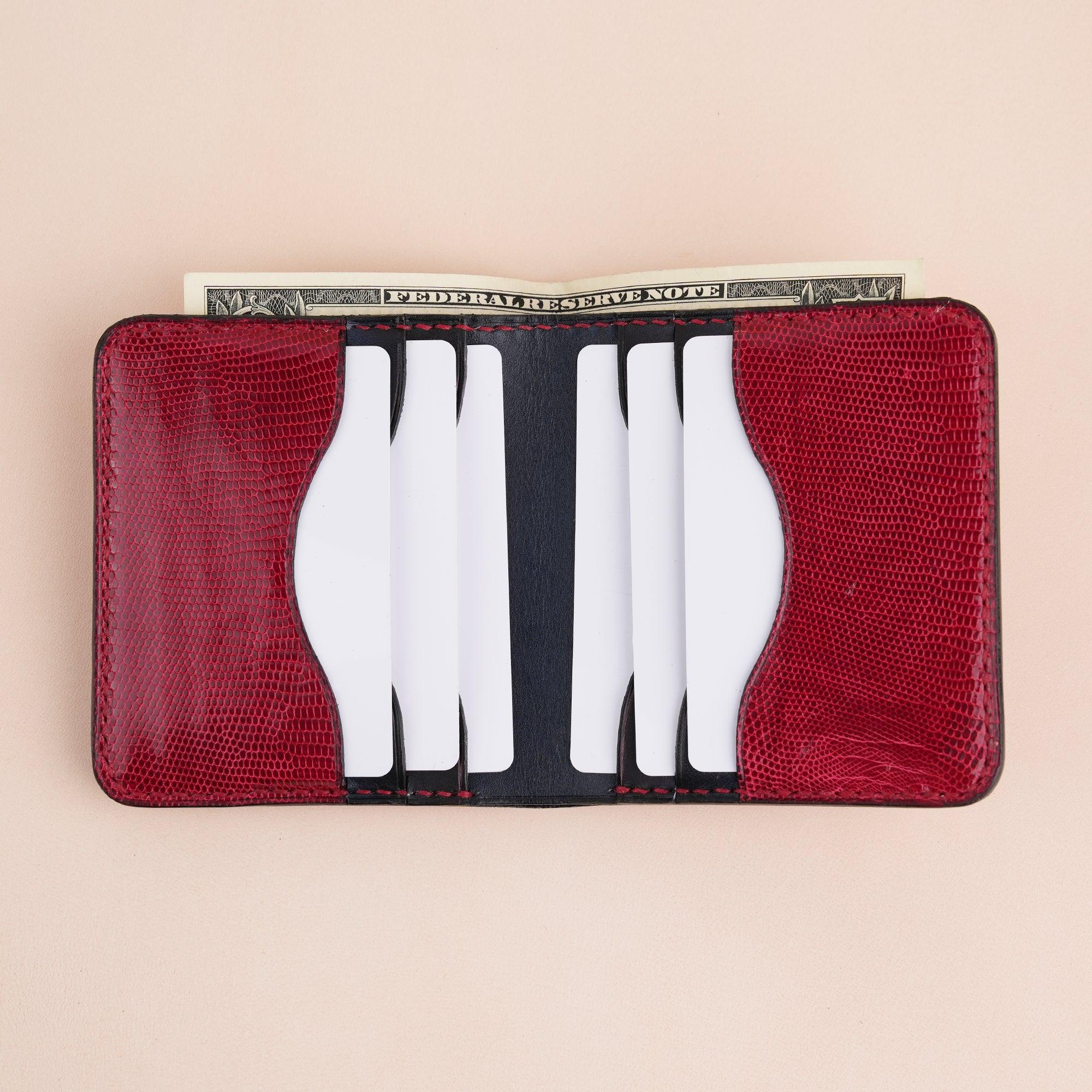
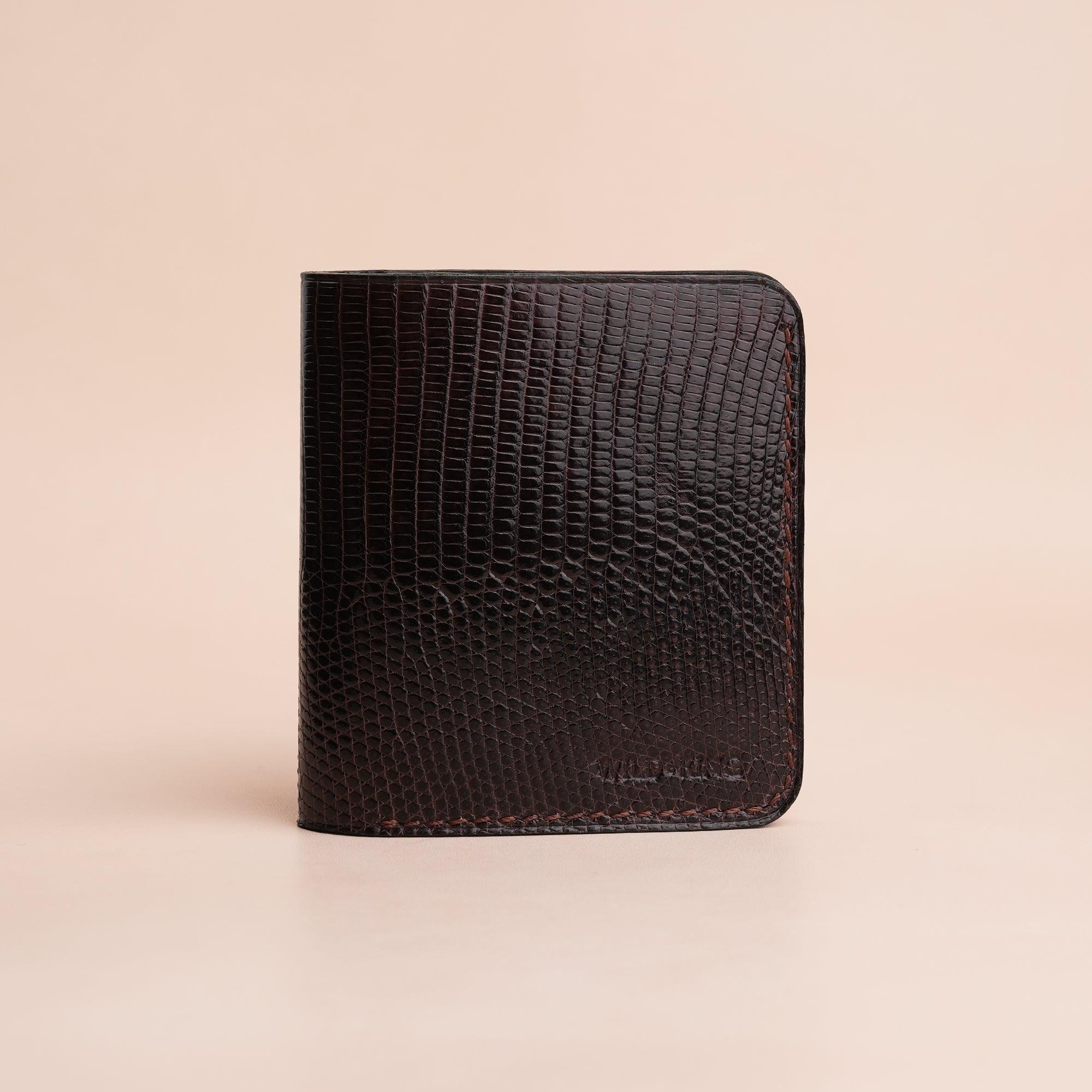
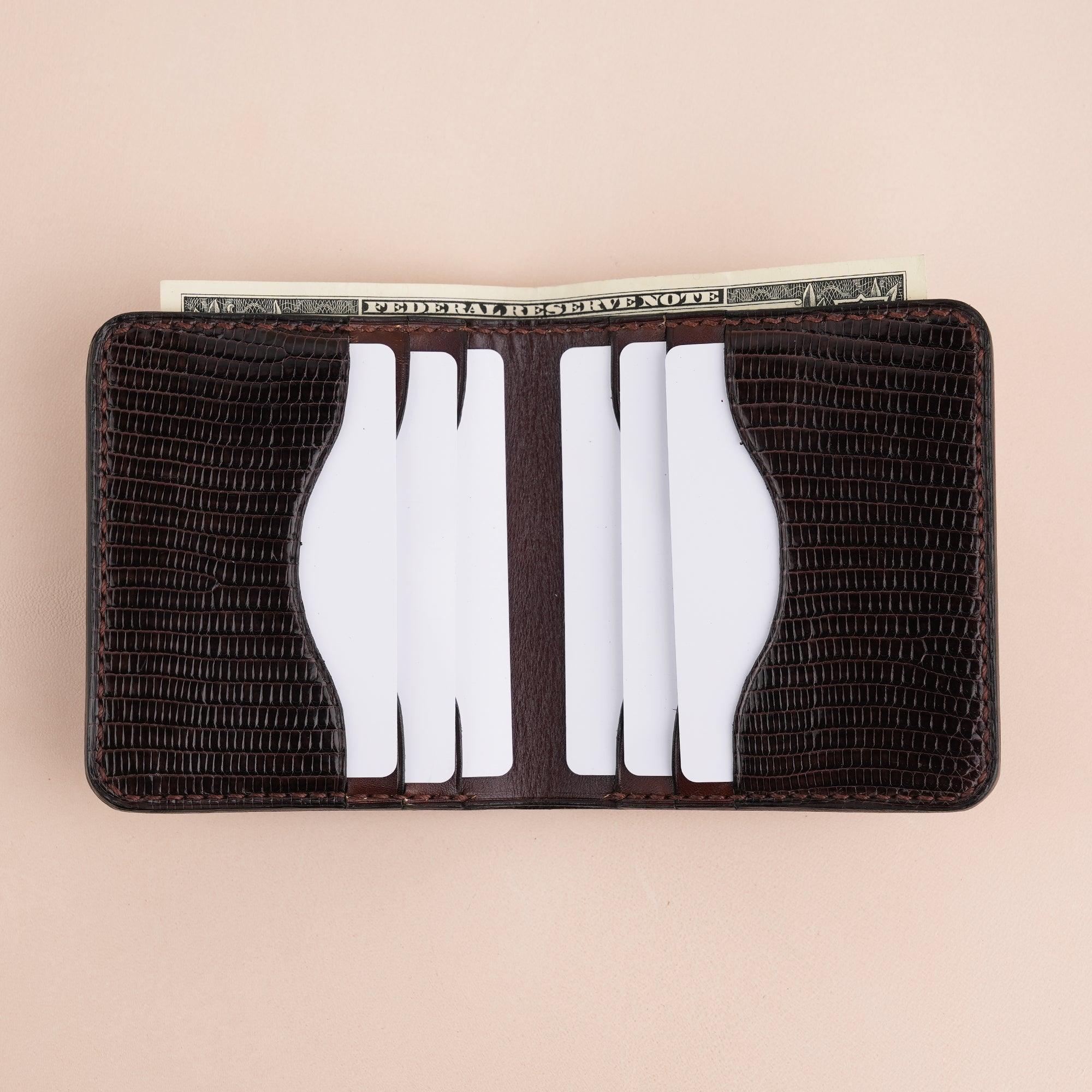
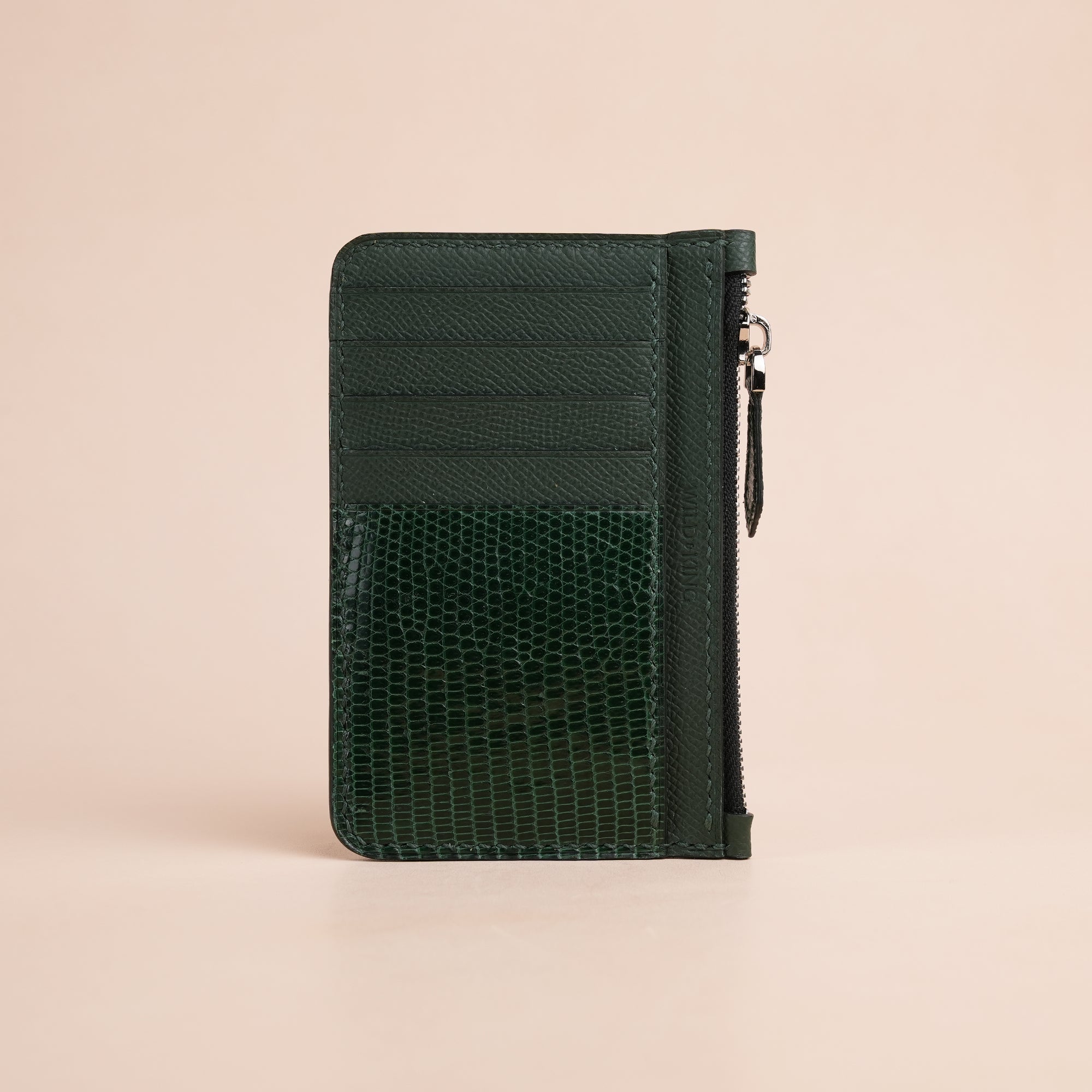
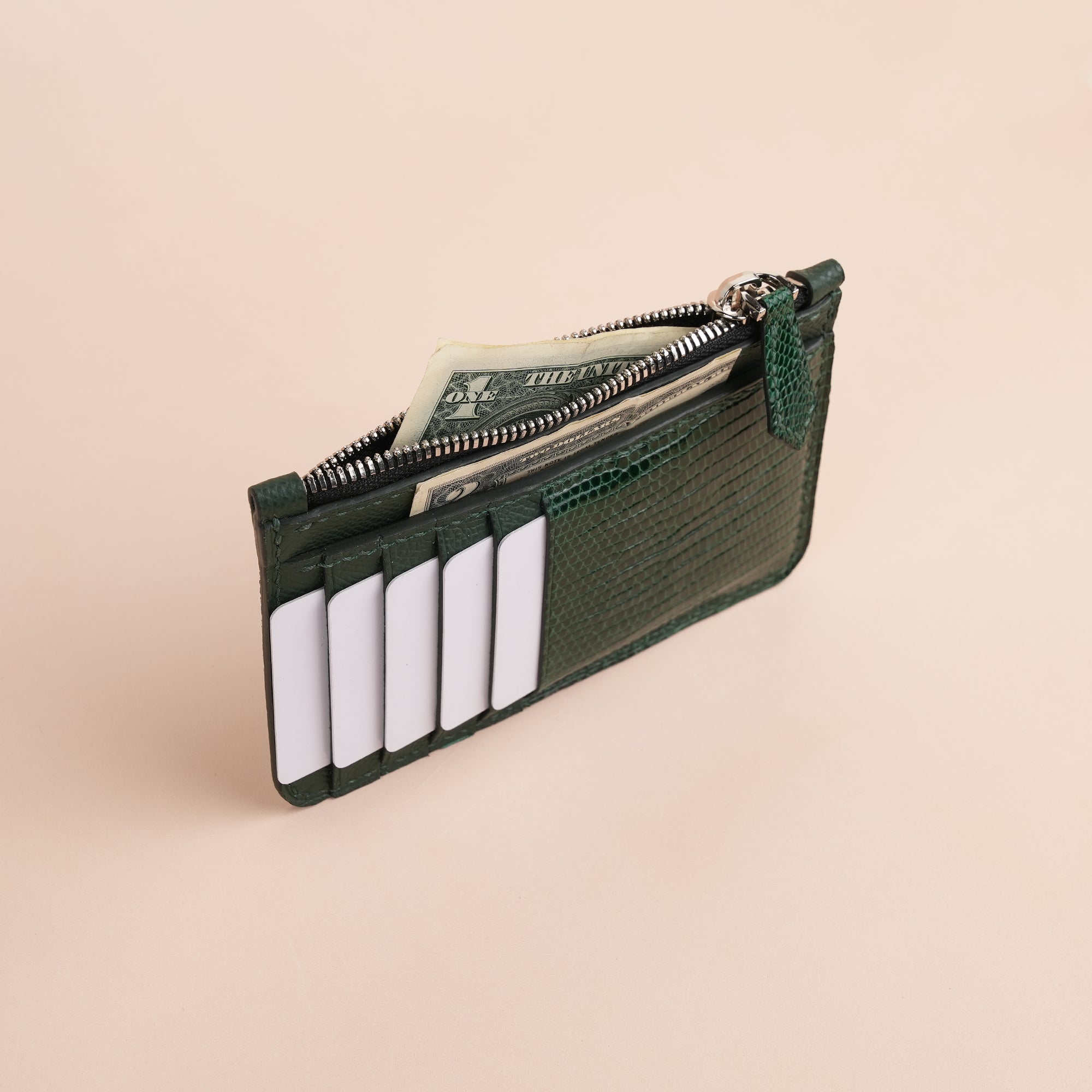
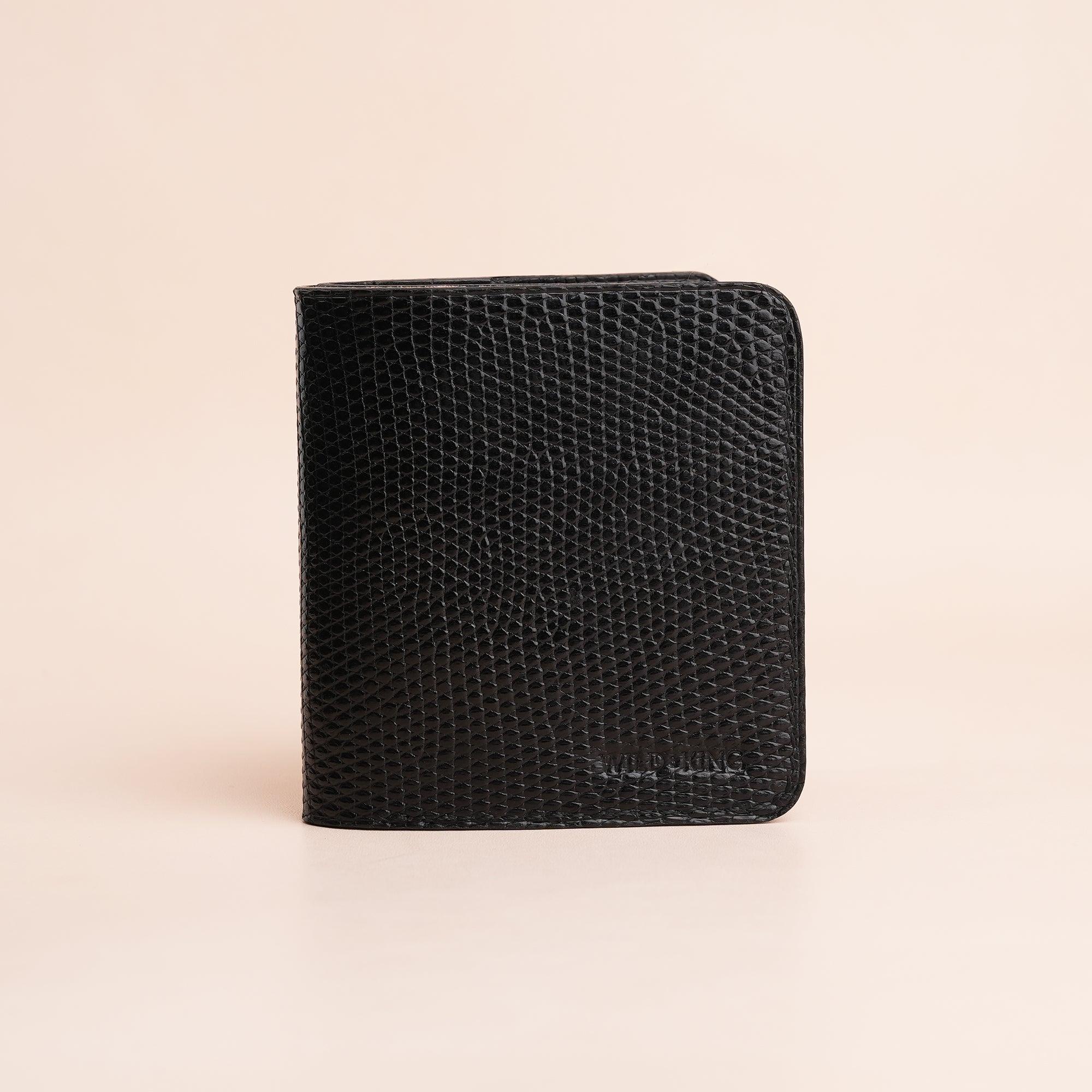
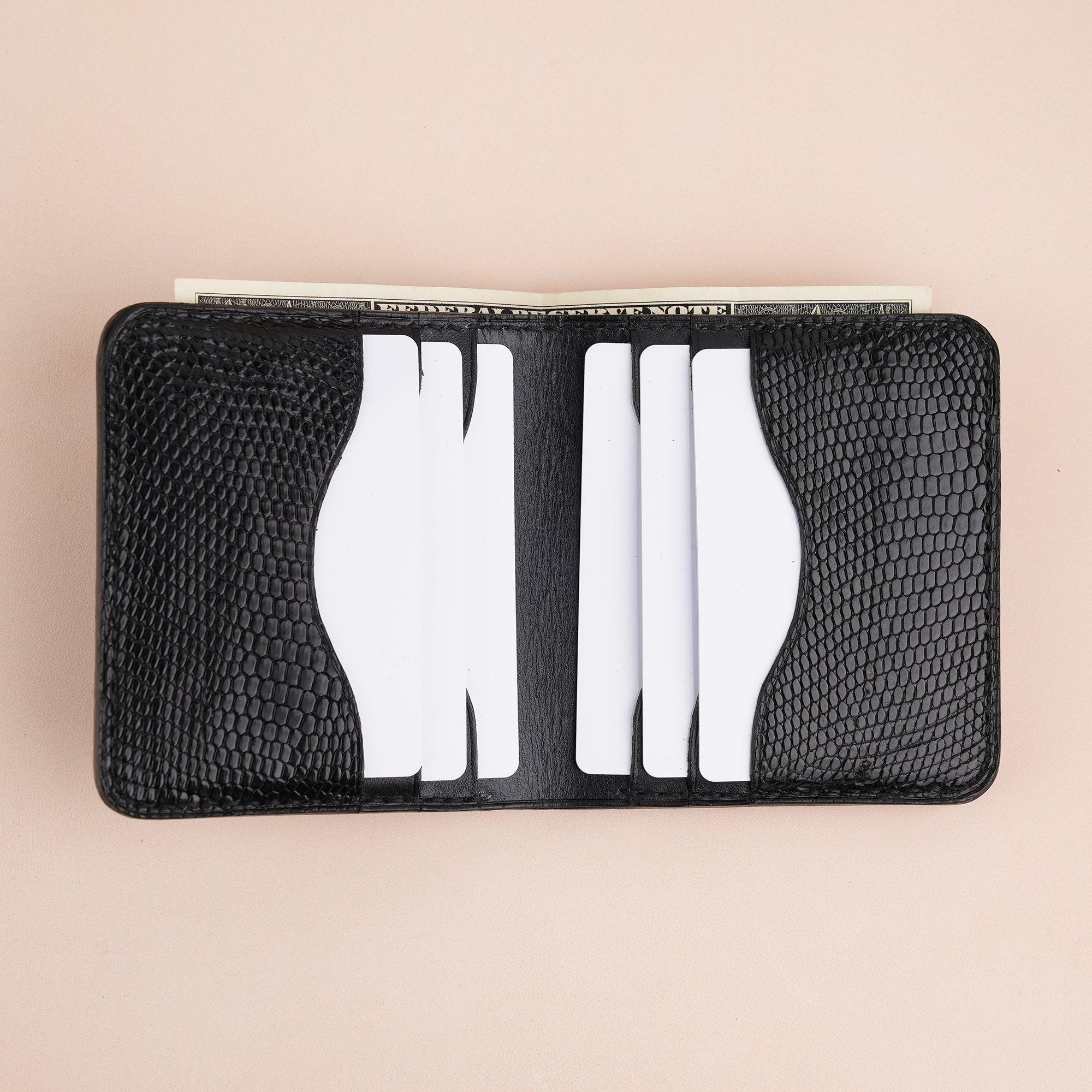
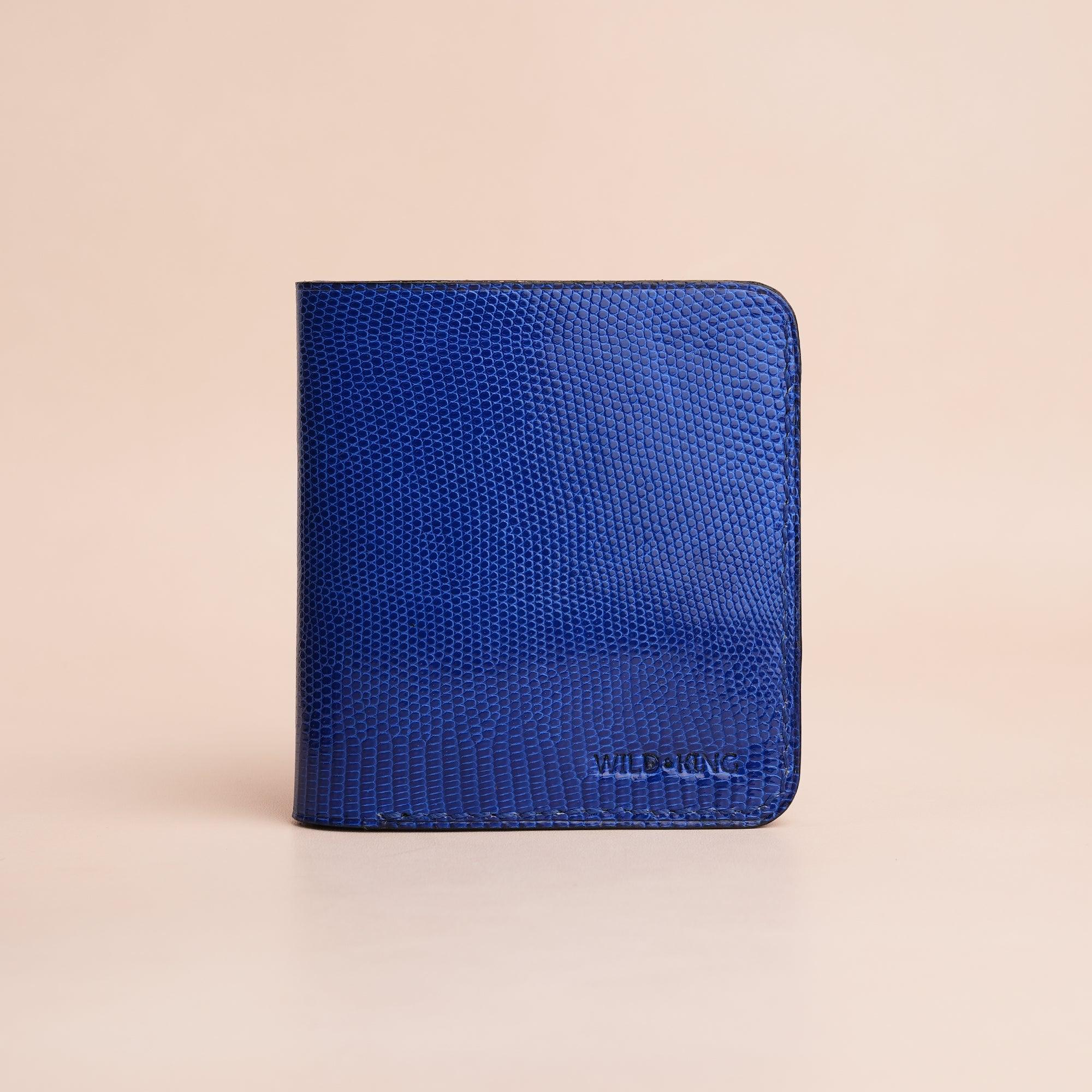
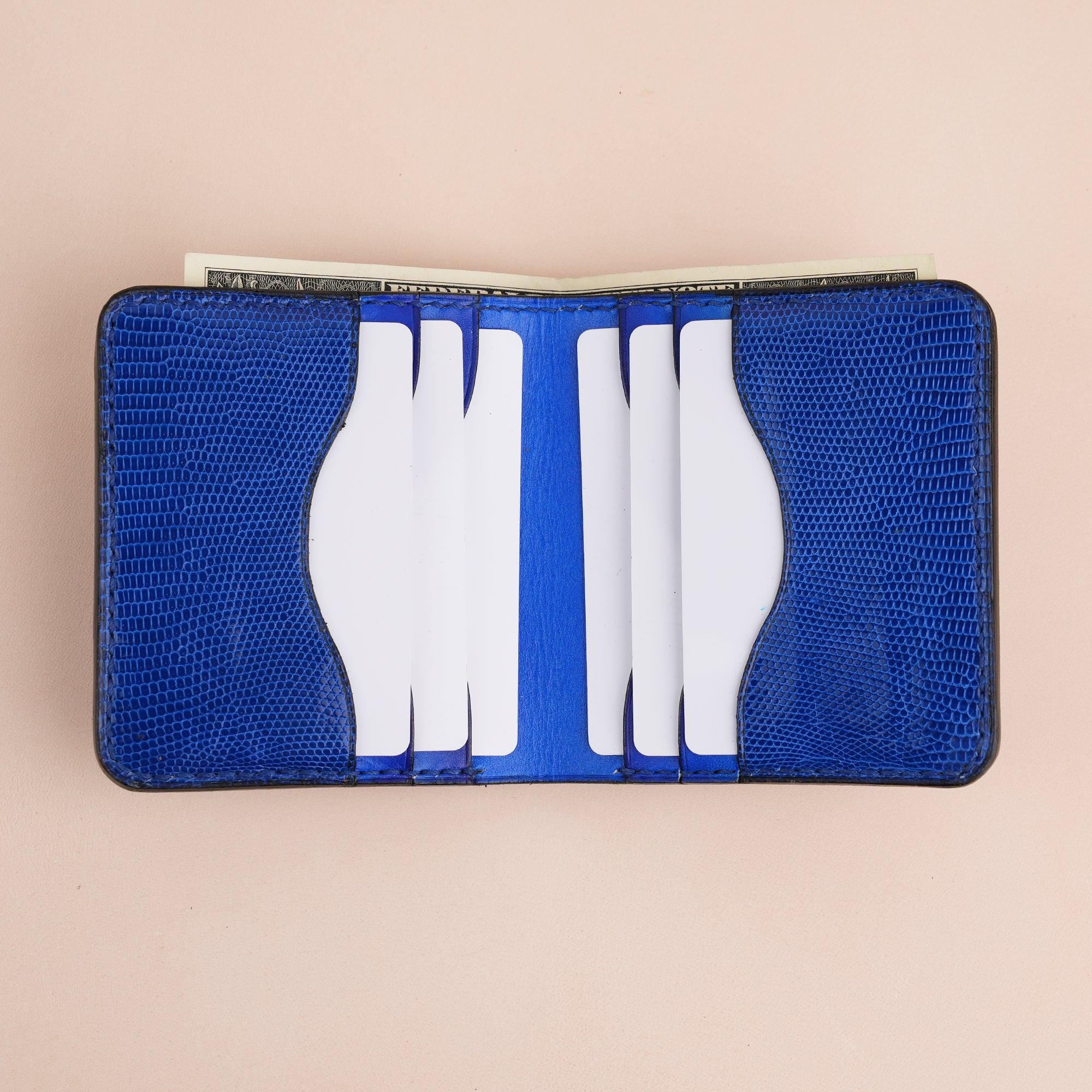
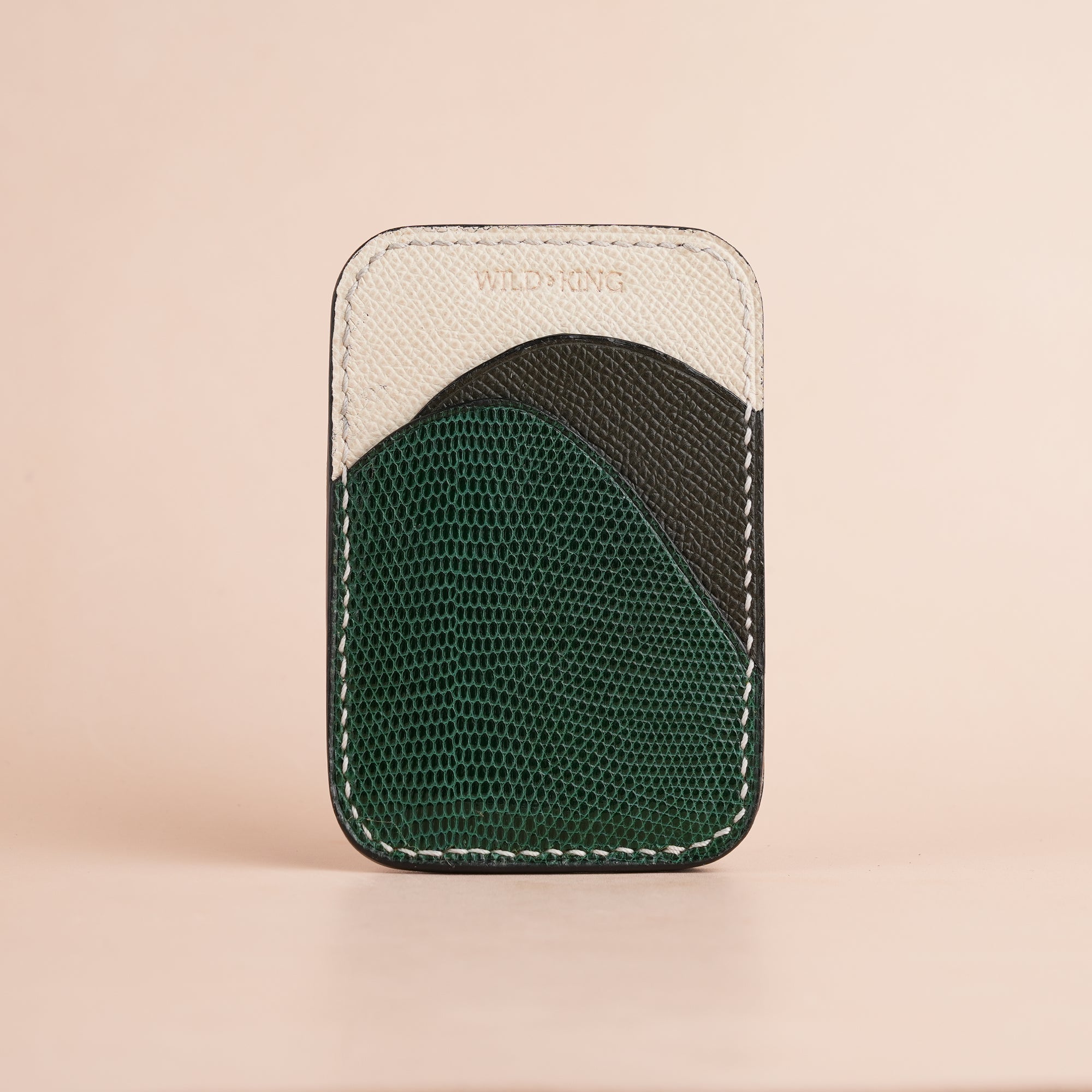
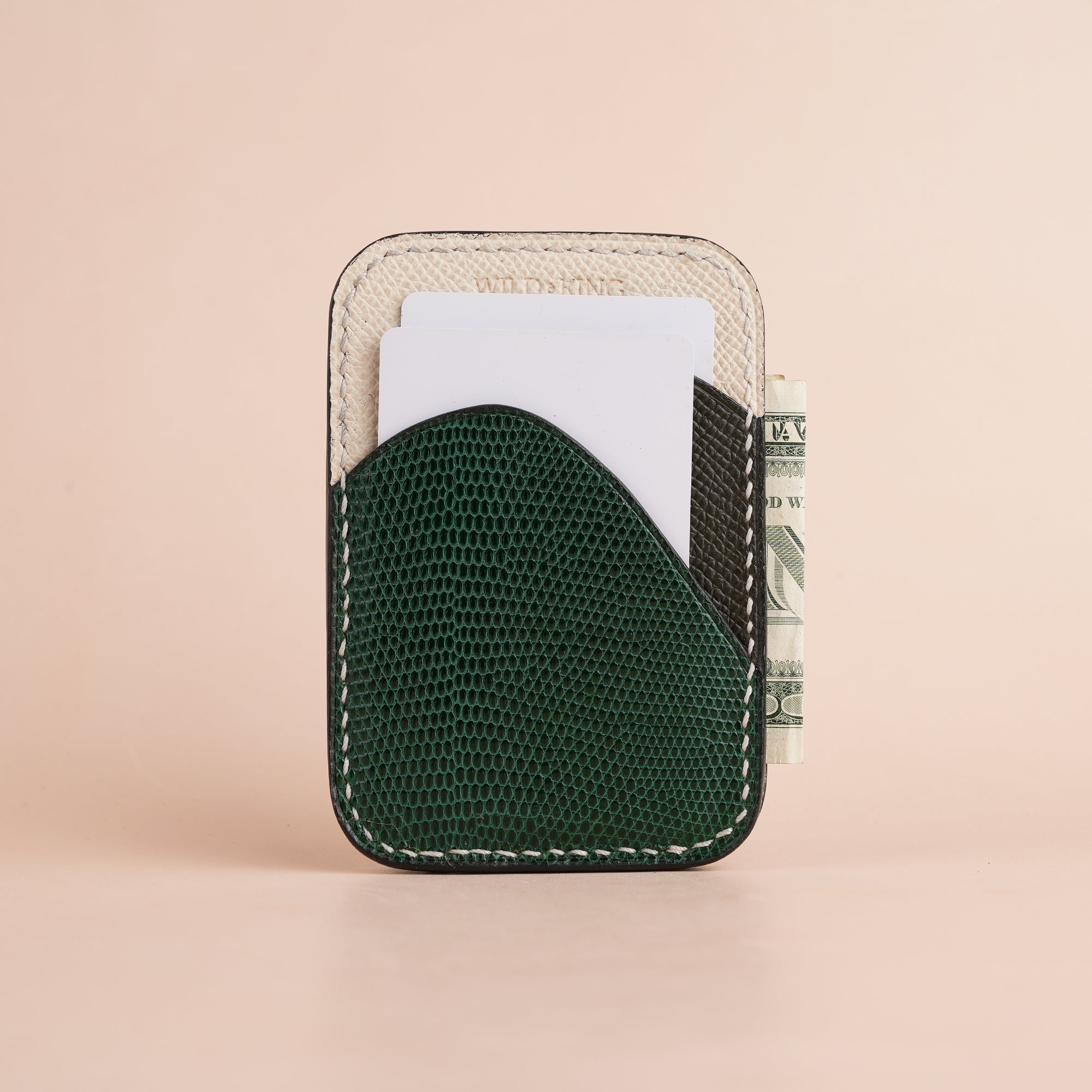
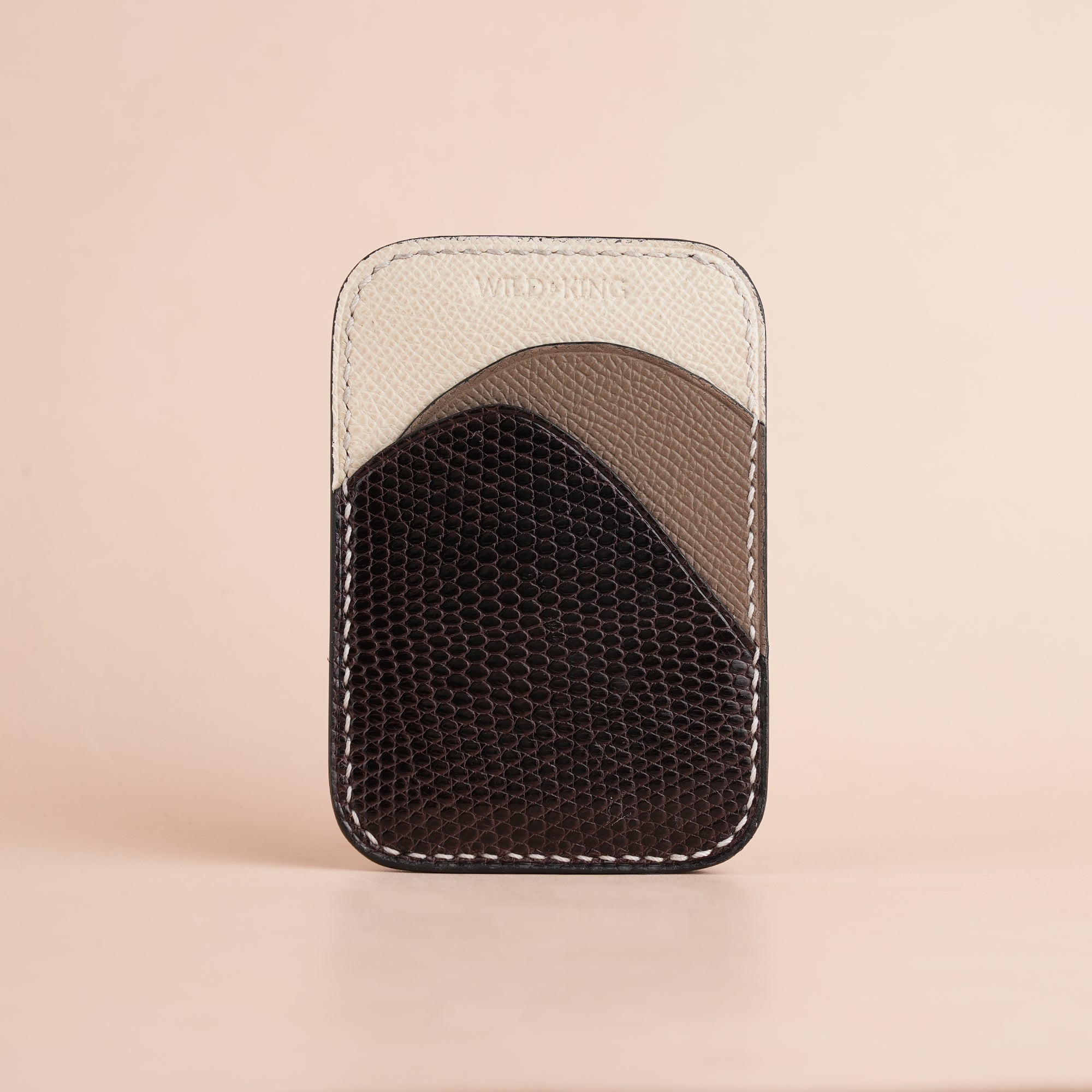
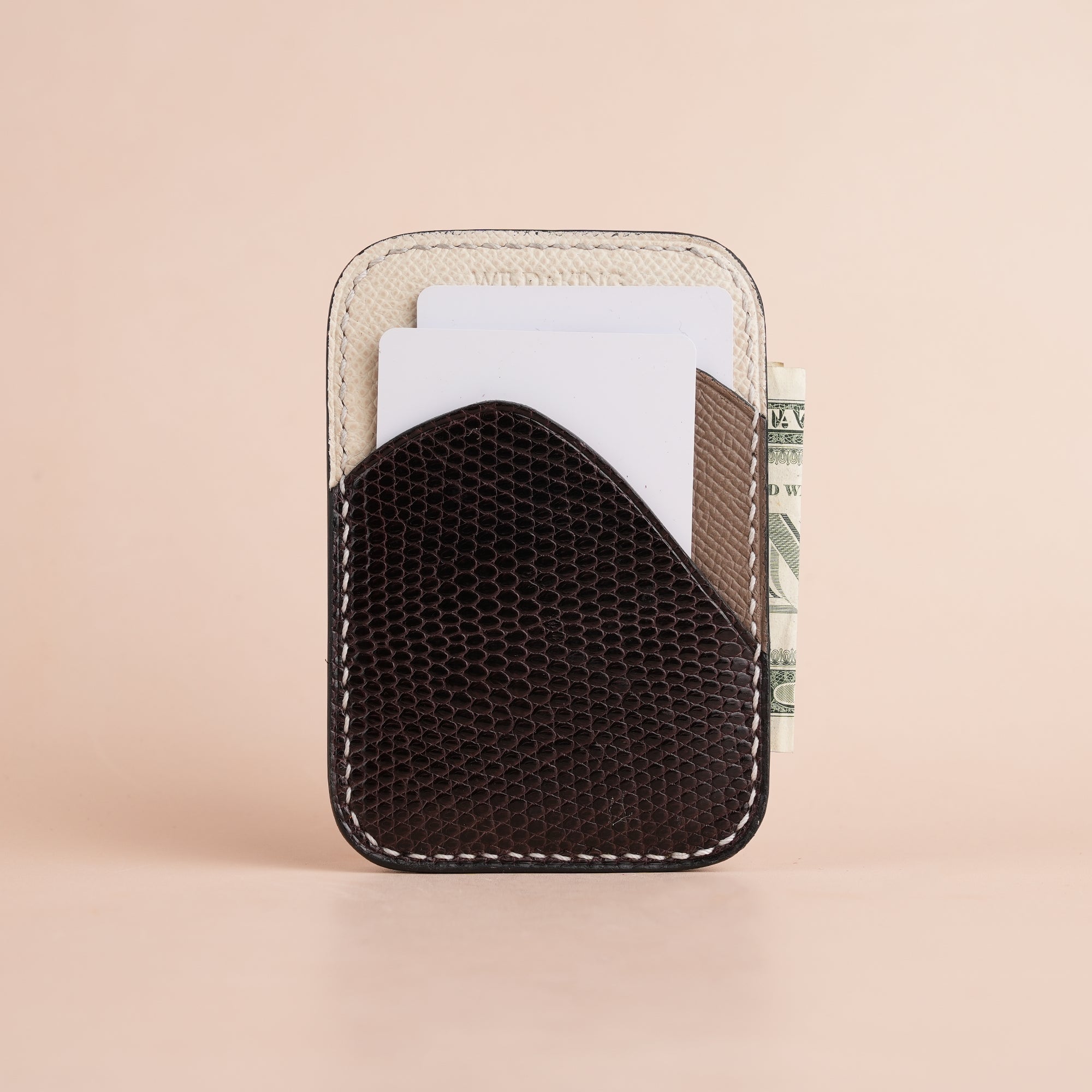
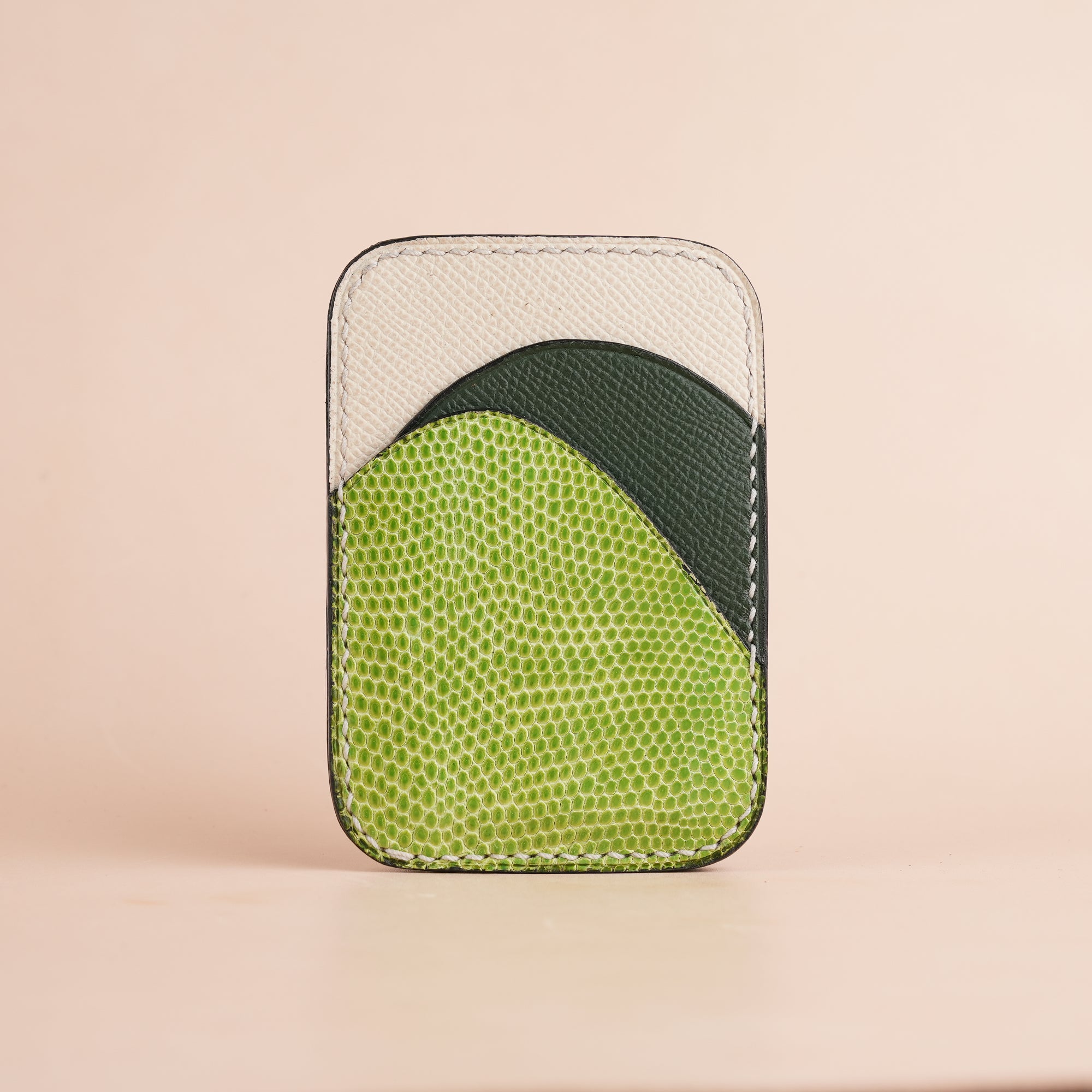
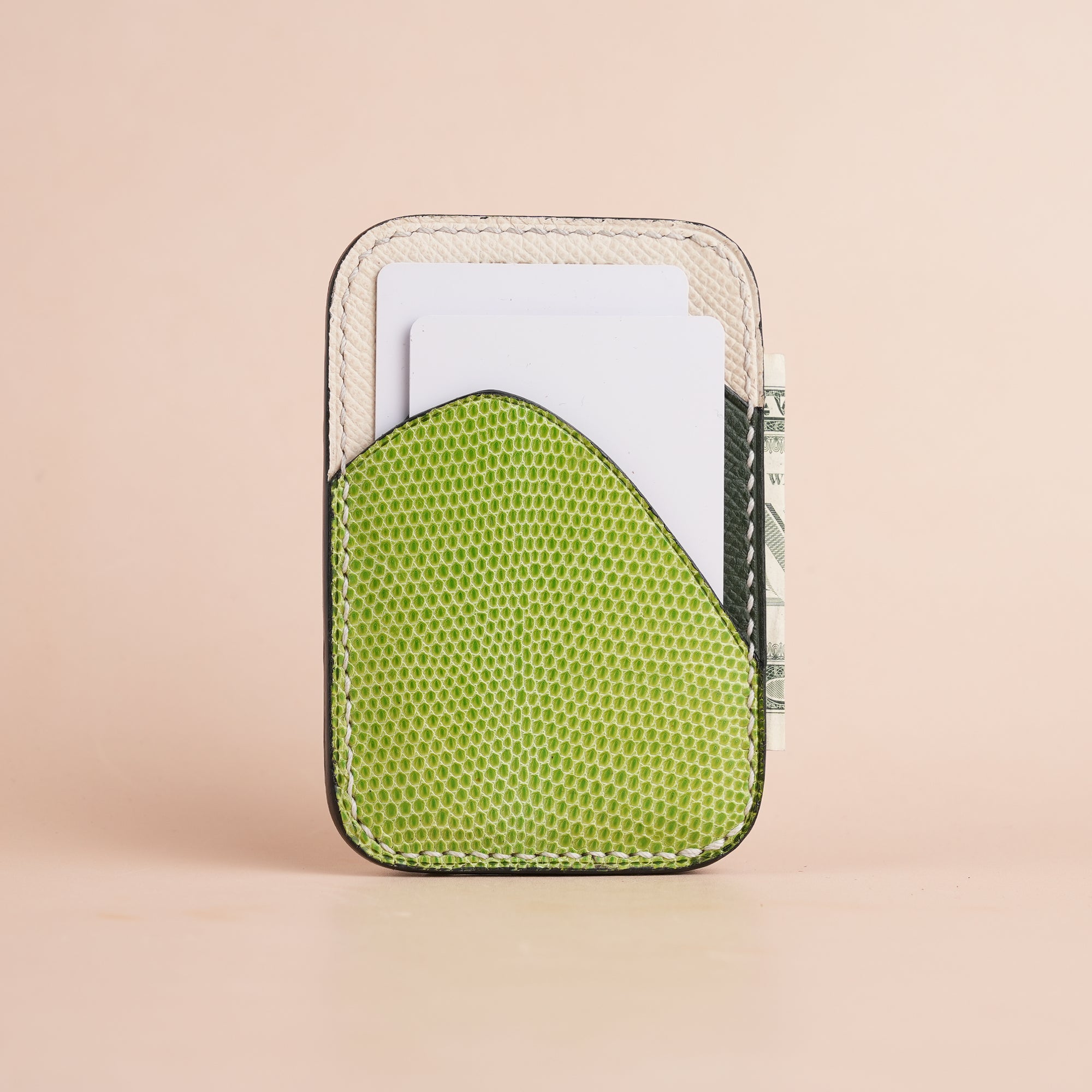
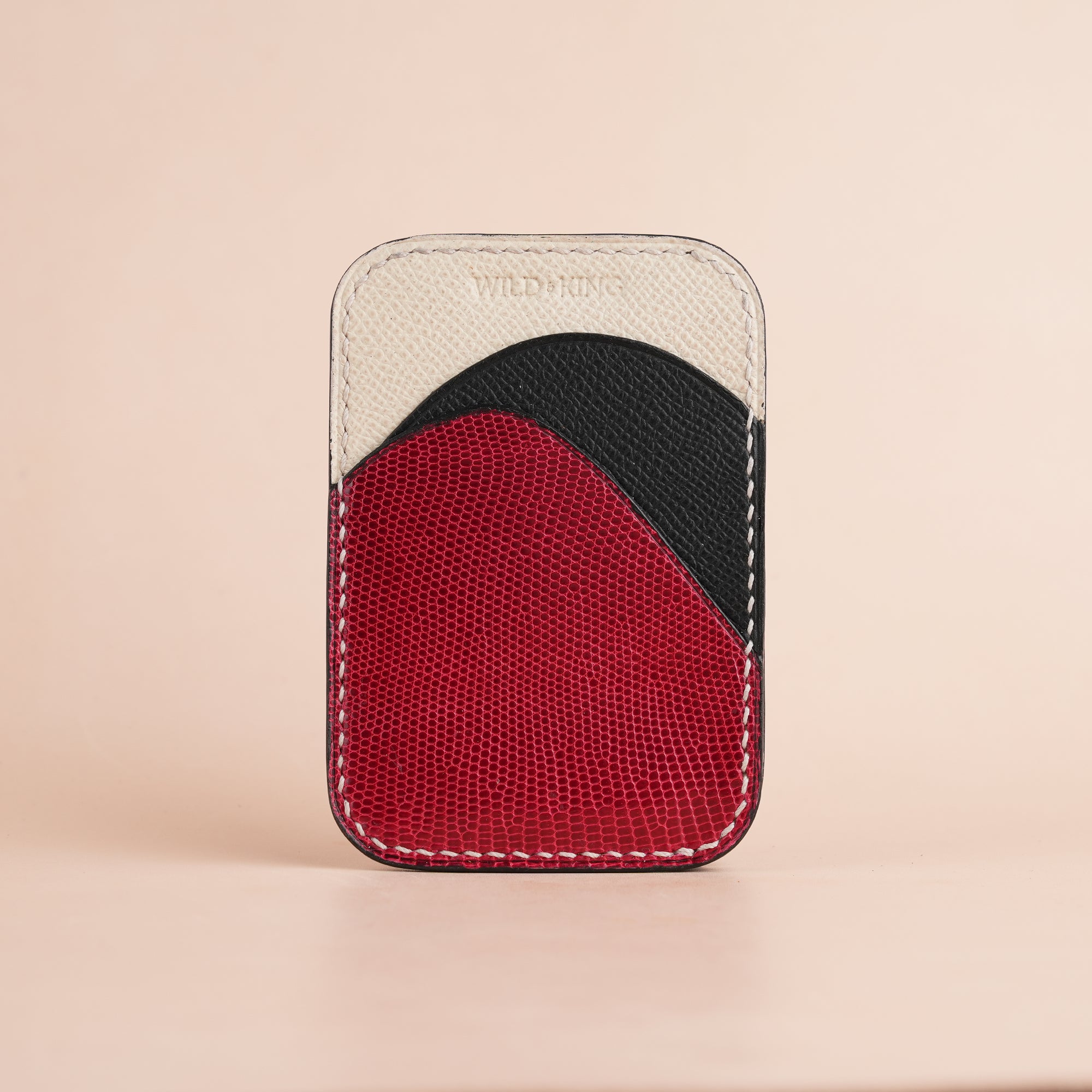
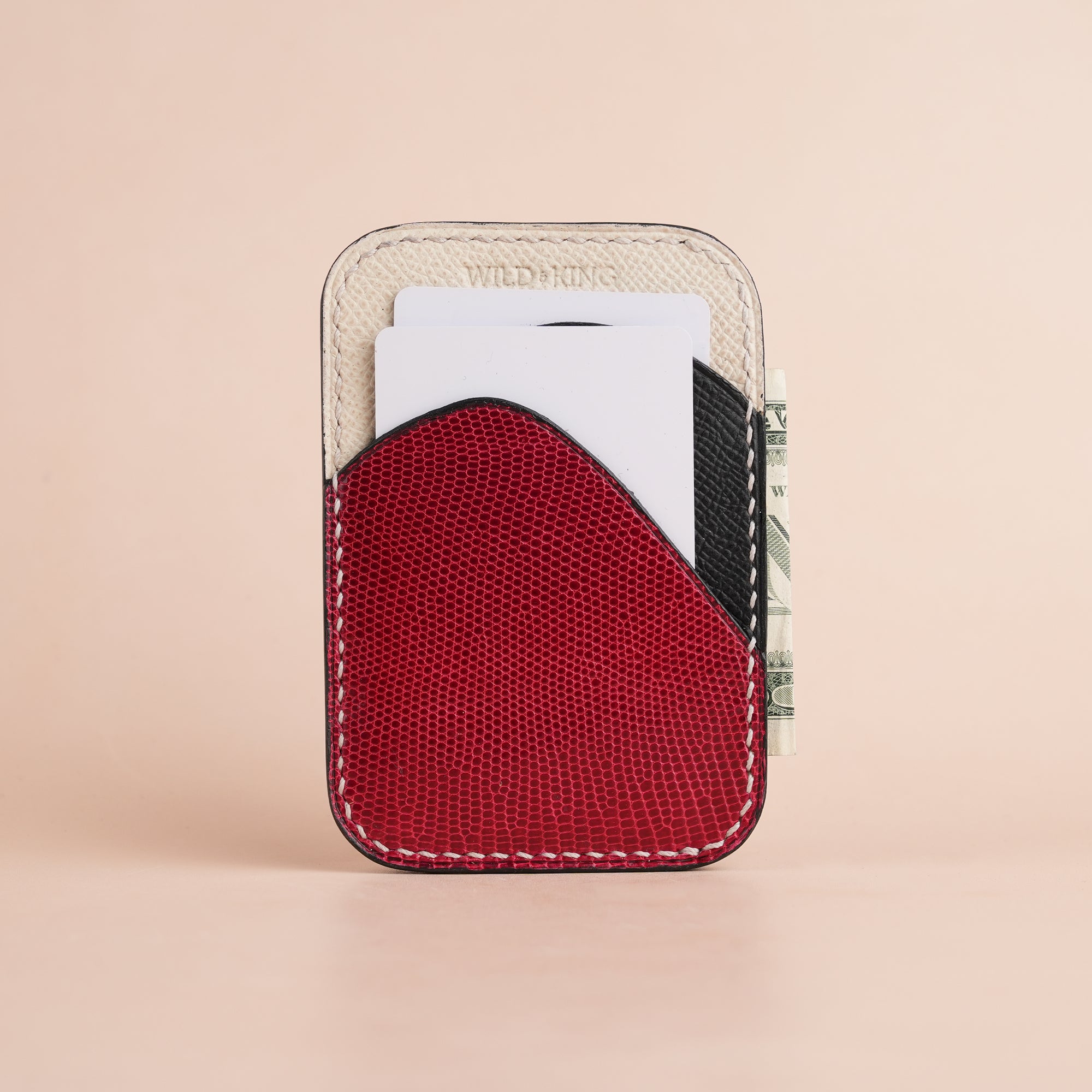
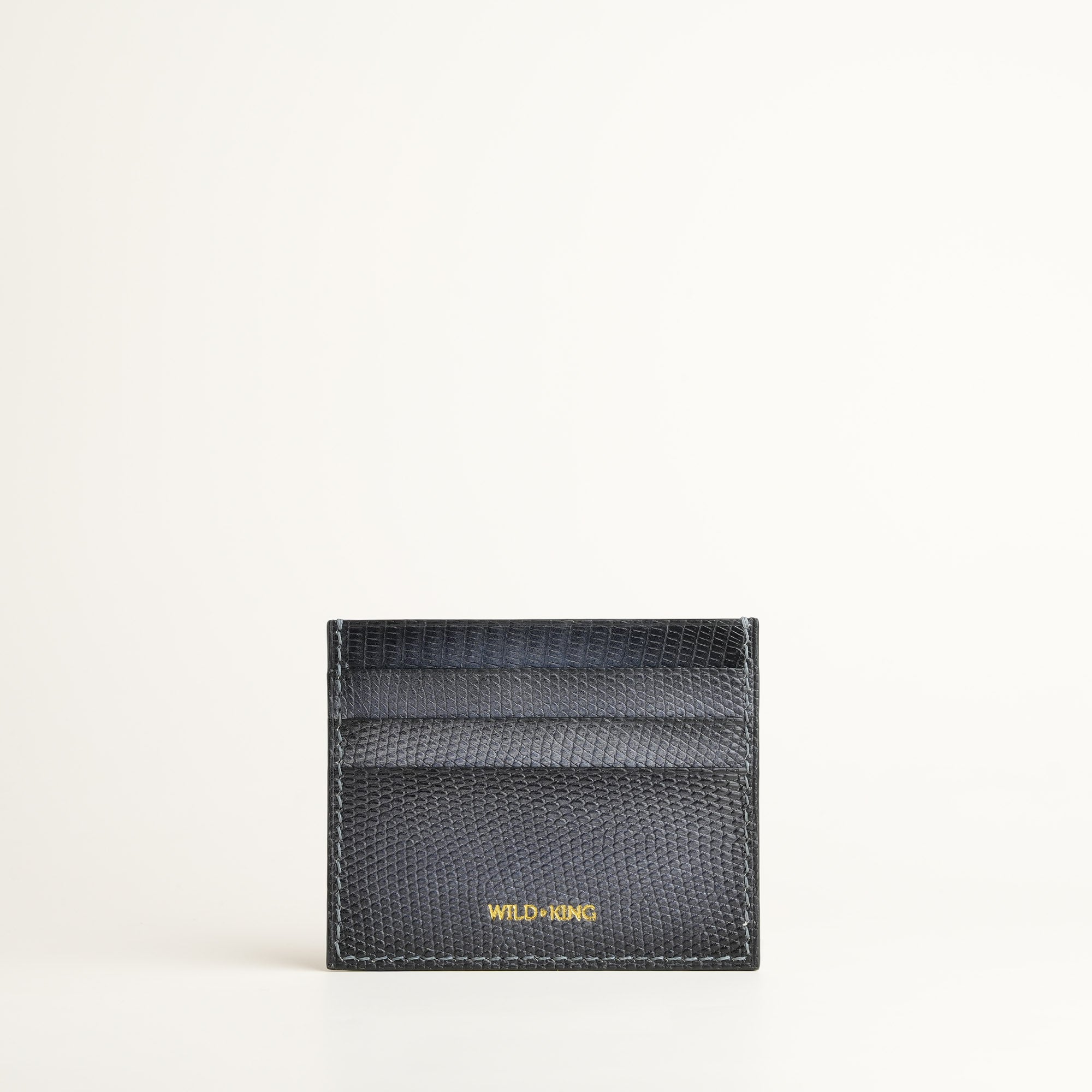
Lizard Leather Wallet


Need help?
Frequently Asked Questions
What is the difference between Full-Grain, Top-Grain, and Genuine Leather?
Understanding leather grades is the foundation of choosing a quality men's leather wallet. Genuine leather and top-grain leather are often sanded down to remove imperfections, losing their natural strength. Full-grain leather retains the entire outermost layer of the hide, keeping the fibers densely packed for maximum durability. At Wild & King, we strictly handcraft our products and do not distribute mass-produced third-party brands. Every piece in our workshop, from our classic bifold to our minimalist card holders, is made exclusively from 100% full-grain leathers, including Italian Pueblo, Habana, and premium exotic hides.
Do you ship overseas?
For an everyday carry (EDC) item that lasts a lifetime, you need a material that balances structural integrity with a slim profile. Many users look for a wallet that can survive decades of use. Here is a breakdown of our top-performing artisan materials to help you choose the best fit for your lifestyle:
| Leather Material | Core Characteristic | Patina Development | Scratch Resistance | Best Wallet Style |
|---|---|---|---|---|
| Pueblo (Italy) | Rustic matte texture | Very Fast | Medium | Vintage bifold wallets |
| Habana | Waxy "pull-up" effect | Fast | Medium | Heritage / Workwear EDC |
| Epsom | Embossed rigid structure | None (Color stays true) | Very High | Modern minimalist cardholders |
| Lizard | Beaded scales & slim profile | Slow | High | Elegant front pocket wallets |
| Himalayan, Alligator, Crocodile | Pronounced scales & tough | Slow | Very High | Statement luxury pieces |
Is exotic leather like Crocodile or Ostrich actually better for wallets, or is it just about looks?
It is not just about aesthetics; exotic leathers offer exceptional real-world performance. Crocodile leather is incredibly tough and provides excellent scratch resistance. Ostrich leather, on the other hand, contains deep natural oils making it softer and lighter than standard cowhide. When these robust exotic leather materials are combined with a traditional hand-sewn saddle stitch, the resulting wallet is structurally superior to machine-stitched luxury fashion brands, ensuring it will never unravel even under heavy daily use.
Which leather develops the best patina for an everyday carry (EDC) wallet?
A rich patina is the hallmark of a high-quality leather good that ages alongside its owner. If you want your custom leather wallet to develop a unique, glossy protective glaze over time, vegetable-tanned leathers are your best option. Our Pueblo and Habana leathers are specifically chosen for their rapid and gorgeous patina development. They absorb natural oils from your hands, healing superficial scuffs and turning a simple minimalist wallet into a deeply personal artifact.
How can I tell if a handmade leather wallet is made from genuine full-grain leather when buying online?
Buying online can make it difficult to judge quality. To ensure you are investing in true full-grain craftsmanship rather than plastic-coated substitutes, look closely at the product photos, specifically the edges. Industrial wallets use thick, rubbery edge paint to hide weak layers. Artisan workshops showcase their full-grain leather by naturally burnishing the edges with beeswax and friction. Additionally, look for brands that explicitly detail their tanning processes and leather origins (like Badalassi Carlo for Pueblo), which is a strong indicator of authentic handmade leather craftsmanship.