


Epsom Leather Care: The Complete Guide to Keeping Your Wallet in Perfect Shape
Table of Contents
- 1. What makes epsom leather different from other leathers
- 1.1. The heat-pressed surface
- 1.2. Why epsom doesn't patina
- 2. 4 simple steps to care for epsom leather
- 2.1. Step 1 — Daily wipe-down (30 Seconds, Every Day)
- 2.2. Step 2 — Spot cleaning the right way
- 2.3. Step 3 — Dealing with scratches on epsom
- 2.4. Step 4 — Storing your epsom wallet the right way
- 3. Epsom leather care mistakes
- 4. Does epsom leather hold up for everyday wallet use?
- 5. FAQ
- 5.1. Does Epsom leather need conditioning?
- 5.2. Can I clean Epsom leather with water?
- 5.3. Does Epsom leather scratch easily?
- 5.4. Will Epsom leather develop a patina over time?
- 5.5. How long does an Epsom leather wallet last?
- 6. Epsom leather care is simple
Epsom leather is one of the most low-maintenance leathers you can own. But most people still get the care routine completely wrong. The problem is not that they are careless. The problem is that they treat Epsom like vegetable-tanned leather, pull-up leather, or any other type of natural leather. And that is a mistake.
Epsom is not a natural leather in the traditional sense. It is a heat-pressed embossed calfskin with a protective coating on the surface. That coating changes everything: how the leather absorbs moisture, how it reacts to conditioners, and how it ages (or does not age) over time.

This guide will show you exactly how to clean, condition, and protect your epsom leather wallet care by the right way. No guesswork, no myths, just the facts that matter.
What makes epsom leather different from other leathers
Most leathers you have seen in the wild are what you would call "natural": they show their true grain, they absorb oils easily, and they develop a beautiful patina over time. That is the world of veg-tan, pull-up, and raw cowhide.
Epsom does none of that. Here is why.
The heat-pressed surface
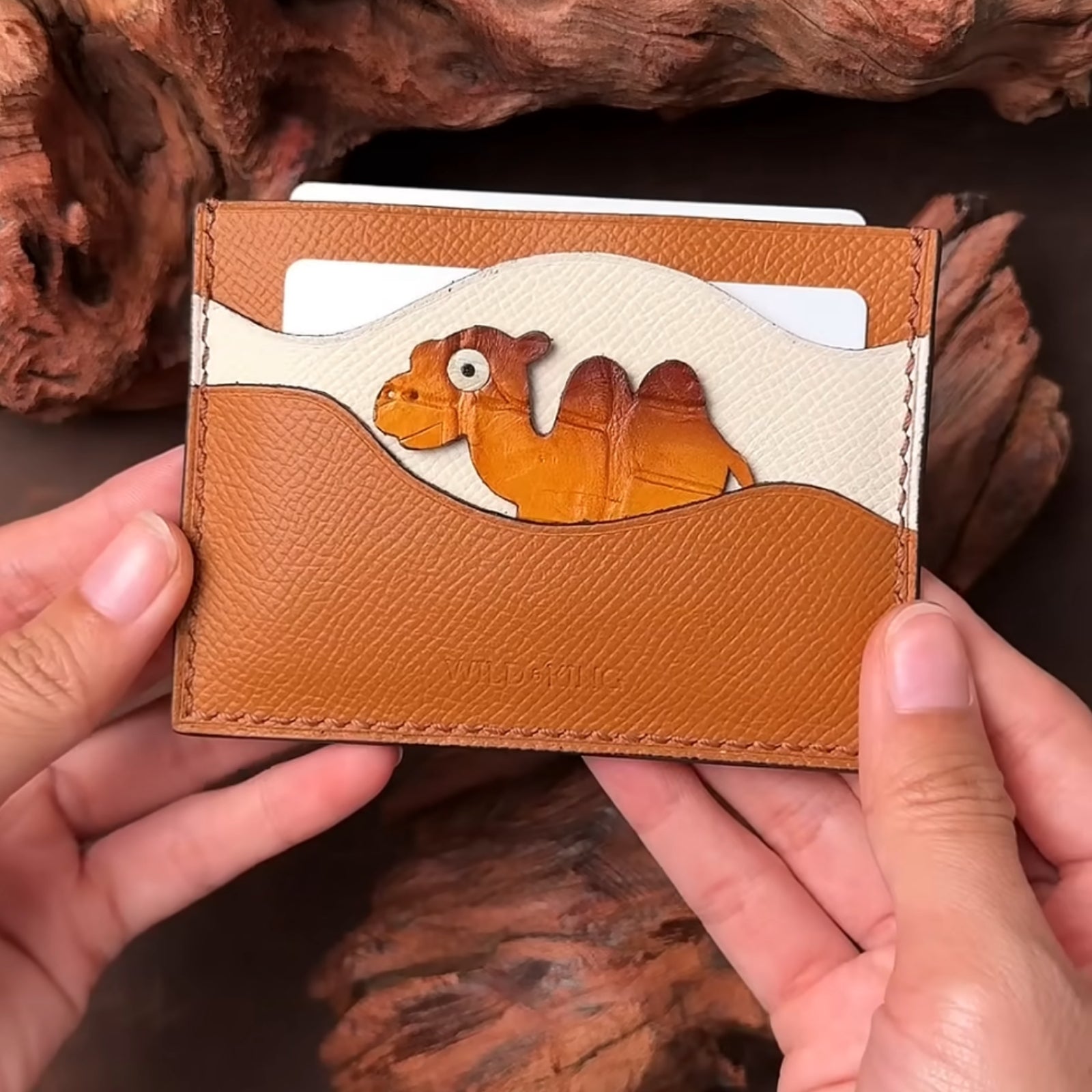
Epsom leather starts as calfskin. But it does not stay that way. During production, the leather is treated, dried, and then heat-pressed with a fine cross-hatched grain pattern. This process creates a uniform, slightly pebbled texture that is the same across the entire hide.
More importantly, a thin protective coating is applied on top of that grain. This coating is what gives Epsom its signature look, and its signature behavior.

Because of this coating, epsom leather texture is much more resistant to water, oil, and dirt penetration than untreated leather. Dust stays on the surface. Water beads up instead of soaking in. Oils do not penetrate deeply. That is why cleaning Epsom is so easy: you are mostly working with the surface, not the fibers beneath.
But it also means that Epsom reacts differently to conditioners, oils, and waxes. You cannot use the same products you use on vegetable-tanned leather. You cannot expect the same patina. You have to work with the leather's actual nature, not your assumptions about leather in general.
Why epsom doesn't patina
One of the most common questions people ask about Epsom is:
"Will my Epsom wallet develop a patina over time?"
The short answer is: No.
The long answer is: and that is exactly how it is supposed to be.
Patina happens when leather absorbs oils, experiences oxidation, and slowly darkens or changes color in an uneven, organic way. That is the magic of vegetable-tanned leather. It is also the problem if you want your wallet to stay looking the same for years.
Epsom's coating blocks oil absorption. It blocks oxidation. It blocks color change. Your wallet will not darken, it will not streak, and it will not develop those rustic, uneven patches that veg-tan lovers adore.
This is not a flaw. It is a design choice.
If you want a leather that stays clean, stays bright, and stays consistent in color, Epsom is one of the best options you can get. In the world of epsom leather long-term, this color stability is the main selling point.
4 simple steps to care for epsom leather
Here is the part you actually care about: how to keep your Epsom leather wallet looking new for years. You do not need fancy products. You do not need complicated routines. You just need the right steps, done in the right order.
Step 1 — Daily wipe-down (30 Seconds, Every Day)
The single most important habit for epsom leather maintenance is the daily wipe-down.
After you take your wallet out of your pocket or bag, grab a clean, dry, microfiber cloth and gently wipe the surface in a light circular motion. Spend about 30 seconds. That is all.
This is not about removing stains. This is about removing dust before it becomes embedded in the cross-hatched grain. Dust is abrasive. Over time, it can dull the surface and make the leather look lifeless.
Do this every day, and your Epsom wallet will stay looking new for years. Ignore it for months, and you will start noticing that the surface looks slightly duller.

Step 2 — Spot cleaning the right way
Sometimes, your wallet gets dirty. Maybe you dropped it on a slightly damp table. Maybe you spilled a drop of coffee. Maybe you put it in your pocket next to a damp hoodie.
When that happens, you need to spot clean, but gently.
Use a clean microfiber cloth slightly dampened with water (not soaking wet).
Gently rub the stained area in a circular motion.
Do not scrub hard. Do not use soap, alcohol, or harsh cleaners.
Pat dry with a clean, dry cloth immediately.
Avoid these at all costs:
Baby wipes: they often contain alcohol or citrus oils that can dull the coating.
Alcohol-based cleaners: they strip the protective layer.
b detergents: they can leave residue that changes the texture.
For most epsom leather wallet care situations, water + microfiber cloth is enough. The coating on Epsom is designed to handle light dirt and moisture without soaking in.
Step 3 — Dealing with scratches on epsom
Another common question:
"Does Epsom leather scratch easily?"
The short answer: No.
Because of its protective coating and embossed grain, Epsom is one of the most scratch-resistant leathers available. Light scratches, the kind you get from sliding your wallet out of a pocket, or from a key in the same pocket, will barely show.
And here is the good part: light scratches often hide themselves.
The cross-hatched grain pattern is not smooth. It is slightly pebbled. When a light scratch happens, it tends to blend into that texture. Over time, as you wipe the wallet daily, the scratch becomes less visible.
If you get a deeper scratch, for example, from a cut or a sharp object, do not try to fix it with oil, wax, or shoe polish. Those products will not penetrate the coating, and they can make the spot look worse.
For deep scratches, the best option is to:
Stop using the wallet for a few days.
Gently clean the area with a damp cloth.
Let it dry naturally.
If it is still very visible, consider sending it to a professional leather restorer.
Note that Epsom is harder to restore than natural leather. Once the coating is damaged deeply, it is not easily reversible. That is why preventing deep scratches is more important than trying to fix them later.
This is one of the key reasons why does epsom leather scratch questions are so common, people worry, but in reality, Epsom is among the safest options for everyday use.
Step 4 — Storing your epsom wallet the right way
If you are not using your wallet every day, or if you want to store it as a backup, you need to store it correctly.
Here is what to do:
Wipe it clean with a dry microfiber cloth.
Place it in a cotton dust bag or a soft cloth pouch.
Store it in a cool, dry place, not in direct sunlight, not near a heater.
Avoid plastic bags or ziplock bags. Plastic traps moisture and can cause the leather to dry out or crack over time.
For long-term storage, you can condition the wallet once before placing it in the bag. This gives the leather a small protective layer before it is out of use for months.
Proper storage is a critical part of epsom leather maintenance routine, especially if you own multiple wallets and only rotate them seasonally.

Epsom leather care mistakes
Even with the best intentions, people still mess up Epsom care. Here are the four most common mistakes, and how to fix them.
| Mistake | Reality | Why It Matters |
| Over-conditioning like vegetable-tanned leather | Epsom needs conditioner only 3–4 times a year, thin layer | Too much conditioner sits on the surface, attracts dust, and looks greasy |
| Using baby wipes or alcohol-based cleaners | Epsom should only be cleaned with water + microfiber cloth | Alcohol and citrus oils dull the coating and can change the texture over time |
| Thinking "water-resistant" means "waterproof" | Epsom is water-resistant, not waterproof | Soaking it in water or leaving it wet can still damage the coating and the leather underneath |
| Buffing out scratches with oils or wax | Light scratches hide on their own; deep scratches need a professional | Oils and wax do not penetrate Epsom's coating and can make the scratch spot look worse |
These are the epsom leather dos and don'ts that matter. If you follow them, your wallet will stay sharp for years. If you ignore them, you will start noticing dullness, greasiness, or discoloration sooner than you expect.
Does epsom leather hold up for everyday wallet use?
Yes. In fact, Epsom is one of the best options for daily wallet leather if you care about durability and low maintenance.
Here is a quick comparison between Epsom and one of Wild & King's other popular leathers: Pueblo.
| Feature | Epsom Leather | Pueblo Leather |
| Grain type | Heat-pressed embossed cross-hatch | Natural cowhide grain |
| Surface coating | Yes — protective layer | No — raw, natural surface |
| Water resistance | High (water-resistant) | Moderate (absorbs moisture more) |
| Scratch resistance | Very high | Moderate |
| Patina development | No | Yes, over time |
| Conditioning frequency | 3–4 times a year, thin layer | Monthly or every 2 months |
| Daily care | Wipe with dry cloth | Wipe + occasional conditioning |
| Best for | Low-maintenance, consistent color lovers | Patina lovers, natural leather fans |
As you can see, Epsom is the leather you choose if you want epsom leather durability without the hassle of constant conditioning. It is the leather you choose if you want your wallet to look the same five years from now as it does today.

At Wild & King, we use full-grain Epsom calfskin in our Burgundy Epsom Leather Bifold Wallet and Minimalist Navy Epsom mix Lizard Leather Card Holder. These pieces are built to last 10–15 years with the care routine we described above.
If you want to learn more about the material itself, you can read our full guide on Epsom Leather.
FAQ
Does Epsom leather need conditioning?
Yes, but very little. Use a lanolin-based conditioner once every 3–4 months, with a very thin layer. More than that is unnecessary.
Can I clean Epsom leather with water?
Yes, but only use a slightly damp microfiber cloth. Do not soak the wallet or rinse it under water.
Does Epsom leather scratch easily?
No. Epsom is one of the most scratch-resistant leathers available. Light scratches often hide themselves in the cross-hatched grain.
Will Epsom leather develop a patina over time?
No. The protective coating blocks oil absorption and oxidation, so the color stays consistent. That is a feature, not a flaw.
How long does an Epsom leather wallet last?
With the correct care routine, 10–15 years is realistic. Epsom is designed for long-term durability and consistent appearance.
Epsom leather care is simple
Epsom leather does not need much attention, but it does need the right attention. A quick daily wipe, a light conditioning every few months, and the right storage habits are all it takes to keep your wallet looking sharp for years.
The key takeaways:
Clean: Damp microfiber cloth only, no alcohol, no baby wipes
Condition: Lanolin-based, 3–4 times a year, thin layer
Store: Away from heat, sunlight, and plastic bags
Scratch: Light ones fade on their own, deep ones go to a professional
Patina: It won't develop one, and that is the point
Built to last and built to stay looking like new, that is exactly why Wild & King uses full-grain Epsom calfskin across our wallet and card holder collections. If you are ready to invest in a piece that works as hard as you do, explore our Epsom leather collection.


Leave a comment
This site is protected by hCaptcha and the hCaptcha Privacy Policy and Terms of Service apply.