





How Many Cards Fit in a Bifold Wallet? Capacity Guide
Table of Contents
- 1. How many cards can a bifold wallet hold comfortably?
- 1.1. Misunderstanding
- 1.2. What a six-card everyday load looks like
- 1.3. When an eight-card bifold makes more sense
- 2. Why slot count does not equal real-world capacity
- 2.1. Wallet lining
- 2.2. Fold spine
- 2.3. Pocket shape
- 2.4. Stitch
- 3. Six-card vs eight-card bifold: which should you choose?
- 4. FAQ
- 4.1. Should every slot hold more than one card?
- 4.2. Do metal cards reduce practical capacity?
- 4.3. Will eight cards be comfortable in a front pocket?
- 5. How Wild & King designs capacity around a slim profile
- 6. Conclusion
When asking how many cards fit in a bifold wallet, most standard designs hold about 6 to 10 cards, while slim leather bifolds are generally most comfortable with 4 to 8 cards.
The spread exists because capacity is a physical outcome, not a number printed on a tag. Hide thickness, lining layers, how the spine folds, whether cards sit in individual slots or stacked compartments, how many bills you fold inside, and whether the wallet rides in a front or back pocket all change what fits well.

Wild & King builds its bifold card wallets across five-, six- and eight-card capacities on purpose, each layout engineered to stay flat in a front pocket instead of bowing at the fold.
How many cards can a bifold wallet hold comfortably?
A traditional horizontal billfold, the kind most Americans grew up carrying in a back pocket, typically runs 6 to 10 cards across four to eight slots plus a full-length bill compartment. A slim vertical bifold card wallet is a different animal. It is built around 4 to 8 cards and a few folded bills, and it is sized for the front pocket of jeans or trousers.

Misunderstanding
Maximum fit and comfortable carry are not the same measurement. A wallet that physically accepts ten cards may not close flat with ten in it, and the last two cards are usually the ones that fight you on the way out.
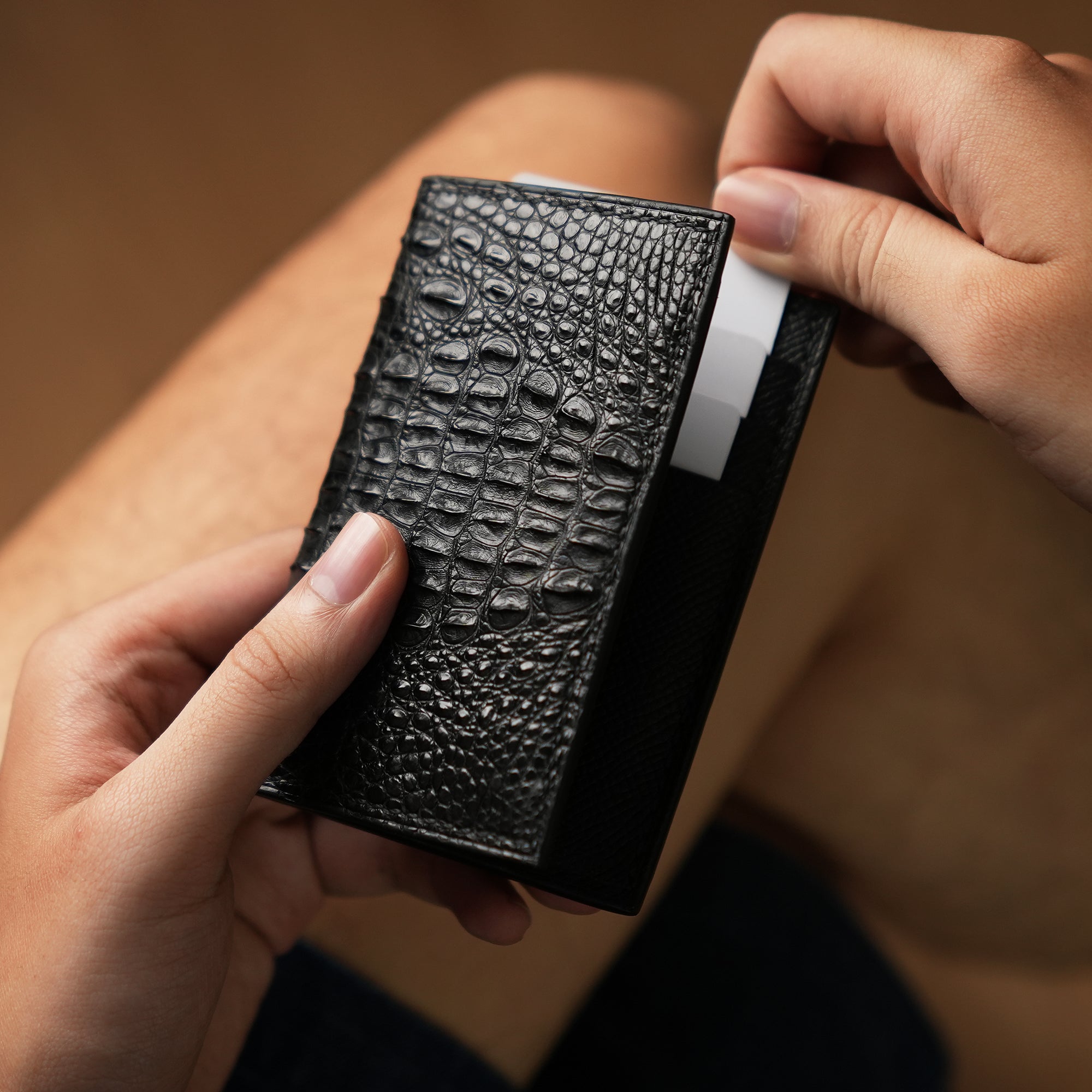
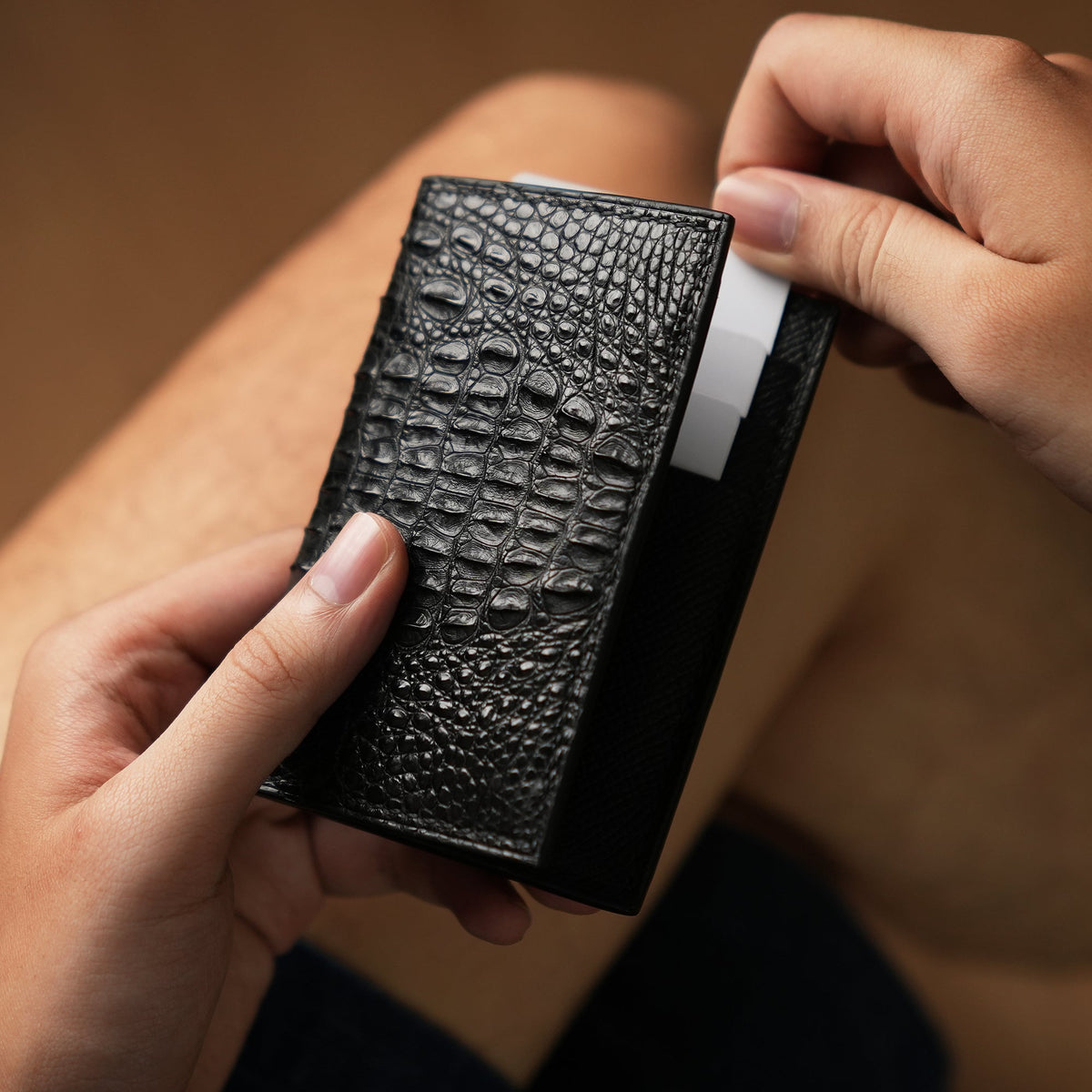
It also helps to separate three terms that marketing copy tends to blur. A slot is a single stitched leather pocket intended for one card. A compartment is a broader pocket designed to take a small stack. Total card capacity is what the finished wallet carries while still closing cleanly. A four-slot wallet is not automatically an eight-card wallet, because doubling up depends on pocket depth, leather temper and how much room the fold has left.
For broader context on the format itself, see what a bifold wallet is.
One more constraint governs everything: cards and cash draw from the same thickness budget. Every bill you add is thickness the cards no longer have.
What a six-card everyday load looks like
Six cards covers the standard American essentials without negotiation. A realistic inventory looks like this:
- Driver's license
- Primary credit card
- Debit card
- One rewards or airline card
- Health insurance card
- HSA card or a single membership card
That is a wallet you can pull from a front pocket, fan open, and find what you need by position rather than by searching. Six cards also leaves the fold enough margin to accept three or four folded bills without the spine rounding out.
If you carry cash most days, or wear slimmer-cut trousers, six is usually the better number. It keeps the loaded stack low enough that the wallet sits flat against your leg instead of printing through the fabric.
When an eight-card bifold makes more sense
Eight becomes the right target when your daily carry genuinely includes recurring extras: a work badge or building access card, a secondary insurance or dental card, a transit card, a gym or club membership, or a second debit card tied to a business account.
An eight-card bifold stays practical as long as the design was drawn for that load from the start. Comfort then depends on three variables rather than on the count alone:
- Card thickness
- Cash volume
- Wallet orientation
Metal credit and rewards cards are the quiet problem. A single metal card can equal the thickness of two or three plastic ones, and it will not flex with the fold, so the stack resists closing. Two or three metal cards in an eight-card wallet behave more like ten or eleven plastic cards in the pocket.
Why slot count does not equal real-world capacity
Is slot count the same as card capacity? No. Pocket depth, stacking behavior, leather layers and overall construction determine what actually fits.
Wallet lining
Here is the mechanical reality. Every card in a leather wallet sits between layers of hide. In a lined wallet you have the exterior panel, the lining, and the slot leather itself, so a four-slot interior may stack six or more layers of material at the fold even before a card goes in.
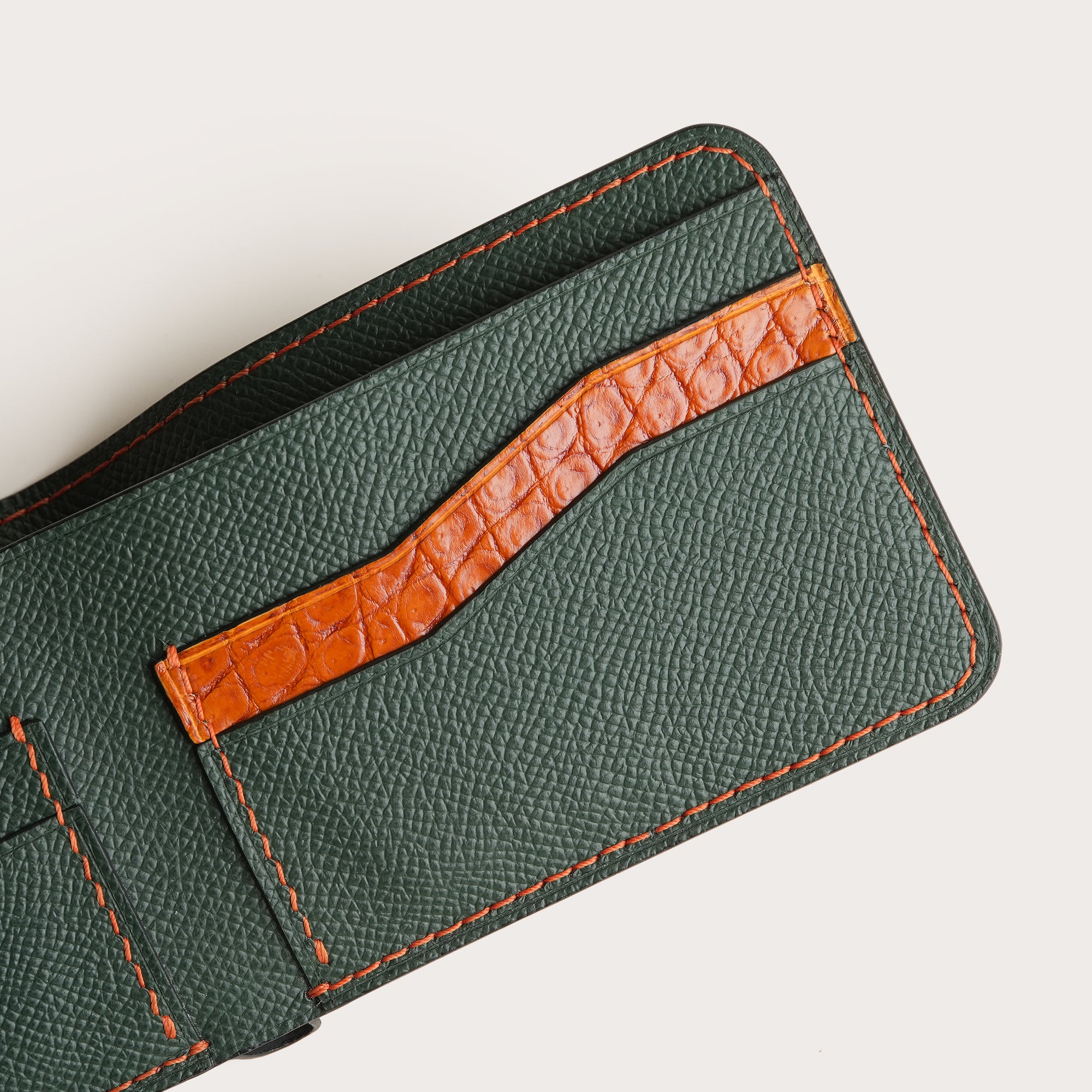
Thicker full-grain panels and heavier linings produce a more structured wallet that holds its shape beautifully, but each layer is thickness the spine has to absorb.
Fold spine
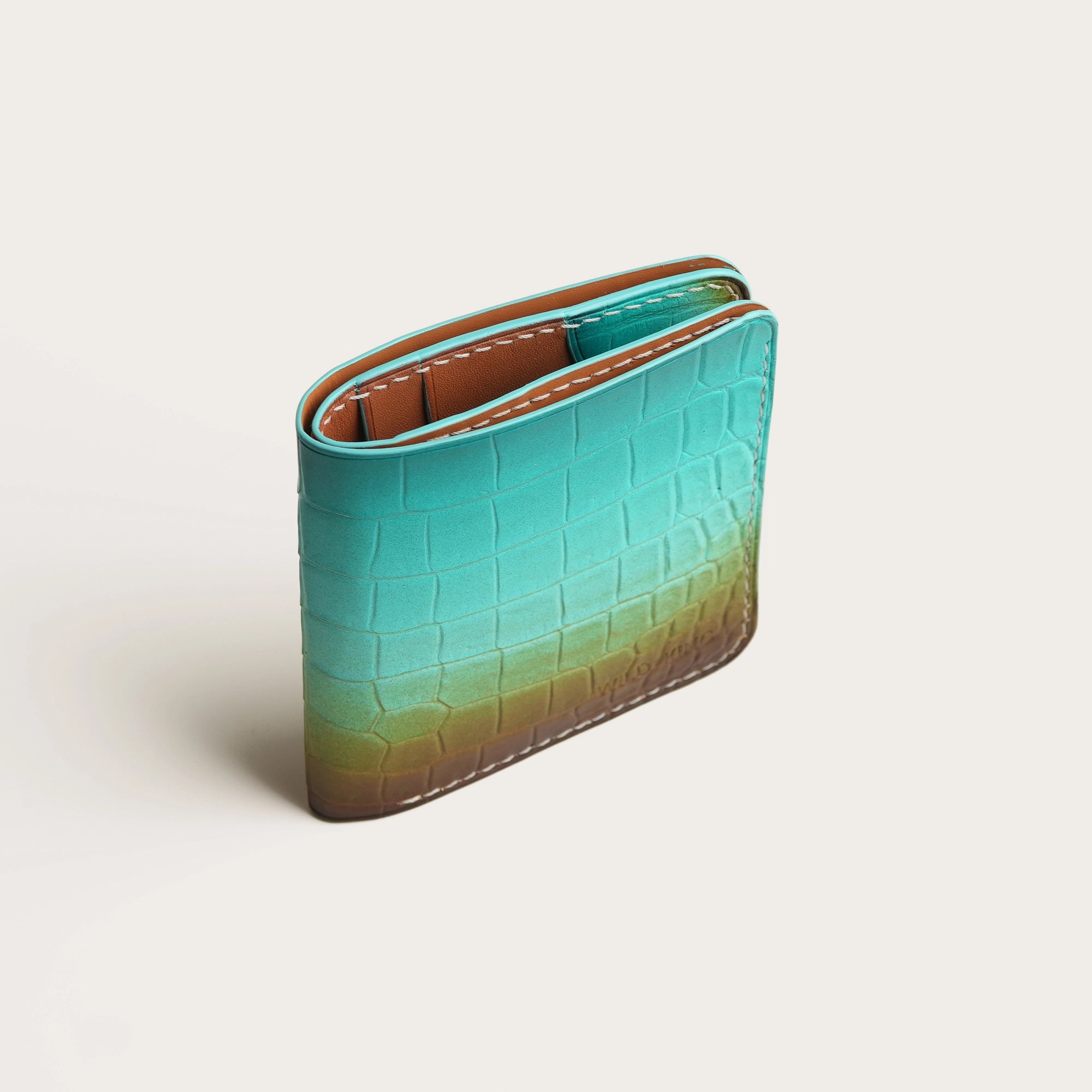
The fold spine is where capacity is won or lost. When the wallet closes, the crease must wrap around the interior leather plus everything loaded into it. Add a bill compartment and you add two more layers of leather plus the bills themselves. Overload the fold and the wallet stops closing flat, the spine bows outward, and the open edge gaps.
Pocket shape
Slot geometry matters just as much. Individual slots distribute cards in a staggered layering pattern, so thickness builds gradually from the top of the wallet down. T-pocket holding stacked cards concentrate thickness in fewer places, which can actually sit flatter in some layouts because there are fewer leather dividers between cards.

Stitch
Stitch tension at the slot mouth controls the rest of the experience. A slot stitched at the right tension grips a single card, releases it cleanly, and stays dimensionally stable. Force two or three cards into an opening drawn for one and that mouth stretches permanently. Retrieval becomes uneven, some cards slide loose while others bind, and the stretched pocket never returns to its original width.

Six-card vs eight-card bifold: which should you choose?
| Decision factor | Six-card bifold | Eight-card bifold |
| Best for | Essential IDs and payments | IDs, payments and recurring extras |
| Pocket position | Usually better suited to front-pocket carry | Often easier in a roomier front or back pocket |
| Cash use | More room within the fold budget | More sensitive to a thick stack of bills |
| Card access | Simpler inventory and faster retrieval | Better organization if the extra cards are genuinely used |
| Metal cards | Leaves extra thickness margin | Count thickness as well as card quantity |
The sorting method is simple. Empty your current wallet, set aside anything you have not touched in a month, and count what remains. Add one spare position for a new card or a folded receipt, then buy for that number. Buying capacity for cards you rarely use produces a wallet that is half empty, loose in the slots and bulkier than it needs to be.
FAQ
Should every slot hold more than one card?
Treat one card per dedicated slot as the baseline, and stack only in compartments built as compartments.
Cash changes the arithmetic directly. A card-only load of eight plastic cards in a slim bifold closes flat and disappears in a front pocket. The same eight cards plus ten folded US bills can add roughly as much thickness as two to three additional cards, because folded currency doubles on itself inside the fold. If you carry cash daily, plan on sitting one or two cards below the wallet's ceiling.
Do metal cards reduce practical capacity?
Yes. They do not reduce slot count, but their thickness and rigidity make the same card count feel bulkier and resist the natural break-in molding that softens a leather wallet around its load.
Will eight cards be comfortable in a front pocket?
They can be, in a slim vertical design built for that load. Orientation, leather layers, cash volume and metal cards matter more than the raw number. A vertical card wallet sits upright along the pocket seam and follows the leg, while a horizontal billfold lies across the pocket opening and tends to push outward. That geometry is why a well-made eight-card vertical bifold often rides better up front than a six-card horizontal billfold.
How Wild & King designs capacity around a slim profile
Wild & King's bifold card wallets span three deliberate capacity tiers, and each one reflects a different interior layout rather than a different amount of leather crammed into the same shell.
- Five cards, four slots. The Pueblo leather bifold card wallets use four slots to carry up to five cards along with folded bills. Pueblo has a dry, textured surface and a firm temper, so the four-slot vertical layout keeps the fold tight and the silhouette clean.
- Six cards, four slots. The vegetable-tanned patina-finish vertical bifolds also use four slots, holding up to six cards plus cash. This is the layout that matches the standard American essentials load most closely.
- Eight cards, two compartments. The minimalist patina-toned vegetable-tanned bifolds replace individual slots with two broad compartments, carrying up to eight cards and cash while staying flat.
That last one is worth pausing on. Fewer compartments do not mean less capacity. By removing the leather dividers between individual slots, a two-compartment interior eliminates several layers of hide from the fold and gives the remaining thickness budget back to the cards. It is a different approach to the same problem: keep the loaded wallet thin at the spine.
Conclusion
Count the cards you actually use, then account for thickness before you account for quantity. Six cards suits a focused essentials load and leaves room for folded bills. Eight suits carriers whose insurance, access or membership cards earn their place every week. If you carry two or more metal cards, or a thick fold of bills, step down one tier and you will get a wallet that closes flat and lasts the way leather should. Browse bifold wallets by card capacity to compare layouts side by side and find the one matched to what you actually carry.

Leave a comment
This site is protected by hCaptcha and the hCaptcha Privacy Policy and Terms of Service apply.