

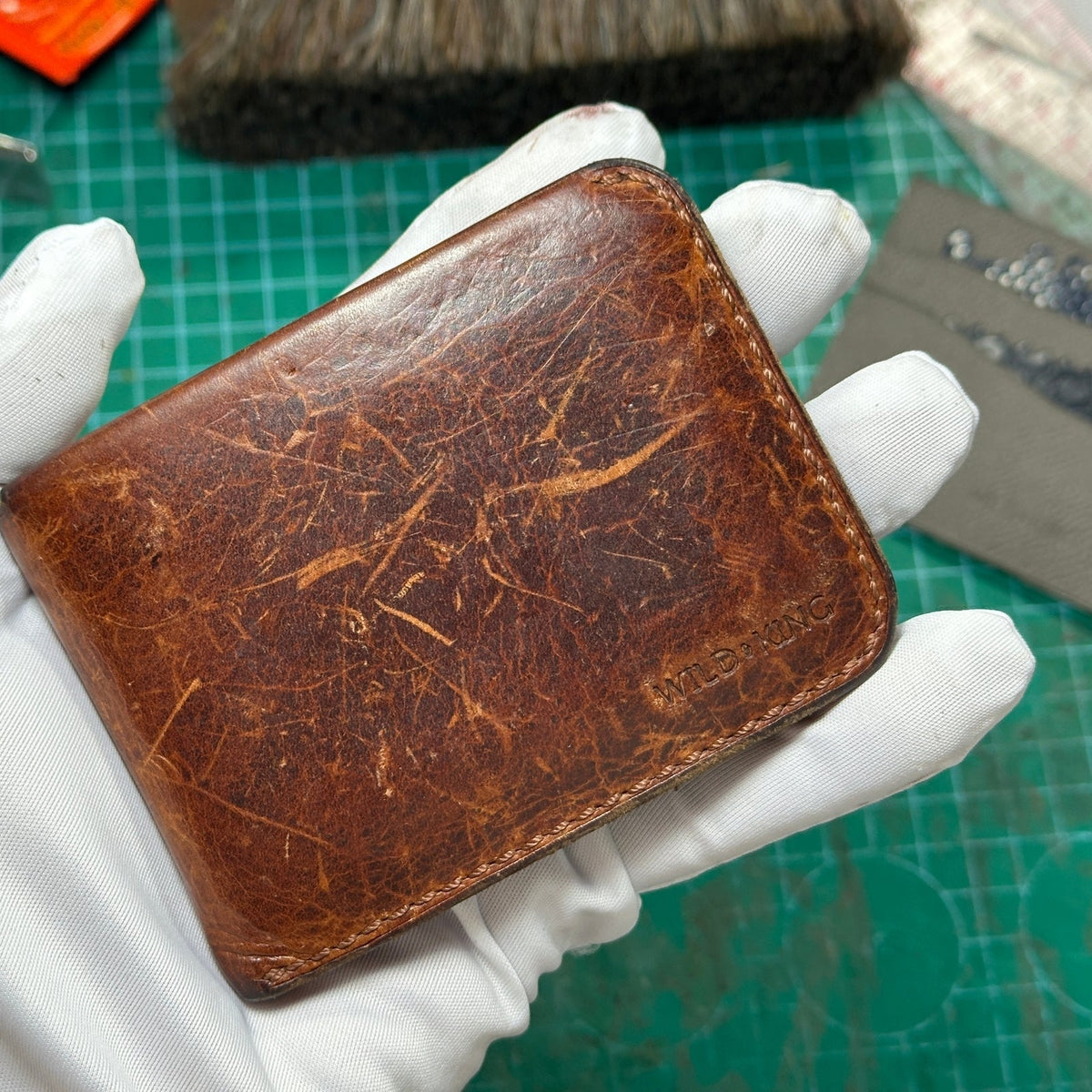
How to Remove Scratches from a Wallet: Safe First Steps
Table of Contents
- 1. How can you tell what kind of scratch is on your wallet?
- 2. What is the safest first step for a light wallet scuff?
- 2.1. Easy way
- 2.2. Test before use
- 2.3. Advice from expert
- 3. Does the right scratch treatment depend on the wallet material?
- 3.1. Patina finish vs Damaged
- 3.2. Solution
- 4. How can you prevent new scratches and know when to get help?
- 5. Conclusion
When searching for how to remove scratches from a wallet, the first step before trying any fix is figuring out what you are actually looking at. Is the mark a light surface scuff, or is it a cut, a lifted finish, or deeper damage?

Once you know, use only the care methods approved for your wallet's material and finish. Start with the gentlest option and work up from there. And set your expectations honestly: some marks fade, some stay visible, and some simply become part of the leather's patina. Promising full removal would be dishonest, since results depend on the leather, the finish, and how deep the mark goes.
How can you tell what kind of scratch is on your wallet?
A light surface scuff usually sits on the very top of the finish. It often looks like a faint pale line or a dull patch, and the leather underneath feels intact. These are the marks most likely to improve with gentle care.

A deeper problem looks different. A real cut exposes the layer below the surface. A peeling or lifting finish shows the coating separating from what it covers. Structural damage, like a split along a fold, means the material itself is giving way. These are not scuffs, and treating them like scuffs rarely helps.

Inspect the wallet in good, direct light. Tilt it so the light rakes across the surface, which makes shallow marks and raised edges easier to see. If the surface is lifting, splitting, or clearly deteriorating, stop. Pressing on with rubbing or product can make a bad spot worse. Keep in mind that even a true surface scuff may not vanish completely. Fading it is a realistic goal; erasing it may not be.
What is the safest first step for a light wallet scuff?
Easy way
Start with the least aggressive option. Take a clean, soft, dry cloth and wipe the area gently. Sometimes what looks like a scratch is really transferred dirt or dust sitting on the surface, and a light wipe is enough to show you the real condition underneath.
Handle the wallet gently and avoid hard rubbing, which can burnish or dull the finish.

Test before use
Before you reach for any product, check the wallet maker's care instructions. Different finishes call for different treatments, and the maker knows what their leather can tolerate.
If a care product is recommended and you decide to use it, test it first on a hidden spot, such as an inside corner or a lower edge. A patch test tells you how the surface reacts before you touch the visible area. If the test spot darkens oddly, gets sticky, or looks worse, do not continue. There is no single oil, wax, cleaner, or compound that is right for every wallet, so resist the urge to grab whatever is in the cabinet.
Not sure how to care for your bifold leather wallet? Find the quickest method right here.
Advice from expert
Some situations call for restraint rather than treatment.
Delicate, specialty, or unknown finishes are easy to damage, and a wrong product can leave a permanent mark. Hold off on home treatment if you are not sure what the surface is. You should also stop at the first sign of real damage. Cuts, peeling, and anything that gets worse while you are testing are all signals to put the product down.

When the material is compromised or you simply are not confident, a qualified leather-care professional is the safer choice. They can assess the finish in person and choose a method that matches it, which is worth far more than guesswork on a wallet you care about.
Does the right scratch treatment depend on the wallet material?
Yes, and this is the part people tend to skip. Surface texture and finish shape how visible a mark is in the first place, and they also decide how the wallet should be cared for.
- A smooth, uniform surface has nothing to break up the light, so a fine scratch can stand out clearly.
- A textured or embossed grain tends to blend small marks into the pattern, so the same scuff may barely register.

Patina finish vs Damaged
This is also where it helps to separate natural wear from actual damage. On a smooth full-grain or vegetable-tanned surface, scuffs and tone changes often read as patina rather than injury. On a crisp, pressed grain, a mark may look more out of place even when the leather is perfectly sound. For a closer look at how different surfaces show and hide marks, see this guide on which leather types resist visible scratches.

Solution
Removal is a choice, not a requirement. On many leathers, minor marks blend into a deepening patina over time, and plenty of owners prefer that lived-in look to a perfectly uniform one. A few faint lines on full-grain or vegetable-tanned leather can read as character rather than flaw. If a light mark bothers you, a gentle approach is fine. If it does not, leaving it alone is a legitimate decision, and often the lowest-risk one. There is no rule that says every scratch must be erased.
How can you prevent new scratches and know when to get help?
A little prevention keeps your wallet looking better longer.
- Keep it away from keys, coins, and other hard objects that share a pocket or bag, since those are a common source of fresh scratches.
- Remove surface dust gently with a soft, dry cloth, and follow the maker's care guidance rather than inventing your own routine.
- Avoid overstuffing, which puts pressure on the leather and edges and creates wear that has nothing to do with scratches.

It is also worth knowing the limits of scratch care. Cracks and structural splits are a different problem with a different fix, and they usually need more than surface treatment. If that is what you are dealing with, read up on how to assess and repair cracked leather instead of treating it as a scuff.
Conclusion
Here is a simple threshold. If the material is cut, peeling, or you are unsure what it is, do not escalate the treatment. Stop and get specialist advice. Pushing harder on an uncertain surface is how a small issue turns into a permanent one.
The short version: look closely in good light, use only care that fits your wallet's material, test before you treat, and accept that some wear may remain. If you are weighing a future wallet and want one that shrugs off daily marks more forgivingly, the same scratch-resistance and material notes can help you compare textured and smooth options before you decide.

Leave a comment
This site is protected by hCaptcha and the hCaptcha Privacy Policy and Terms of Service apply.