

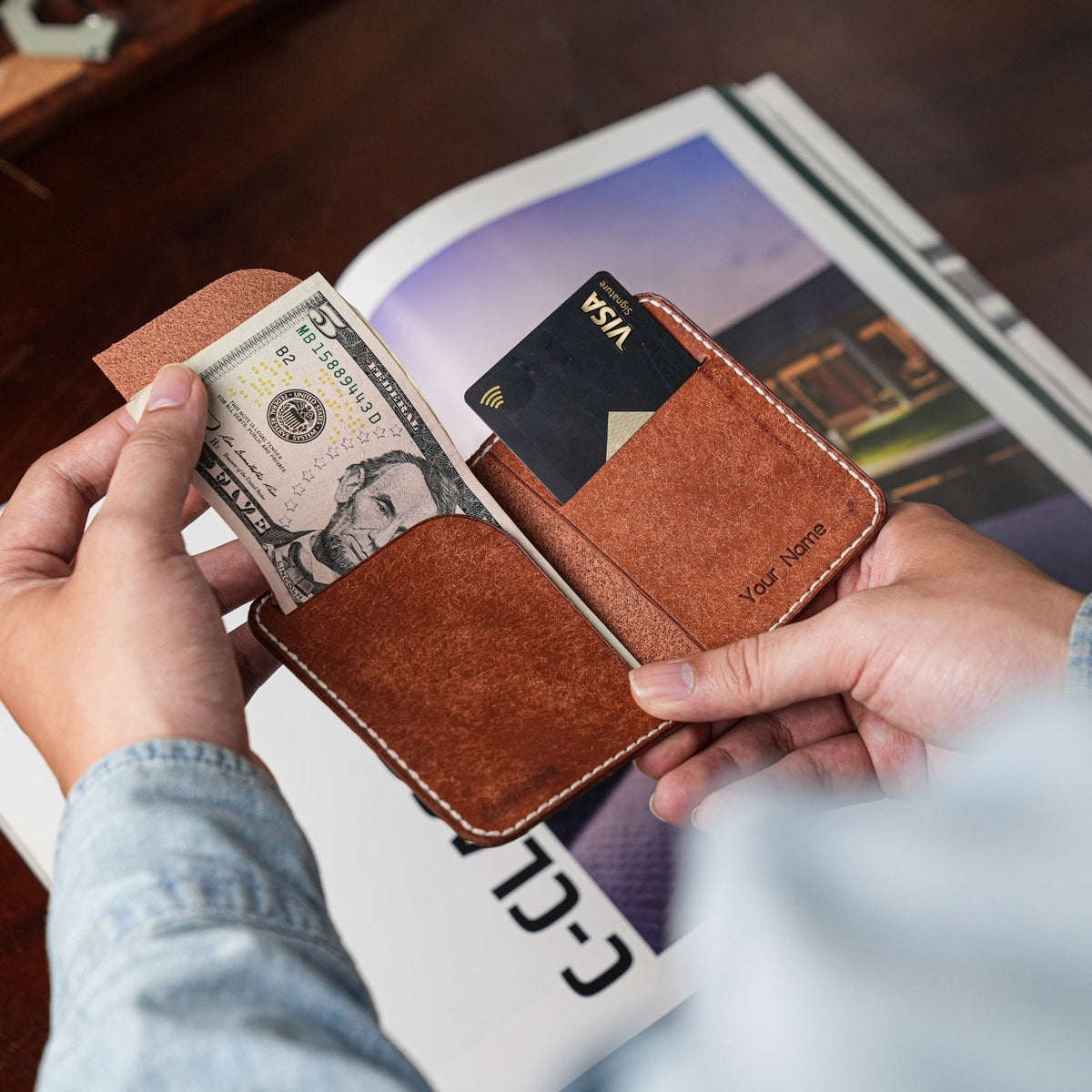
What Makes a Bifold Wallet Expensive? Materials & Craft
Table of Contents
- 1. What makes a bifold wallet cost more?
- 2. How leather choice affects price and performance
- 2.1. Leather grading
- 2.2. Tanning method
- 3. Which construction details are worth paying for?
- 3.1. Saddle stitching
- 3.2. Edge finishing
- 4. How to judge whether a higher-priced wallet is worth it
- 5. What Wild & King's bifolds show about material and craft
- 6. Conclusion
A bifold wallet costs more when it uses better leather, takes real hands-on labor to build, and gets finished with care. Design complexity and brand reputation also push the price up. Some of that premium reflects tangible quality you can see and feel. Some of it is simply what a name is worth to buyers. The goal of this guide is to help you tell the difference, so you can judge whether a higher price actually buys you a better wallet.

What makes a bifold wallet cost more?
Price usually comes down to a handful of factors stacked on top of each other.
- Material: Full leather hides cost more than bonded or coated scraps, and exotic skins like crocodile or alligator sit at the top of the range.
- Labor: A wallet stitched and finished by hand takes far more time than one assembled by machine, and that time shows up in the price.
- Finishing technique: burnished edges, clean skiving, and careful lining all add steps.
- Design complexity: like unusual layouts or decorative inlay work.
- Brand overhead: which covers marketing, packaging, and margin.

Here is the important part. The first four factors are visible in the wallet itself. Brand overhead is not. A well-known name can command a premium without offering anything extra in the leather or the stitching. Learning to separate craft value from markup is what protects your money.
How leather choice affects price and performance
Leather grading
Leather is often where the biggest price gaps come from, but the labels can be confusing. You will see terms like full-grain, top-grain, and genuine leather.
- Full-grain uses the outer layer of the hide with the natural grain intact.
- Top-grain has that surface sanded and refined.
- "Genuine leather" sounds premium but usually describes lower layers or processed material.
These labels hint at how a leather is made, but a label alone does not guarantee how long a wallet will last or how well it was built. Construction and care matter just as much.

Tanning method
Tanning also affects both price and character. Vegetable-tanned leathers tend to develop a rich patina, deepening in tone as you carry them. Firmer, structured leathers like Epsom hold their shape and resist scuffs.

Neither is simply better. They age differently and suit different tastes. If you want a closer look at how two popular options compare, this breakdown of Pueblo versus Epsom leather walks through the trade-offs in tone, texture, and feel. Exotic skins add cost because the raw material is rarer and harder to work with, not because they automatically outlast everything else.
Which construction details are worth paying for?
Construction is where a wallet quietly proves its worth. These details are easy to inspect once you know what to look for.
Saddle stitching
Start with the stitching. Even, consistent stitches with no loose threads suggest careful work. Saddle stitching, where each stitch is locked by hand, is a traditional method that Wild & King uses across its line. The brand describes it as more durable than machine sewing, which is its stated reason for the added labor. You can read more about that approach in their overview of handmade bifold construction. Treat it as a craft rationale rather than a guarantee, since real durability depends on the whole wallet and how you use it.
Edge finishing
- Next, check the edges. Finished, burnished edges look cleaner and tend to hold up better than raw cut edges.
- Then look at skiving, which is the thinning of leather at folds and seams. Good skiving keeps a wallet slim and comfortable in the pocket.
- Finally, check the fit of the card slots and any hardware. Slots should be snug but not so tight they stretch, and any snaps or rivets should sit flush.
These small things separate a wallet that ages gracefully from one that frays early.

How to judge whether a higher-priced wallet is worth it
Once you know the price drivers, judging value gets easier. Use a simple inspection checklist before you buy:
- Stitching is even and tight, with no loose threads
- Edges are finished cleanly rather than left raw
- Skiving keeps the wallet thin at the folds
- Card slots fit snugly without over-stretching
- Any hardware sits flush and feels solid
If a wallet checks these boxes, the price more likely reflects real workmanship. If it does not, a high price may just be brand markup. It helps to think in terms of cost per year, but keep the math honest.

Example: Say you buy a $90 wallet and carry it for ten years. That works out to about $9 per year. A $25 wallet replaced every year would cost more over the same stretch.
This is a hypothetical, not a guaranteed outcome. Your wallet might last far longer or wear out sooner depending on the leather, the build, and how you treat it. The takeaway is simple: a premium can buy better materials or better workmanship, but price alone proves neither. Inspect first, then decide.
What Wild & King's bifolds show about material and craft
Wild & King is a useful example because its wallets lean on the factors covered above.

Every wallet is handmade rather than machine-assembled, and the brand builds them with saddle stitching as described in its handmade wallet overview. That hands-on approach is a labor cost you can actually see in the finished piece.
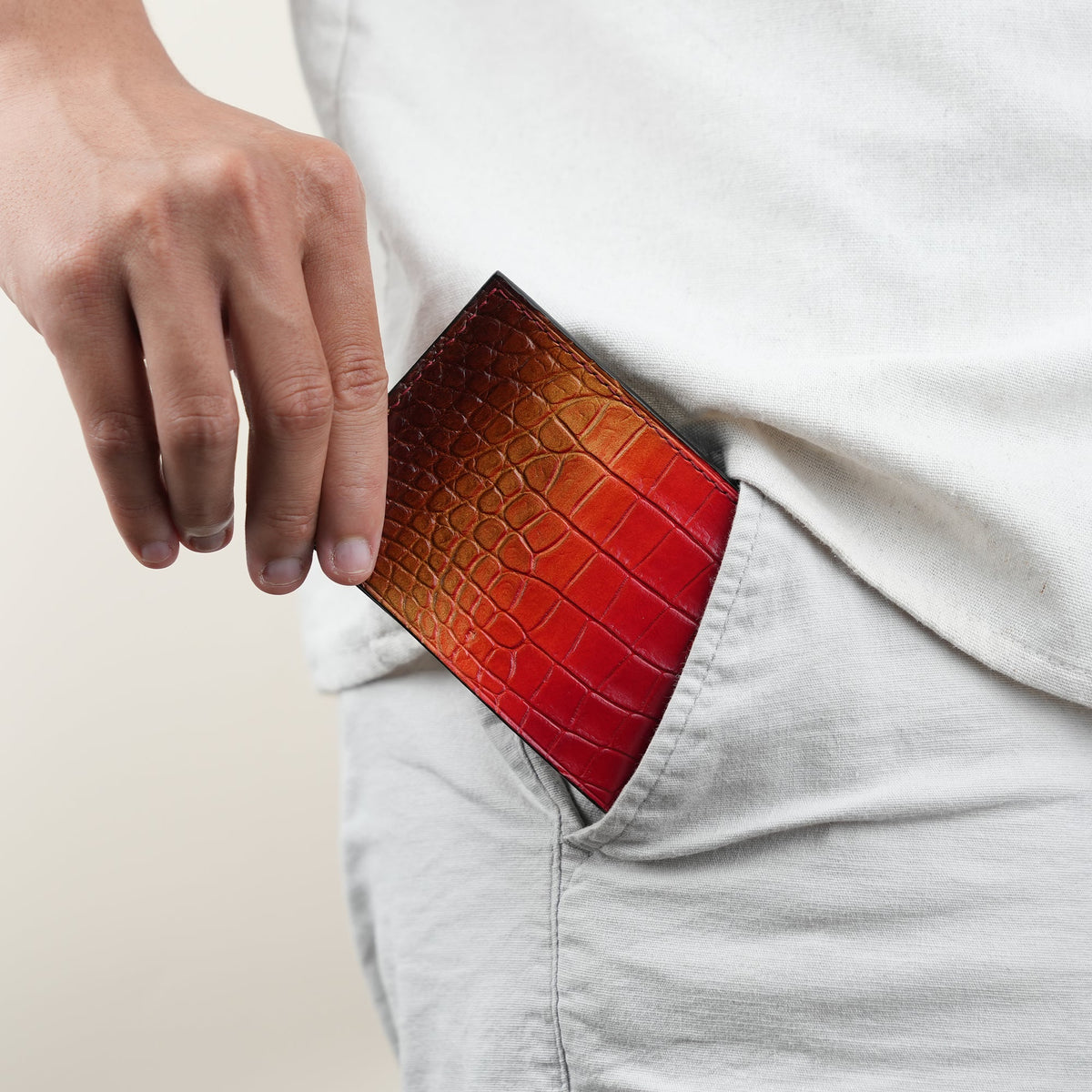
On the material side, its square crocodile bifolds pair premium crocodile leather with Epsom leather, hold up to six cards, and include a full-size compartment for cash. The green crocodile bifold is one concrete example of that pairing, combining an exotic exterior with a structured lining.
Conclusion
This is not a claim that any one wallet is worth a specific number. It simply shows how material choice and hand construction translate into a higher-tier product. If you want to browse across price points, the wider range of crocodile leather bifolds shows how exotic skins sit at the top of the lineup, while other collections offer more everyday options.
Choosing a bifold really comes down to matching materials, construction, and budget to how you carry every day. Inspect the stitching, the edges, and the leather, then weigh what that quality is worth to you. If you are still comparing styles and price levels, start with the full range of bifold wallets and let the details, not just the price tag, guide your decision.

Leave a comment
This site is protected by hCaptcha and the hCaptcha Privacy Policy and Terms of Service apply.