

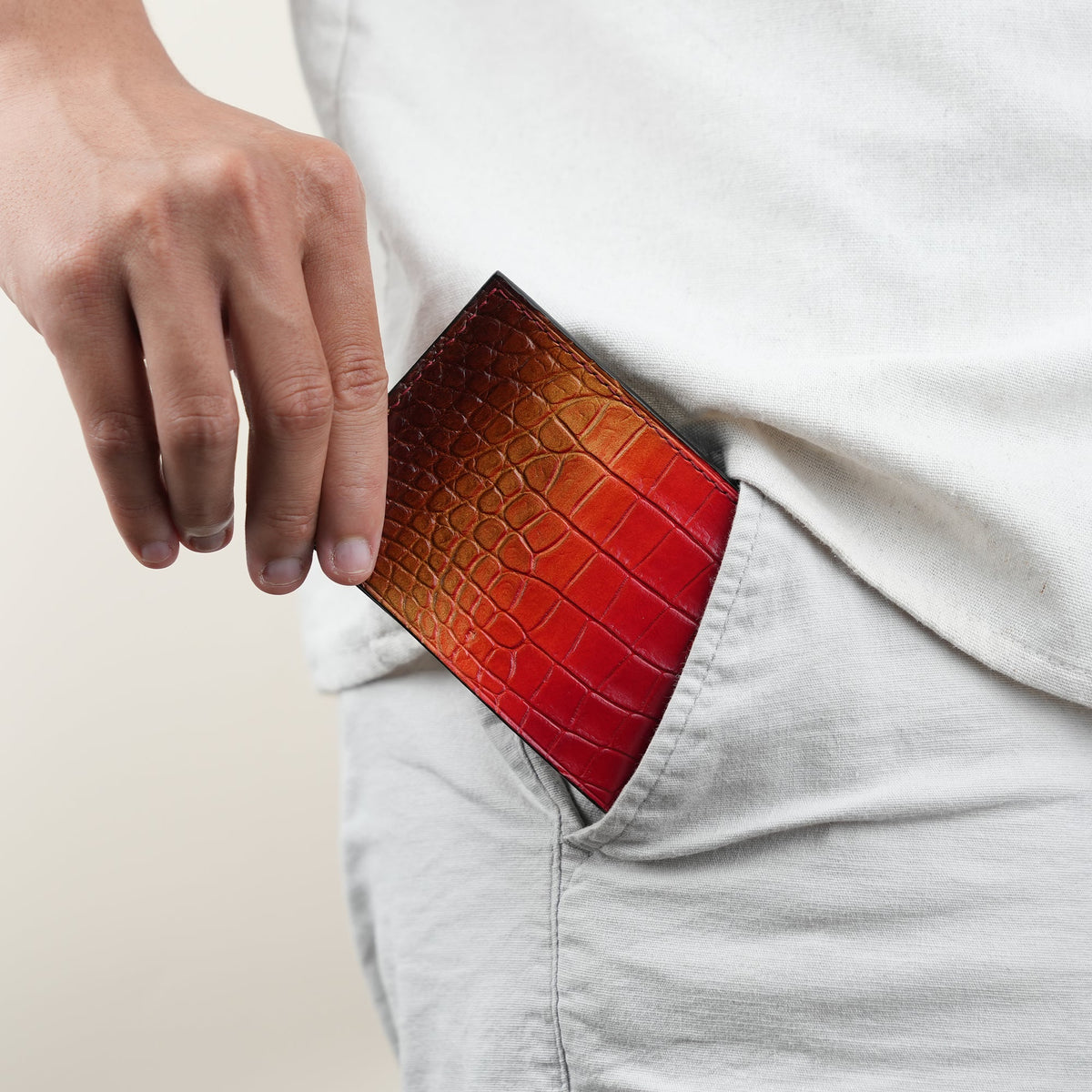
How Long Should a Leather Bifold Wallet Last?
Table of Contents
- 1. Answer You Need
- 2. Leather Grade Lifespan: What to Expect
- 2.1. Full-grain and vegetable-tanned leather
- 2.2. Top-grain, genuine and bonded leather
- 3. Why Bifold Wallets Wear at Different Rates
- 4. Signs to Repair, Keep Using or Replace
- 5. How to Extend a Leather Bifold Wallet's Life
- 6. Choosing a Bifold for Long-Term Value
- 7. FAQs
- 7.1. Can a leather bifold wallet really last 20 years?
- 7.2. Does back-pocket carry shorten a wallet's life?
- 7.3. Is cracking worse than scratches?
- 8. Conclusion
A leather bifold wallet can last anywhere from about 2 to 25 or more years, and the material grade is the biggest single factor. Bonded and faux leather sit at the short end, genuine leather is in the middle, and full-grain or vegetable-tanned leather can run the longest. But the label alone does not tell the whole story. A bifold's central fold, overstuffing, moisture and back-pocket sitting can all push a wallet toward the lower end of its range.

Below, Wild & King provides a practical guide to help you judge leather quality and spot the moment to repair or replace your wallet.
Answer You Need
Here is a straightforward breakdown of indicative lifespan by leather category. Treat these as guideline ranges, not warranties. A wallet made from a premium hide but assembled poorly can fail early, while a modest wallet that is loaded lightly and cared for can outlast expectations.
| Leather category | Indicative lifespan |
| Full-grain / vegetable-tanned | About 10 to 25+ years |
| Top-grain | About 5 to 15 years |
| Genuine leather | About 2 to 5 years |
| Bonded or faux leather | About 1 to 3 years |

Real-world reports vary widely, and that variation is normal. Construction quality, how many cards you carry, how often the wallet gets wet, and how much cosmetic wear you are willing to accept all matter as much as the leather itself. One person may retire a wallet the moment the corners soften, while another carries the same wallet for a decade and calls the wear "character." Keep that subjectivity in mind as you read the numbers.
Leather Grade Lifespan: What to Expect
Leather grading generally moves from bonded up through genuine, then top-grain, and finally full-grain. The catch is that these labels are used loosely across the market. "Genuine leather", in particular, is not a precise durability grade. It simply means the product contains real leather, which can range from decent to disappointing. So use the hierarchy as a starting point, then look closer at how a wallet is actually built.
Full-grain and vegetable-tanned leather
Full-grain and vegetable-tanned leather tend to sit at the top of the durability range, roughly 10 to 25 or more years. These materials keep the natural grain intact, which helps them resist splitting and hold up to daily folding. Expect visible aging along the way. Scratches, darkening and a deepening patina usually appear long before anything structural gives out. That change is expected and is often part of the appeal, not a sign of failure.

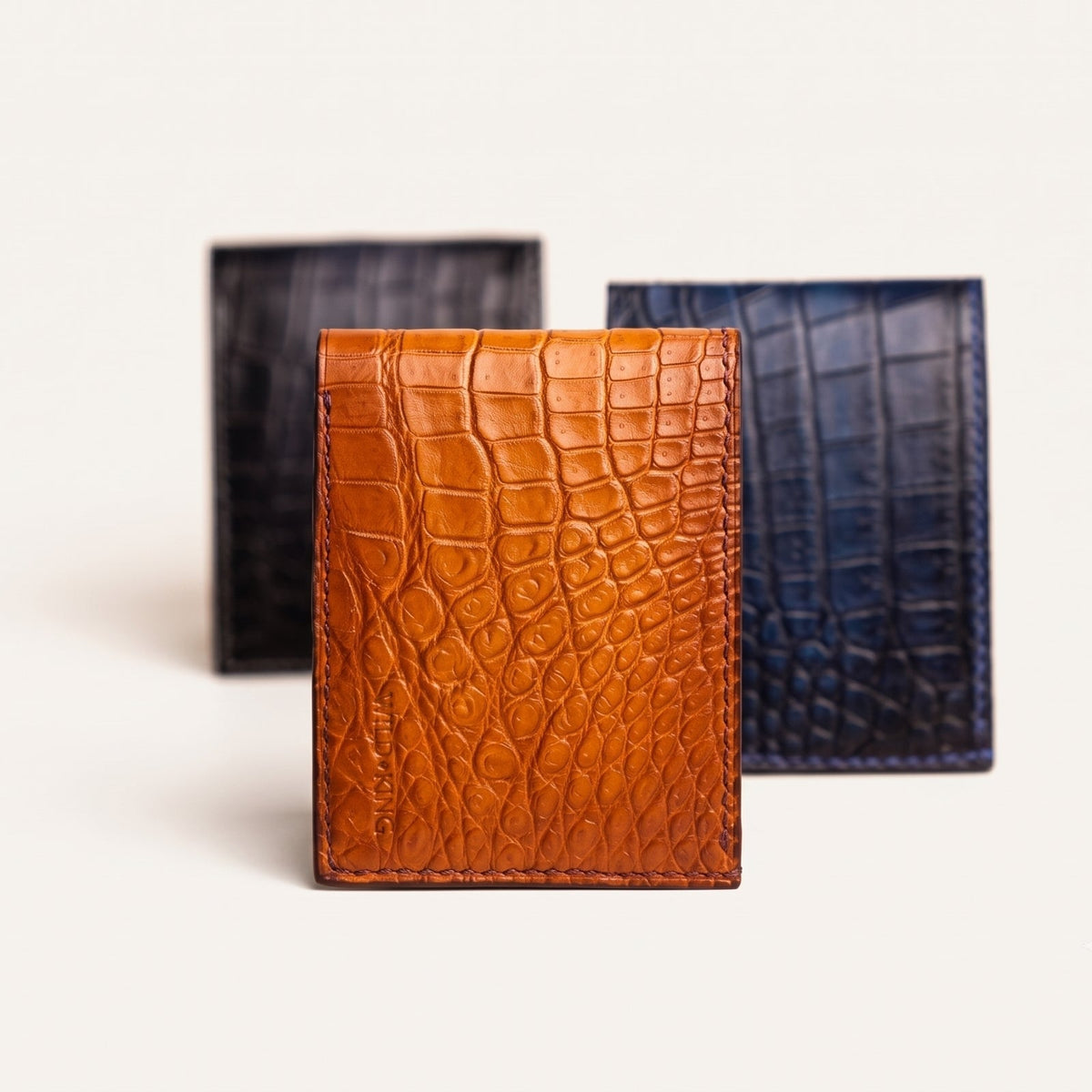
Wild & King's vegetable-tanned minimalist bifold card wallets are a good example of this material type. They are slim, hold up to eight cards and some cash, and are made to age into a richer tone over time. That capacity applies to those specific wallets, not to every bifold on the market.
Top-grain, genuine and bonded leather
Top-grain leather usually lands around 5 to 15 years. It is sanded and finished for a smoother, more uniform look, which trades a little long-term ruggedness for a cleaner surface. Genuine leather typically falls in the 2 to 5 year range, though quality within that label swings widely. Bonded or faux leather sits lowest, often 1 to 3 years.
The failure pattern also differs. Higher grades tend to wear gradually and develop patina. Bonded and faux materials are more likely to fail by cracking, peeling or delaminating, where the surface layer separates and flakes. That kind of breakdown is harder to live with and rarely worth repairing.
Why Bifold Wallets Wear at Different Rates
A bifold has one central fold that you open and close constantly. That repeated bending concentrates stress right along the spine, so it is often the first place a lower-quality wallet shows trouble. Card slots take a beating too. Every time you push a card in or pull it out, the slot stretches a little, and stitching along the edges absorbs steady friction. Over years, those small stresses add up.
How you carry the wallet changes the math. Front-pocket or bag carry keeps pressure off the fold. Back-pocket carry does the opposite, since sitting bends the wallet under body weight over and over. Loading habits matter just as much. A slim, sensibly filled wallet keeps its shape, while an overstuffed one strains the slots, spreads the fold and pulls at the seams.

One more point worth stating plainly: price alone does not guarantee a longer service life. A well-built mid-priced wallet carried carefully can easily outlast an expensive one that gets crammed full and sat on daily.
Signs to Repair, Keep Using or Replace
Not every mark means your wallet is done. Use this quick diagnostic to decide what to do next.
- Keep using: surface scratches, gradual darkening, patina and minor edge rubbing. These are cosmetic and, for many owners, part of the appeal.
- Consider repair: a few loose threads, a slightly separated edge, a mildly stretched slot, or a small seam opening while the leather itself is still sound. A cobbler or leather repair shop can often address these.
- Replace: a failed central fold, extensive cracking, peeling or delamination, card slots that no longer hold cards, or stitching failure that lets cards slip out.
Whether something is repairable depends on the material and how far the damage has gone. Sound full-grain leather with a popped seam is a strong repair candidate. Bonded leather that is flaking apart usually is not. And remember, aesthetic change on its own is not end-of-life damage.
How to Extend a Leather Bifold Wallet's Life
Good habits do more for lifespan than almost anything else. A few simple steps go a long way:
- Wipe off dust and dirt with a soft cloth.
- Avoid overfilling, which stretches slots and distorts the shape.
- Keep the wallet away from water.
- If it does get wet, blot it and let it air dry naturally. Skip hair dryers and heaters, since heat can make leather brittle.
- Apply a suitable leather conditioner every few months if the wallet calls for it.
- Store it out of direct sun and away from heat and humidity, ideally in a cloth bag or box.
- Rotate between wallets when you can, so each one gets a rest.

For the full routine, including cleaning and conditioning details, read our full bifold wallet care guide. Beyond the "every few months" conditioning guidance, there is no universal schedule, since different leathers have different needs.
Choosing a Bifold for Long-Term Value
When you shop, look past the headline material and weigh a few things together:
- The leather category, and whether the seller explains it clearly rather than hiding behind a vague label.
- Stitching, edge finishing, how the fold behaves when closed, and how the card slots are constructed.
- The intended card capacity versus your realistic daily load.
- Where you carry it, and how much moisture or heat it will face.
- Whether you want visible patina or a more consistent, unchanging look.

That last point deserves real thought, because different leathers age differently. If you want to compare a character-driven hide against a structured, low-maintenance one, compare Pueblo vs Epsom leather durability before you decide. If exotic leather is on your list, the choice between alligator vs lizard bifold wallet durability comes down to feel, finish and how each wears. And if you are drawn to the look and heft of crocodile, you can shop durable crocodile leather bifold wallets to see the range.
When you are ready to weigh styles side by side, you can shop long-lasting bifold wallets across colors and constructions.
FAQs
Can a leather bifold wallet really last 20 years?
Yes, the indicative range for full-grain or vegetable-tanned leather runs from about 10 to 25 or more years. Whether a specific wallet reaches the top of that range depends on how it is built and how well it is maintained.
Does back-pocket carry shorten a wallet's life?
It can. Sitting on a bifold bends the fold and presses on the edges and stitching over and over. Front-pocket or bag carry reduces that stress and often adds years.
Is cracking worse than scratches?
Usually, yes. Scratches and patina are typically cosmetic. Cracking, peeling or delamination point to structural or material failure and are much harder to fix.
Conclusion
A leather bifold is best judged by a realistic lifespan range, honest construction, sensible loading and steady care, not by price alone. If you want a slim, documented vegetable-tanned option that ages into a warm patina, Wild & King's bifold card wallets are a solid starting point, and you can browse the wider bifold collection when you want to compare designs, colors and structures before you buy.

Leave a comment
This site is protected by hCaptcha and the hCaptcha Privacy Policy and Terms of Service apply.