
Epsom Leather
Every leather has a personality. Some soften over time, picking up the wear of daily life. Some develop a rich patina that tells a story. Epsom leather does something different, it holds its ground, completely. Same shape. Same color. Same clean surface. Year after year.
That is not a limitation. For the right person, it is exactly the point.

What makes epsom leather different
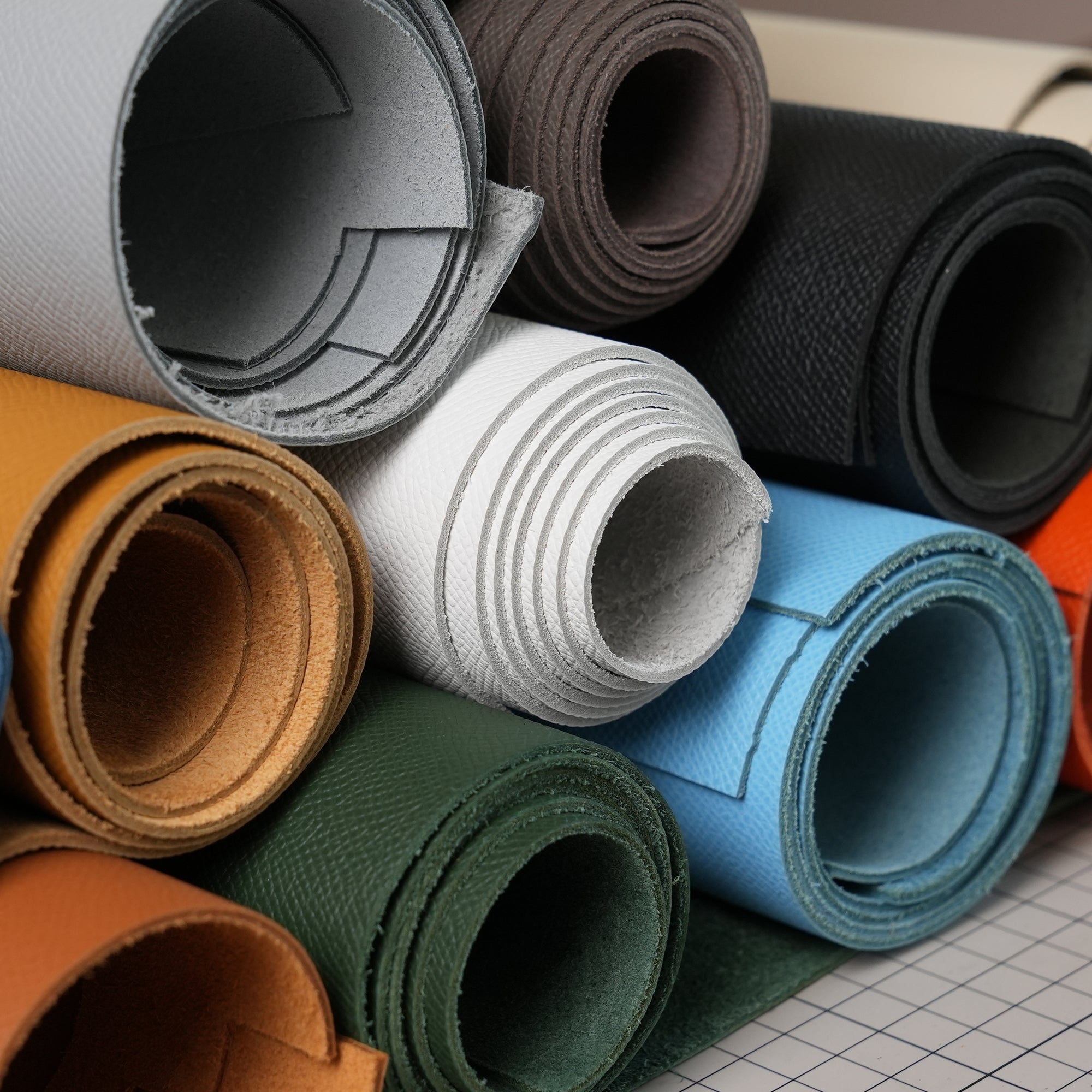
Epsom leather is a full-grain calfskin that goes through a high-pressure embossing process, pressing a tight cross-hatch pattern directly into the hide. The result is a surface that is far more structured and uniform than naturally grained leathers like Togo or Clemence.

The leather is then finished with a surface coating, a fine protective layer that locks in color, repels moisture, and creates the signature resistance Epsom is known for. This coating is not a synthetic overlay. It is applied to genuine calfskin, which is why Epsom leather durability comes from both the compressed grain structure and the finish working together.
The pressing process behind the grain
Most natural leathers show the hide exactly as it grew, imperfections, variations in grain depth, and all. Epsom takes a different path. The embossing press compacts the leather fibers, making the hide denser and more rigid without adding weight.
This compression is why Epsom calfskin holds its form so reliably. The fibers are not just shaped, they are locked into position at the structural level. A card holder made from Epsom will sit just as flat on day 1,000 as it did on day one.

Why epsom feels firm
That Is a Feature, Not a Flaw.
The most common criticism of Epsom is that it feels "plasticky." It is a fair observation. The surface coating gives the leather a smooth, slightly cool feel that does not resemble raw or pull-up leather.

But that quality is intentional. Epsom was designed for people who want a leather good that performs consistently, not one that tells a story of wear. If you carry a card holder in your back pocket every day, a leather that stays smooth and clean is not a compromise. It is the right tool for the job.
5 reasons epsom leather works harder than other leathers
Epsom leather characteristics set it apart from every other premium leather in practical, everyday use:
-
Scratch-resistant surface — the embossed grain and surface coating absorb light abrasion without showing marks. Keys, bag linings, and daily friction barely touch it.
-
Water-resistant by nature — a damp cloth is all you need. Epsom does not absorb moisture the way pull-up or vegetable-tanned leathers do.
-
Holds its shape permanently — no softening, no sagging, no stretching. The compressed structure means the form you buy is the form you keep.
-
Lightweight for its strength — despite its dense grain, Epsom is noticeably lighter than Togo or Clemence of the same size.
-
Color stays vivid for years — because the surface is coated rather than open-pored, Epsom leather color retention is exceptional. Navy stays navy. White stays white. Burgundy stays rich.

Epsom leather vs. other premium leathers
Understanding where Epsom sits among other luxury leathers makes the choice much easier. Here is a straightforward comparison across the criteria that actually matter for wallets and small leather goods:
| Feature | Epsom | Togo | Saffiano | Caviar (Chanel) |
| Texture | Embossed cross-hatch, uniform | Natural pebble grain, soft | Embossed cross-hatch, waxy | Embossed caviar grain, firm |
| Softness | Firm | Soft and supple | Medium-firm | Medium-firm |
| Scratch resistance | ★★★★★ | ★★★☆☆ | ★★★★☆ | ★★★★☆ |
| Water resistance | ★★★★★ | ★★★☆☆ | ★★★★☆ | ★★★★☆ |
| Develops patina | No | Yes | No | No |
| Weight | Light | Heavier | Light | Light |
| Best for | Wallets, card holders | Bags, pouches | Wallets, bags | Bags |
Does Epsom leather develop patina?
No. This is one of the clearest differences between Epsom and leathers like Pueblo or vegetable-tanned hide.

Because the surface is coated, Epsom does not absorb oils from your hands or develop the color-shifting warmth that natural leathers do over time. For collectors who love the aging process, that is a meaningful trade-off. For minimalists who want the product to look the same in five years, it is exactly right.
Epsom vs. Togo - which one should you choose?
Togo leather is softer, heavier, and develops a natural patina over time. It smells more like traditional leather and has an organic variation in grain depth that many people find luxurious to the touch.
Epsom is lighter, firmer, and maintenance-free. It holds structured shapes better and resists daily wear without any conditioning routine.
For a bag you want to carry softly and age gracefully, Togo is the answer. For a wallet or card holder you want to carry hard and look sharp every single day, Epsom wins.

Why Epsom is the best leather for wallets and card holders
Every material has an ideal application. Epsom's ideal application is small leather goods, and specifically, the pieces you reach for dozens of times a day.
The slim card holder that stays slim
A slim card holder lives in a pocket, a bag, or a back pocket. It gets squeezed, bent, and pulled out repeatedly. The worst thing a card holder can do is lose its structure after a few months of use.
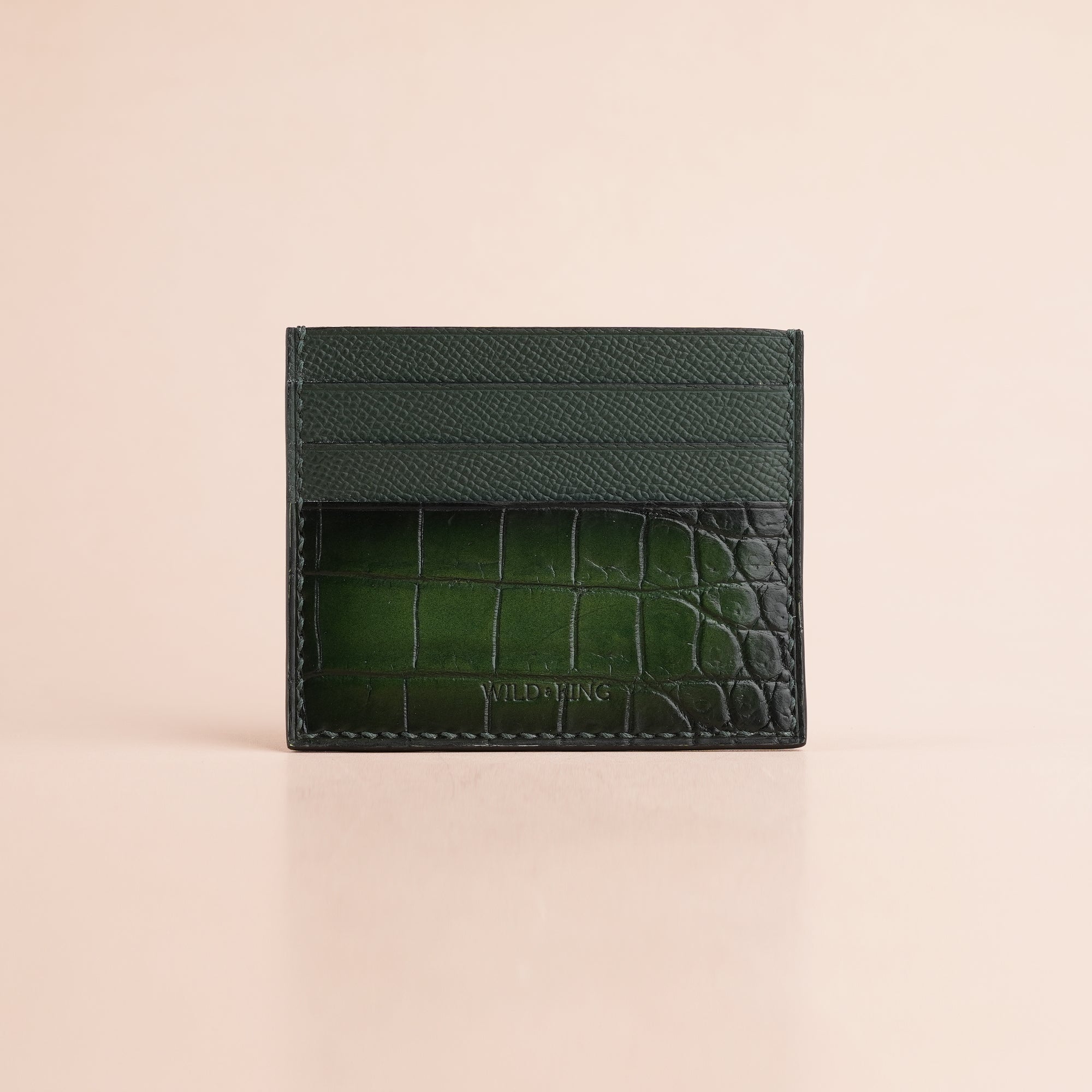
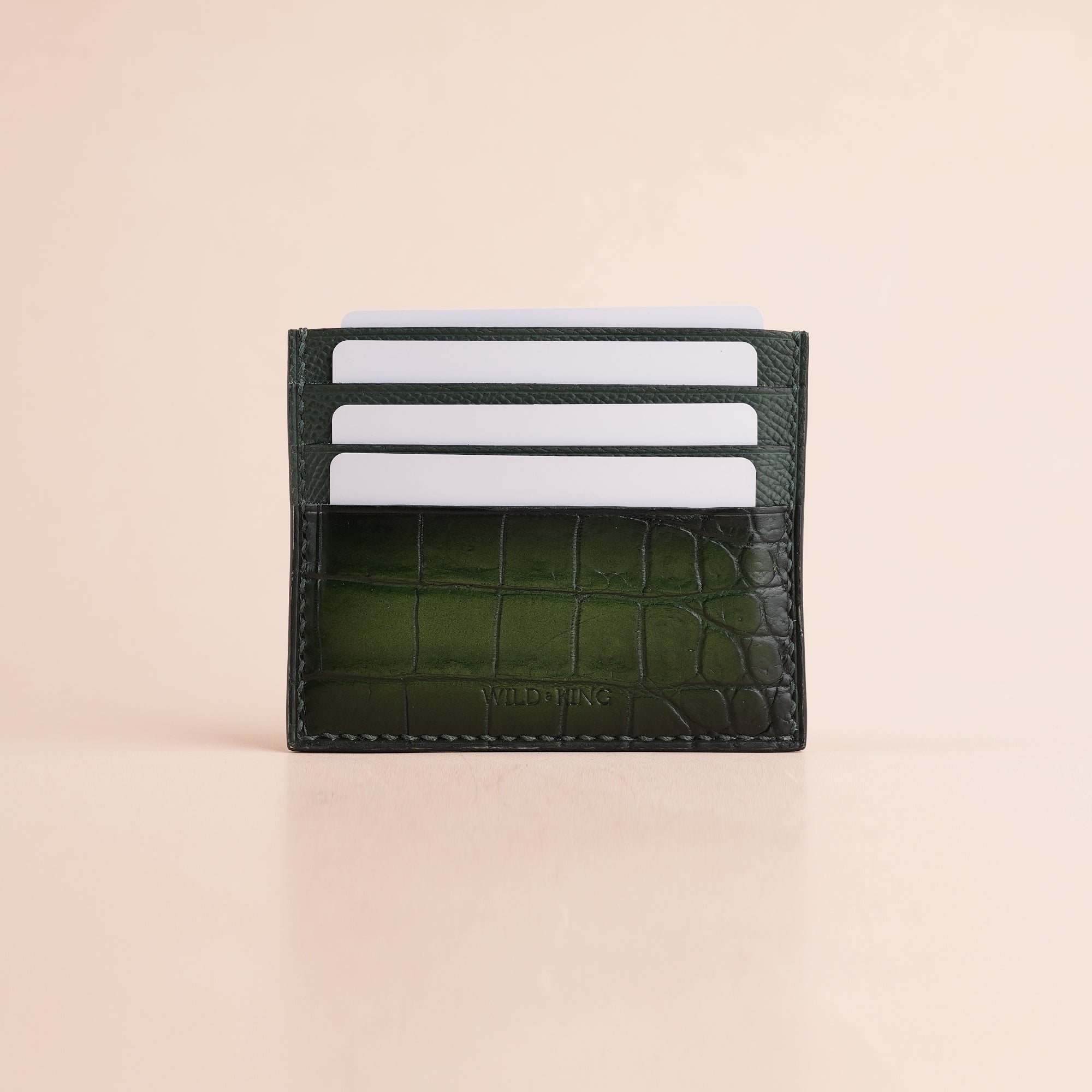
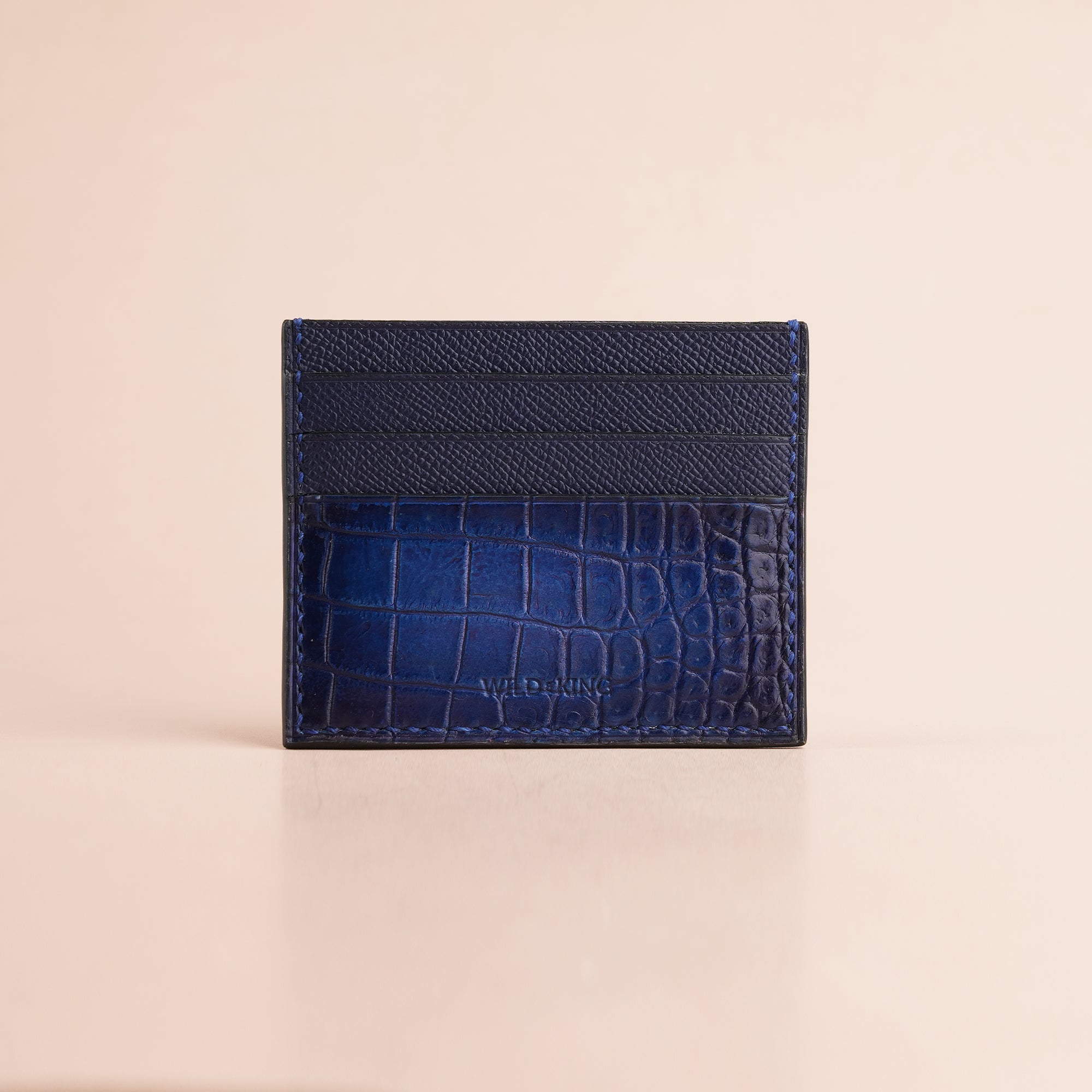
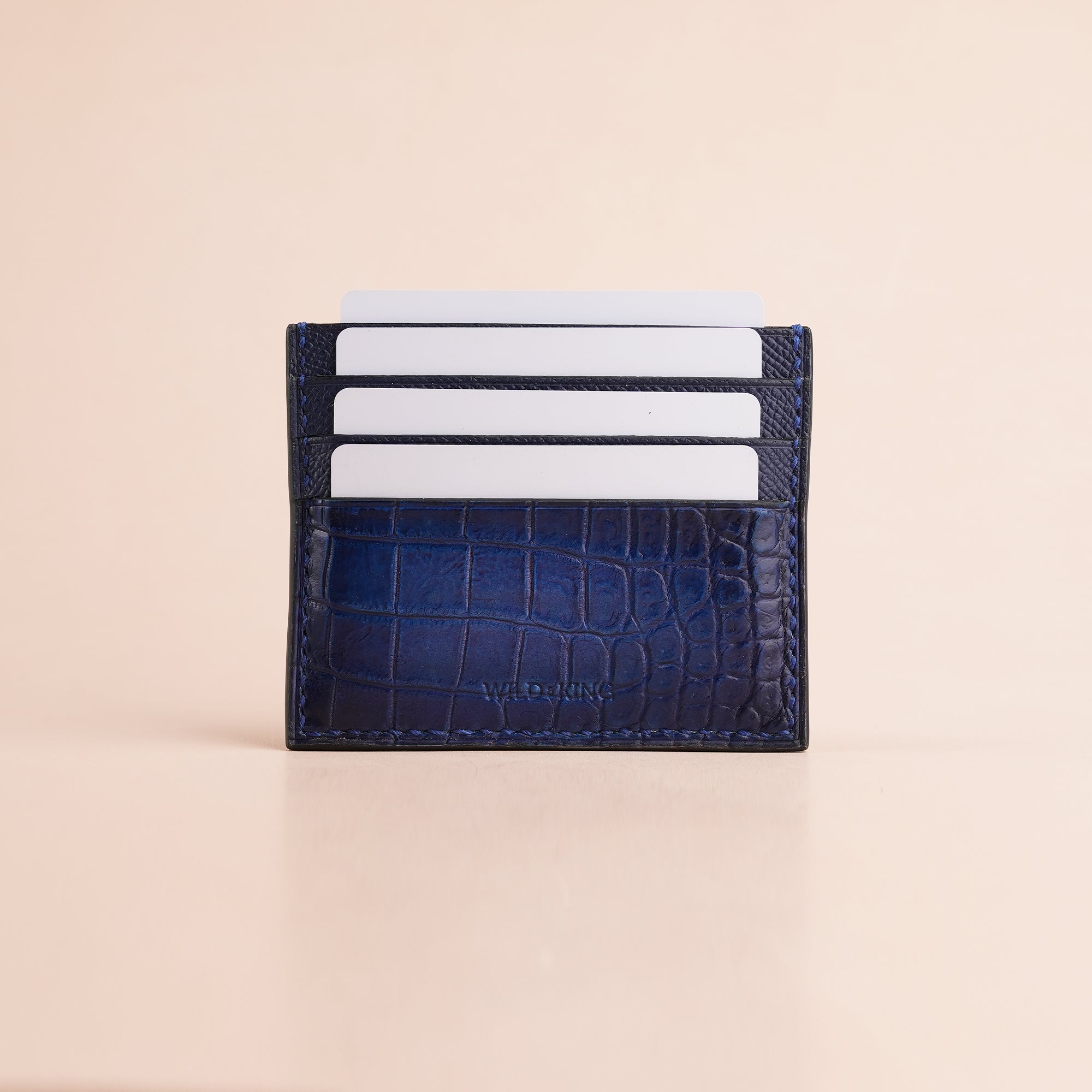
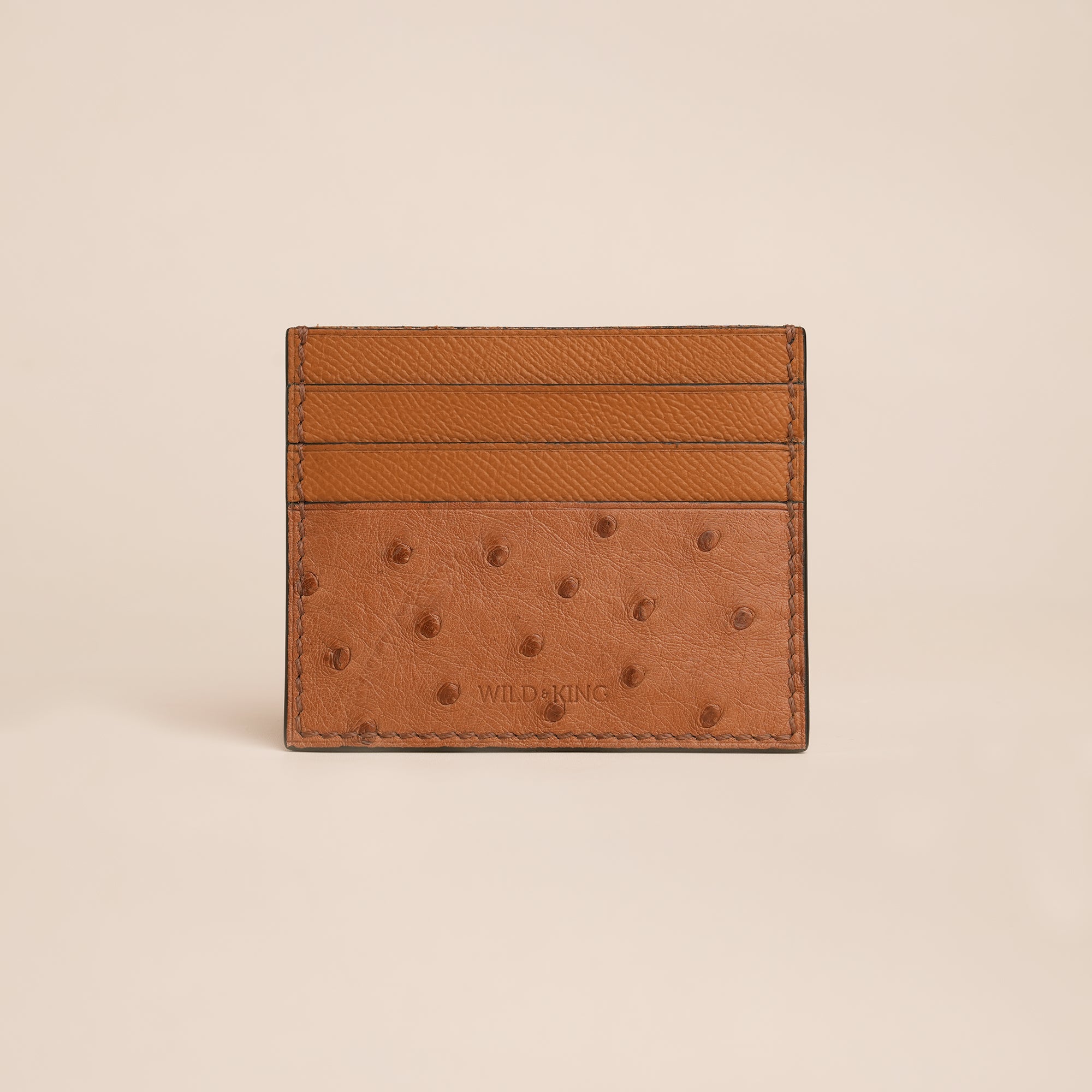
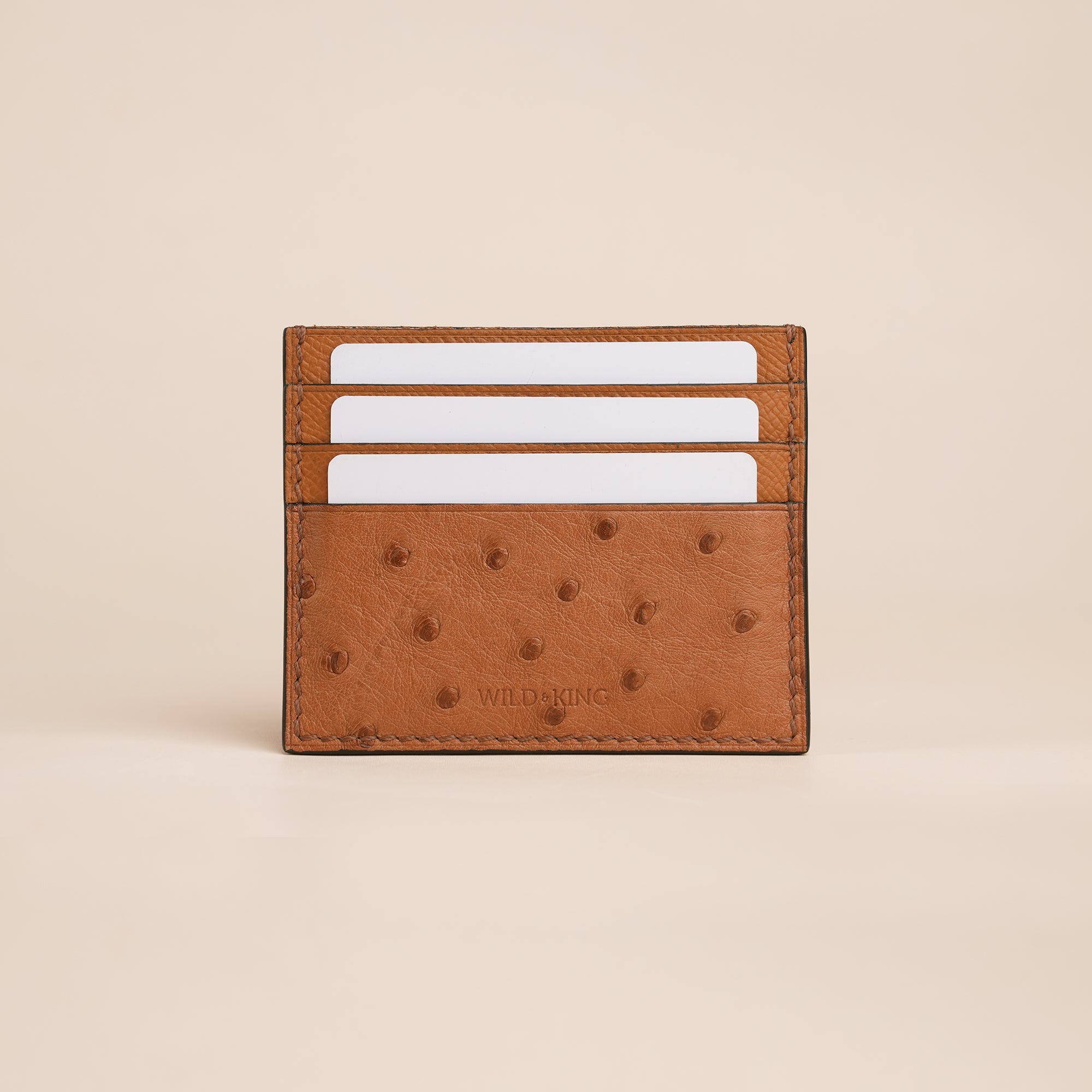
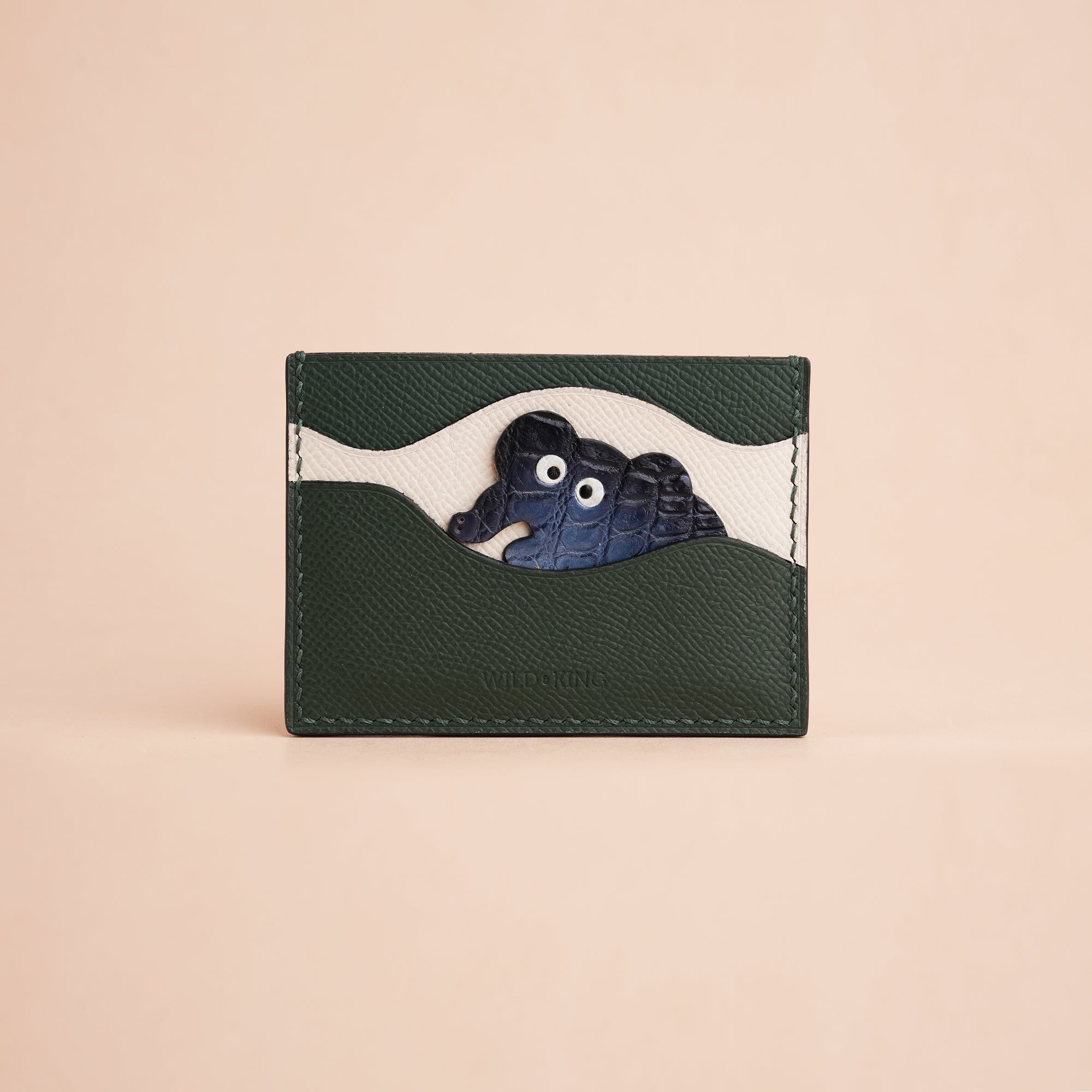
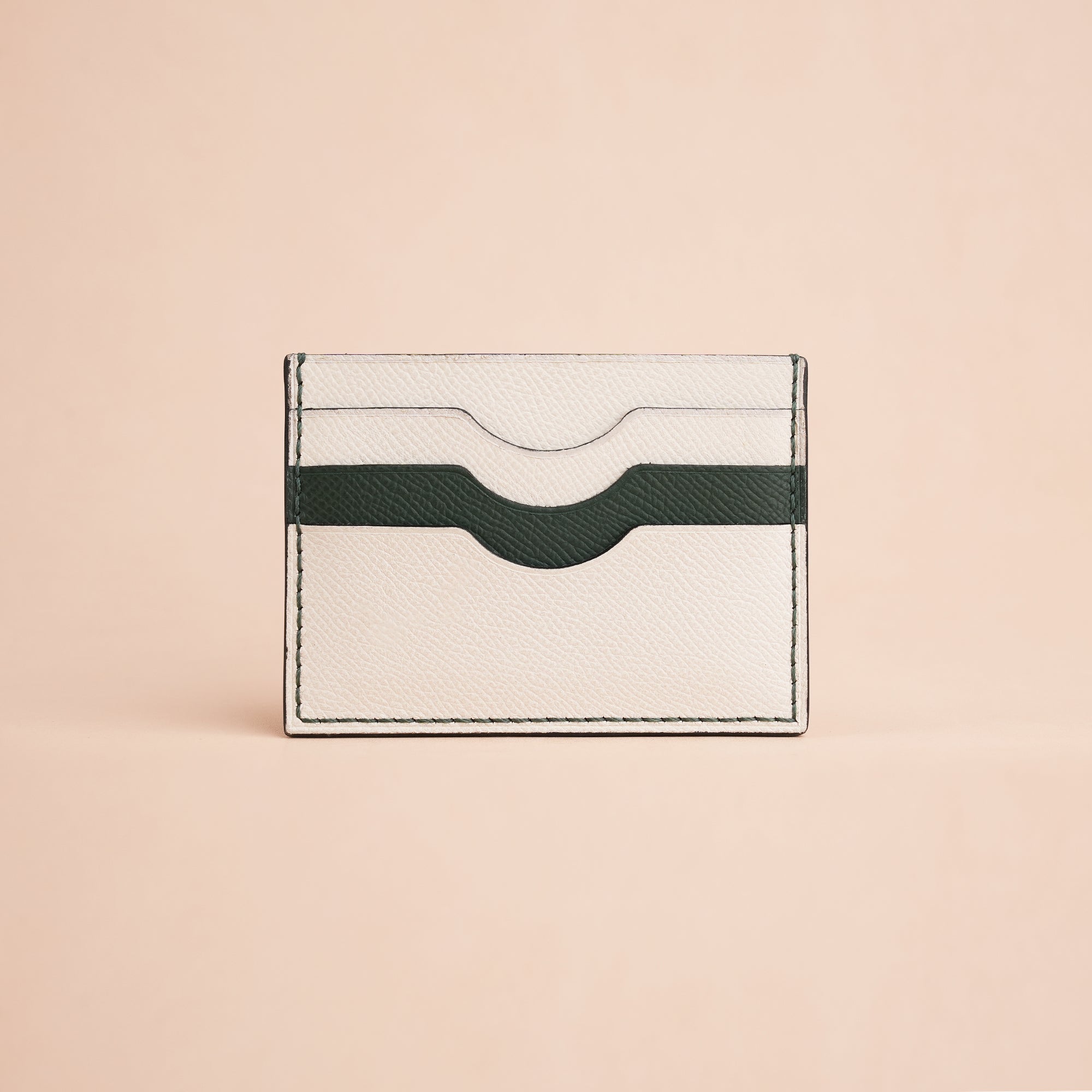
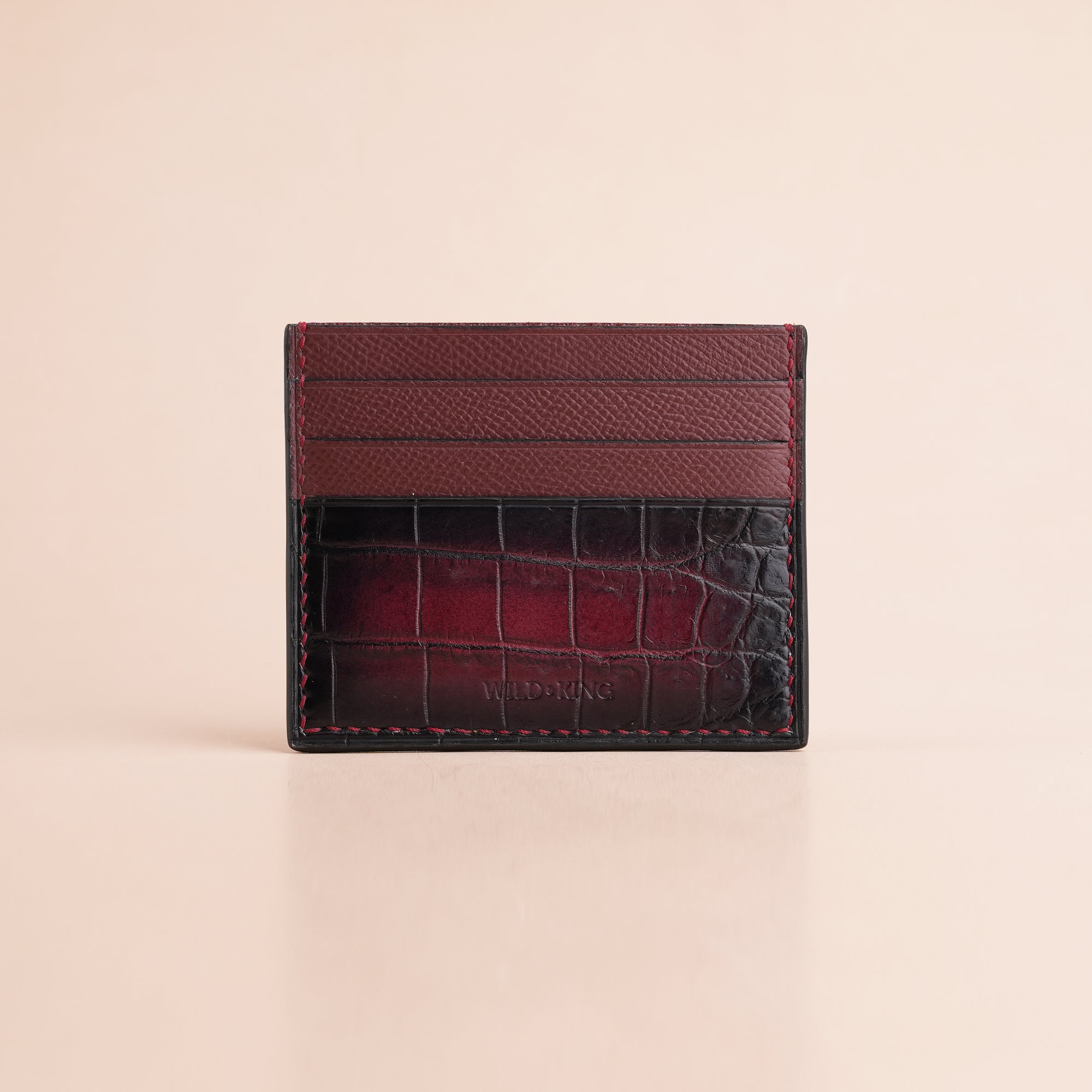
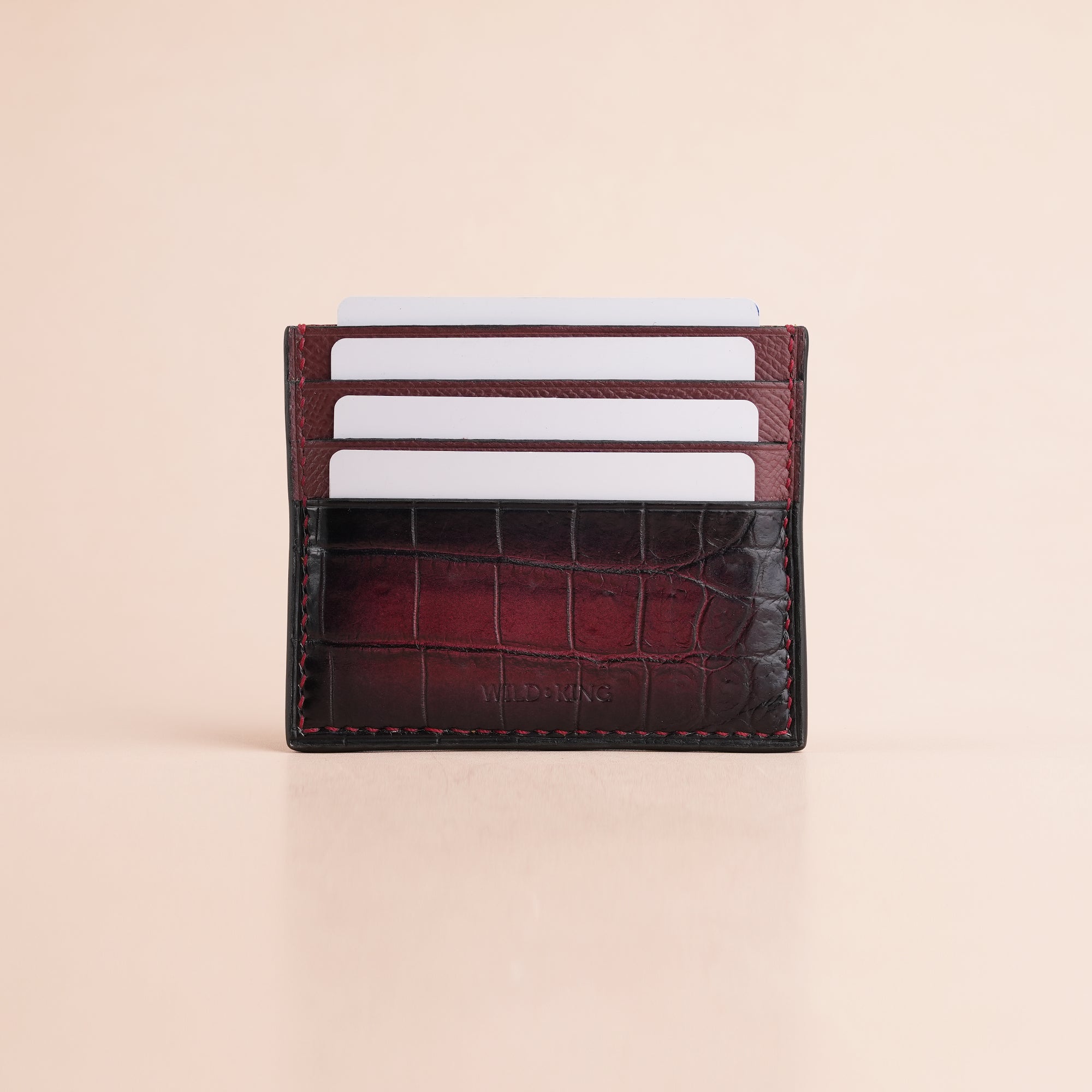
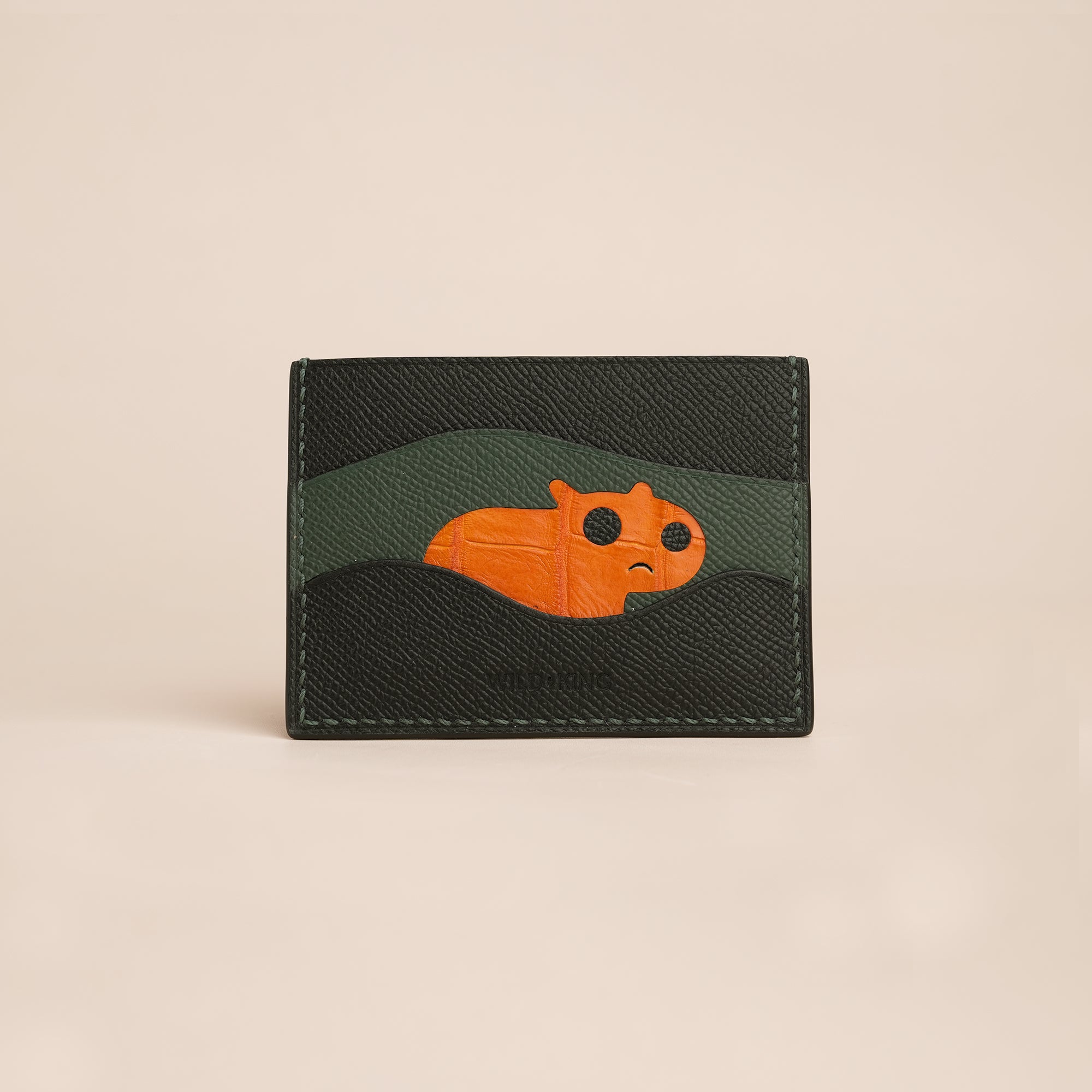
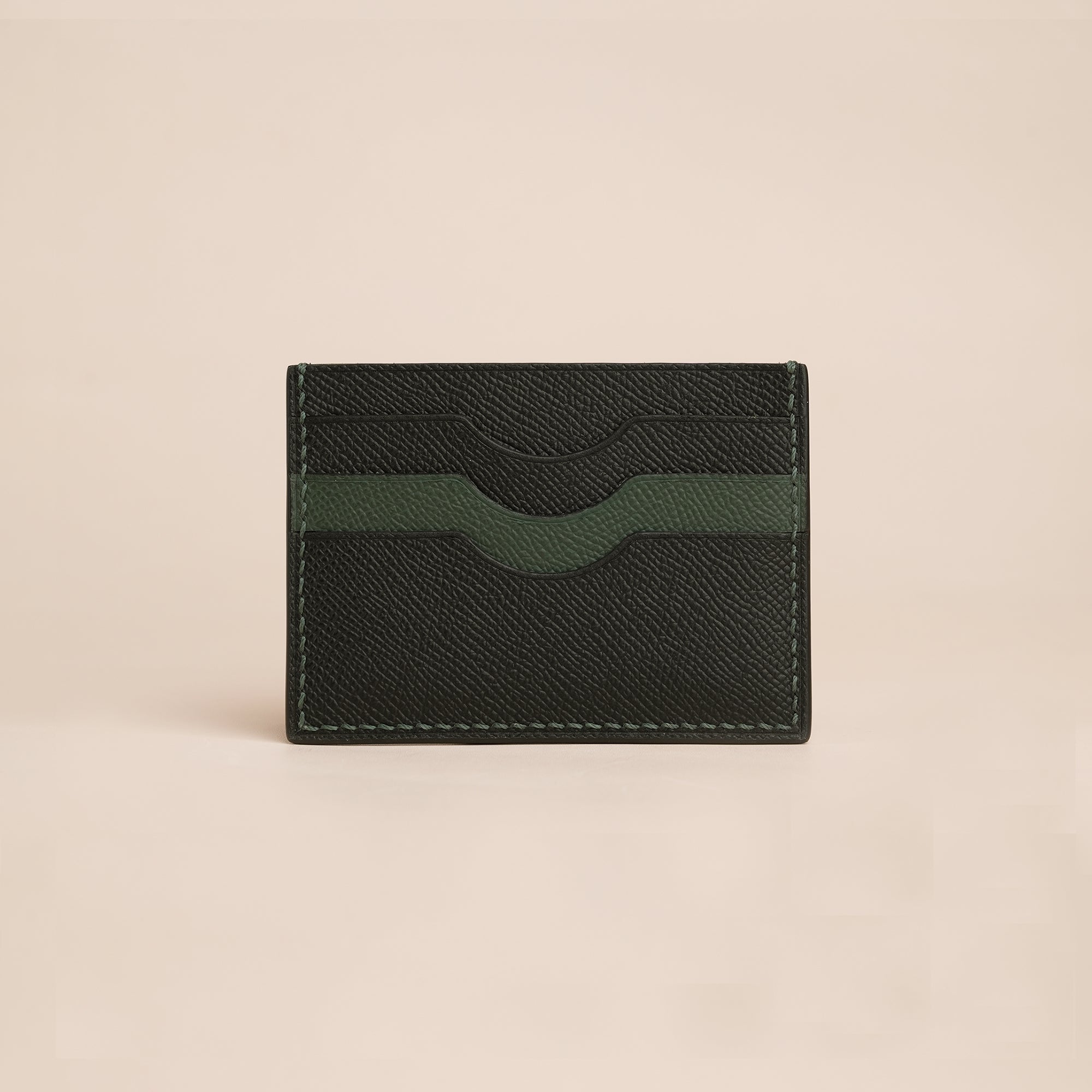
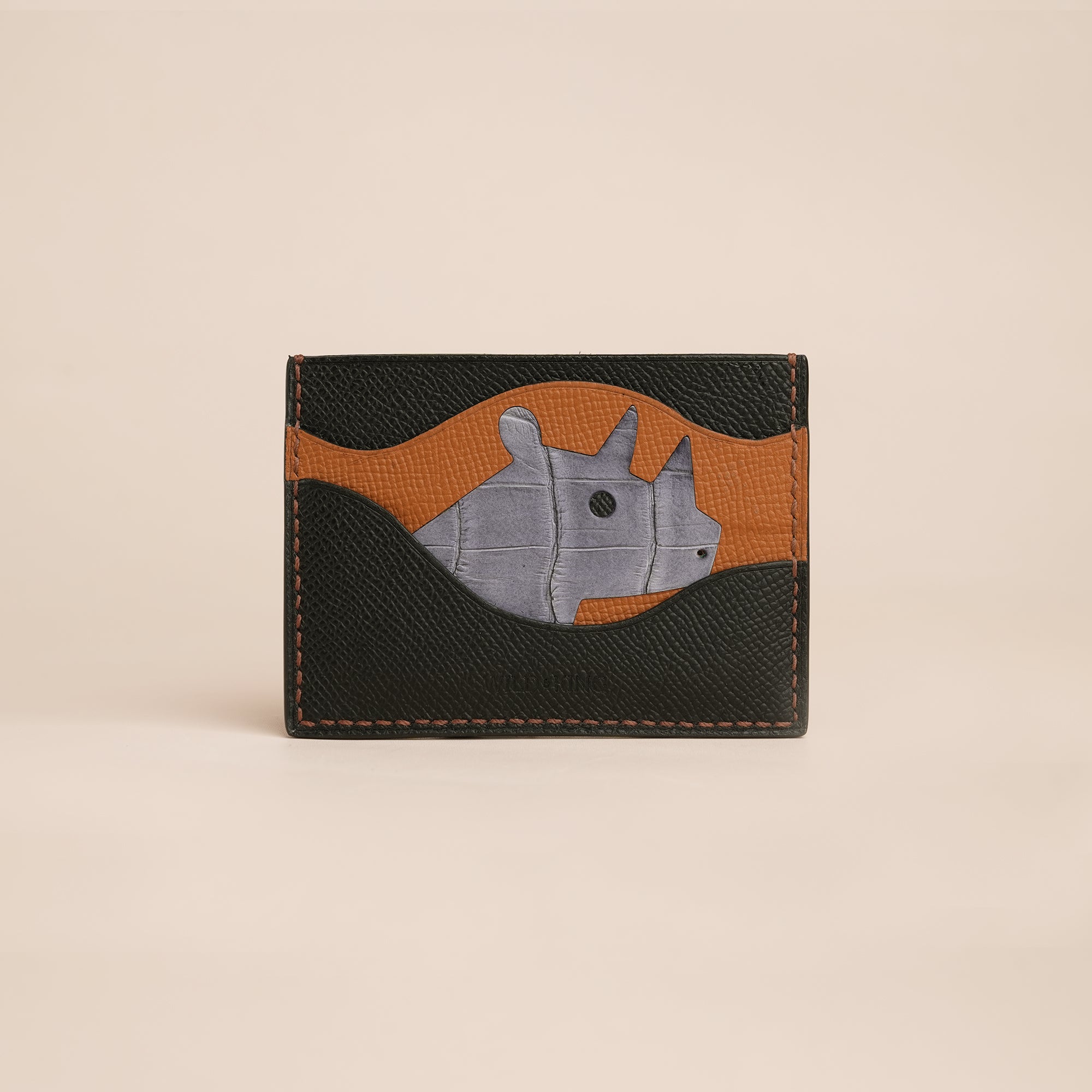
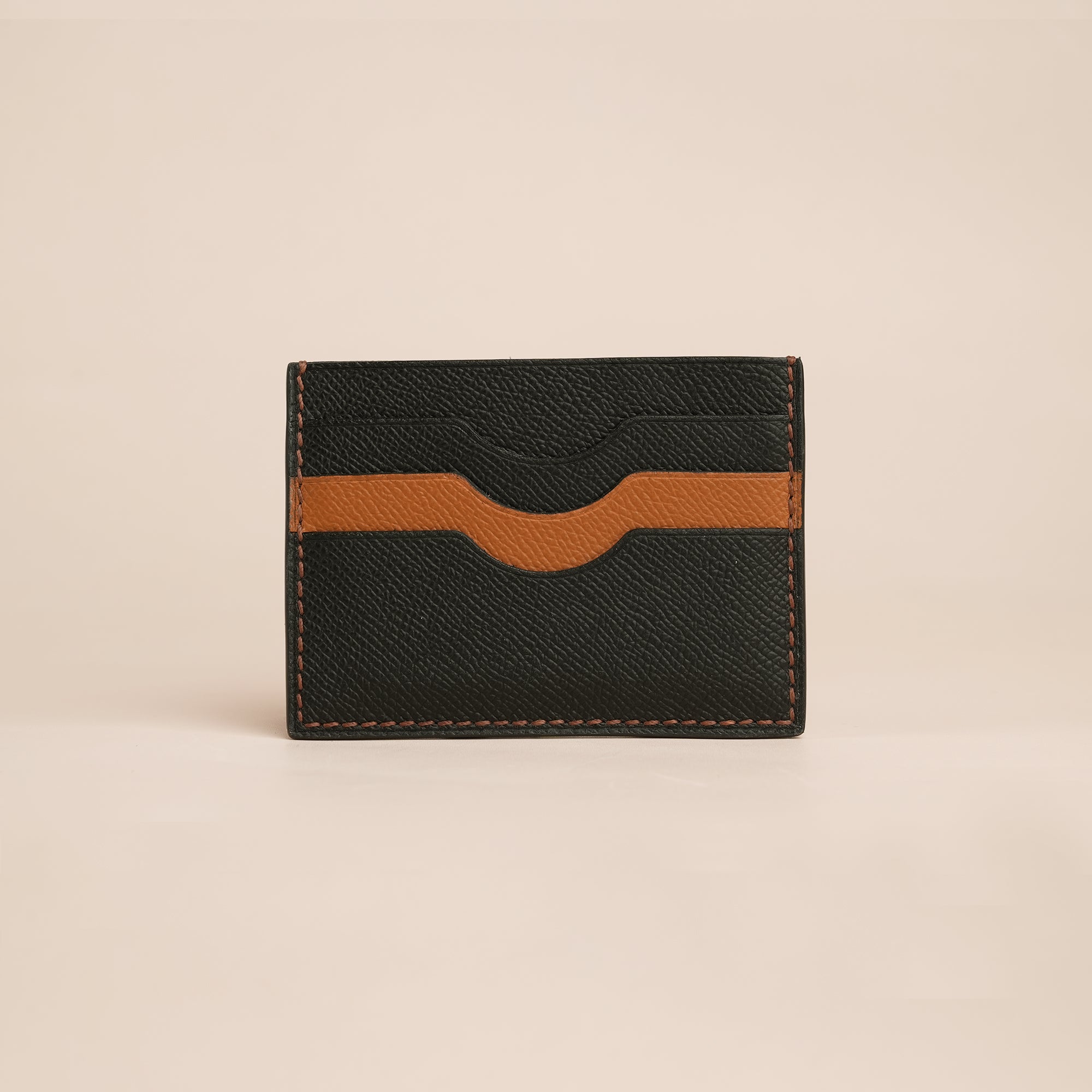
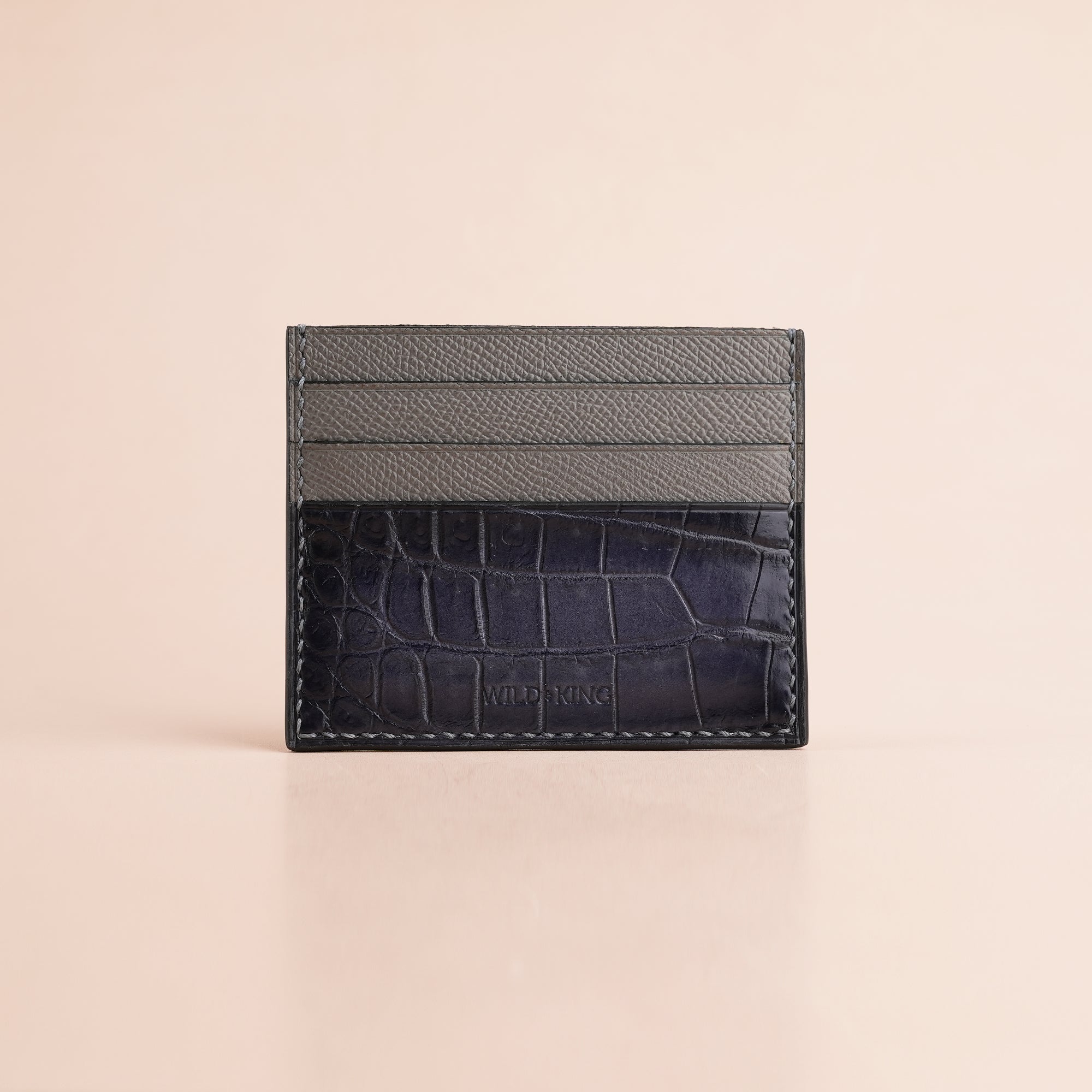
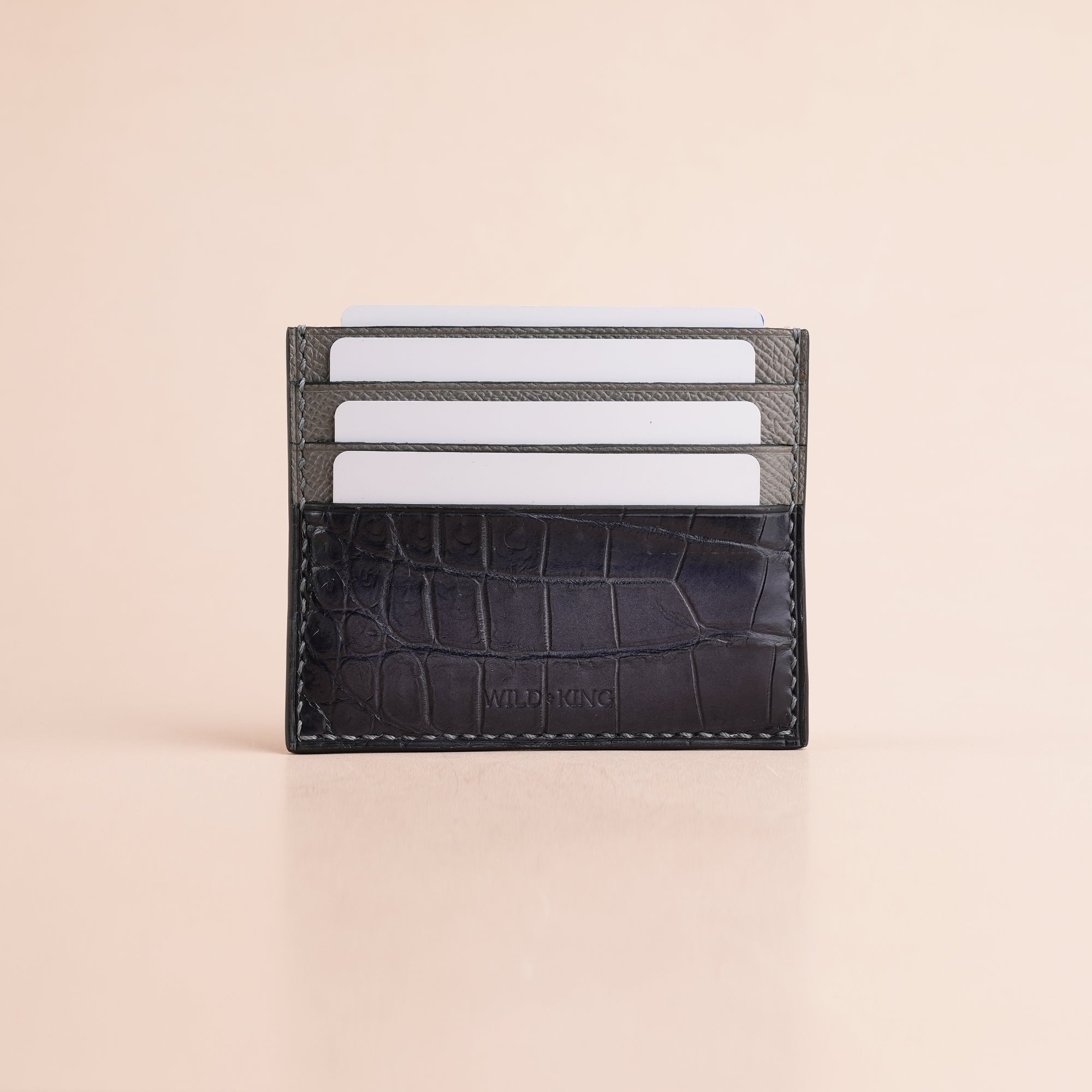
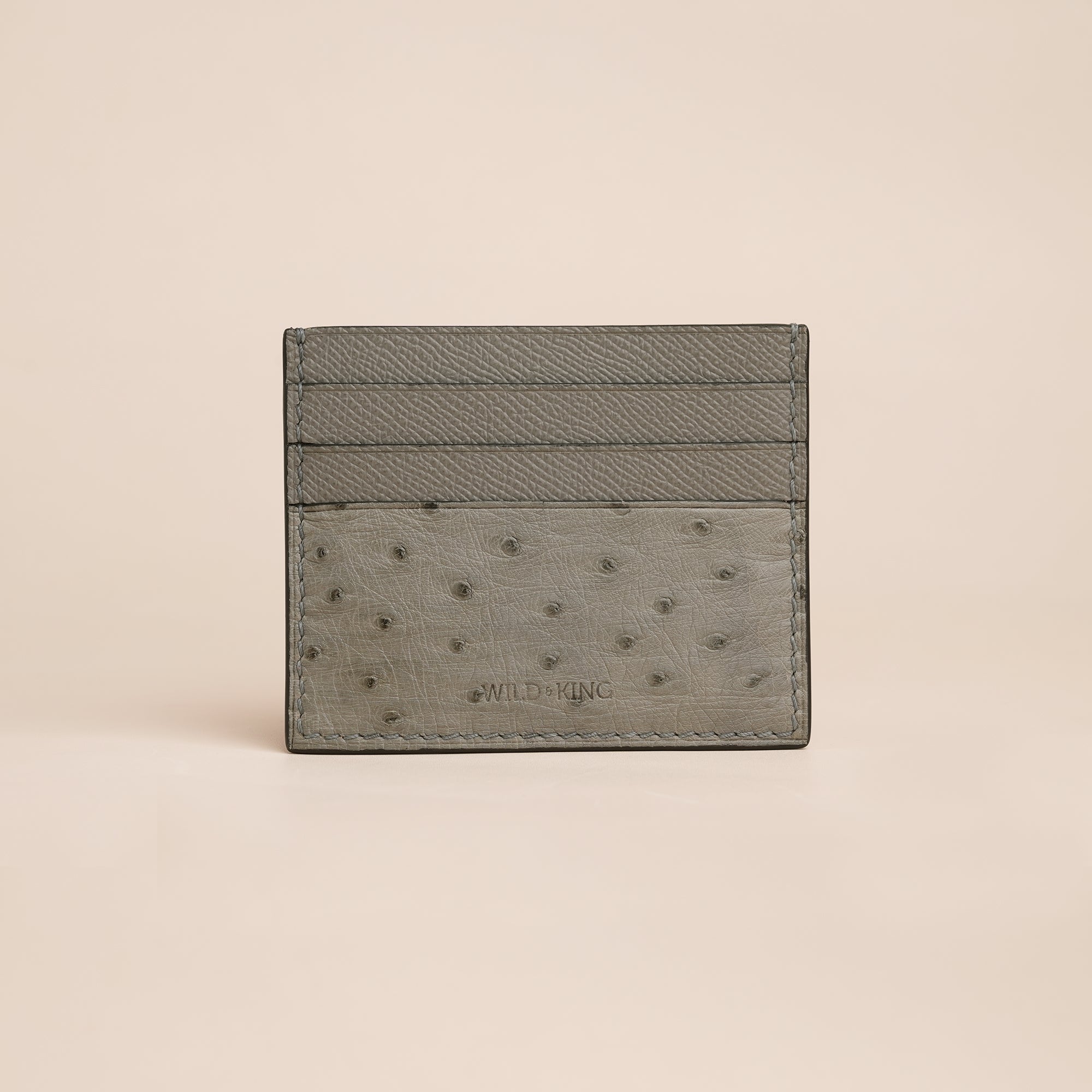
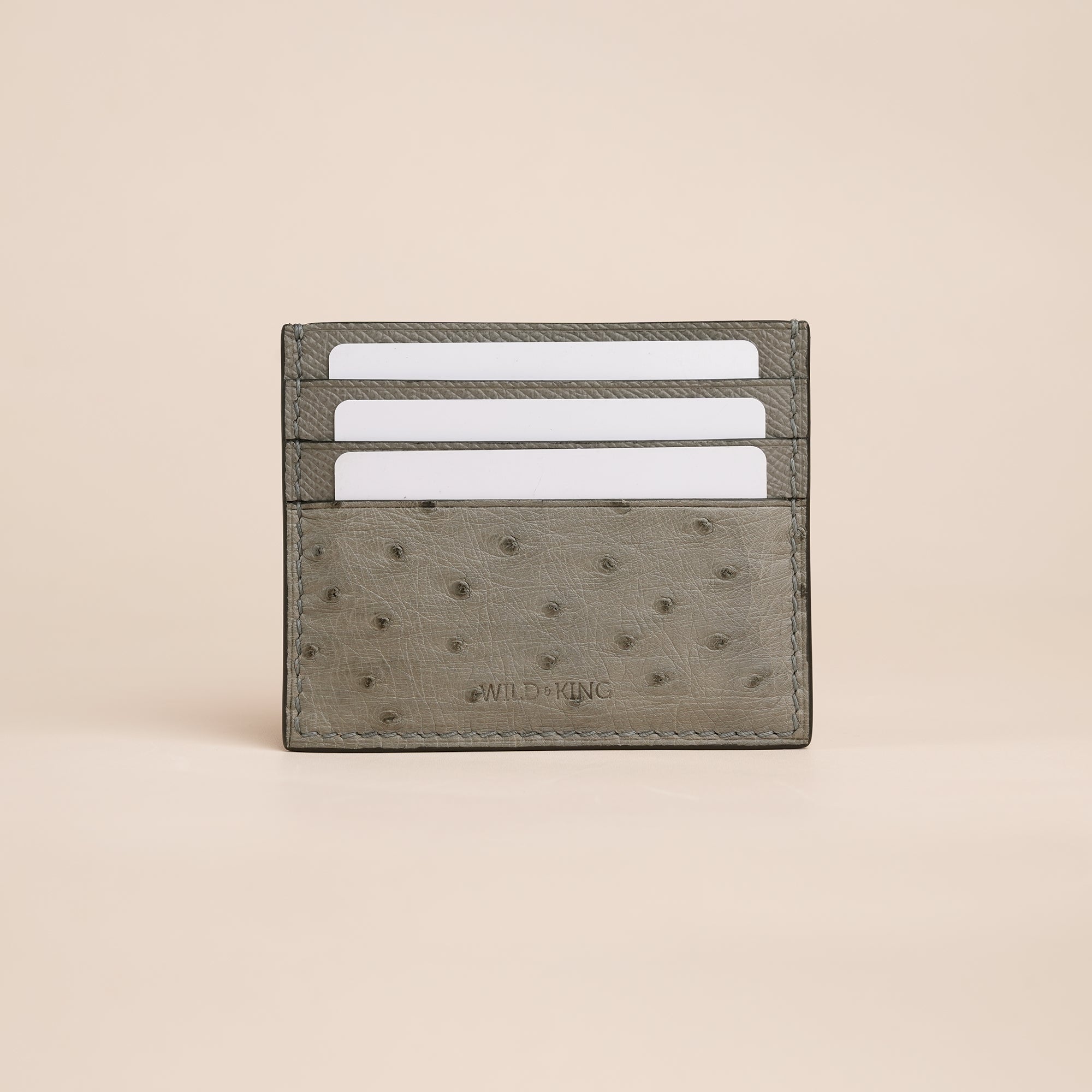
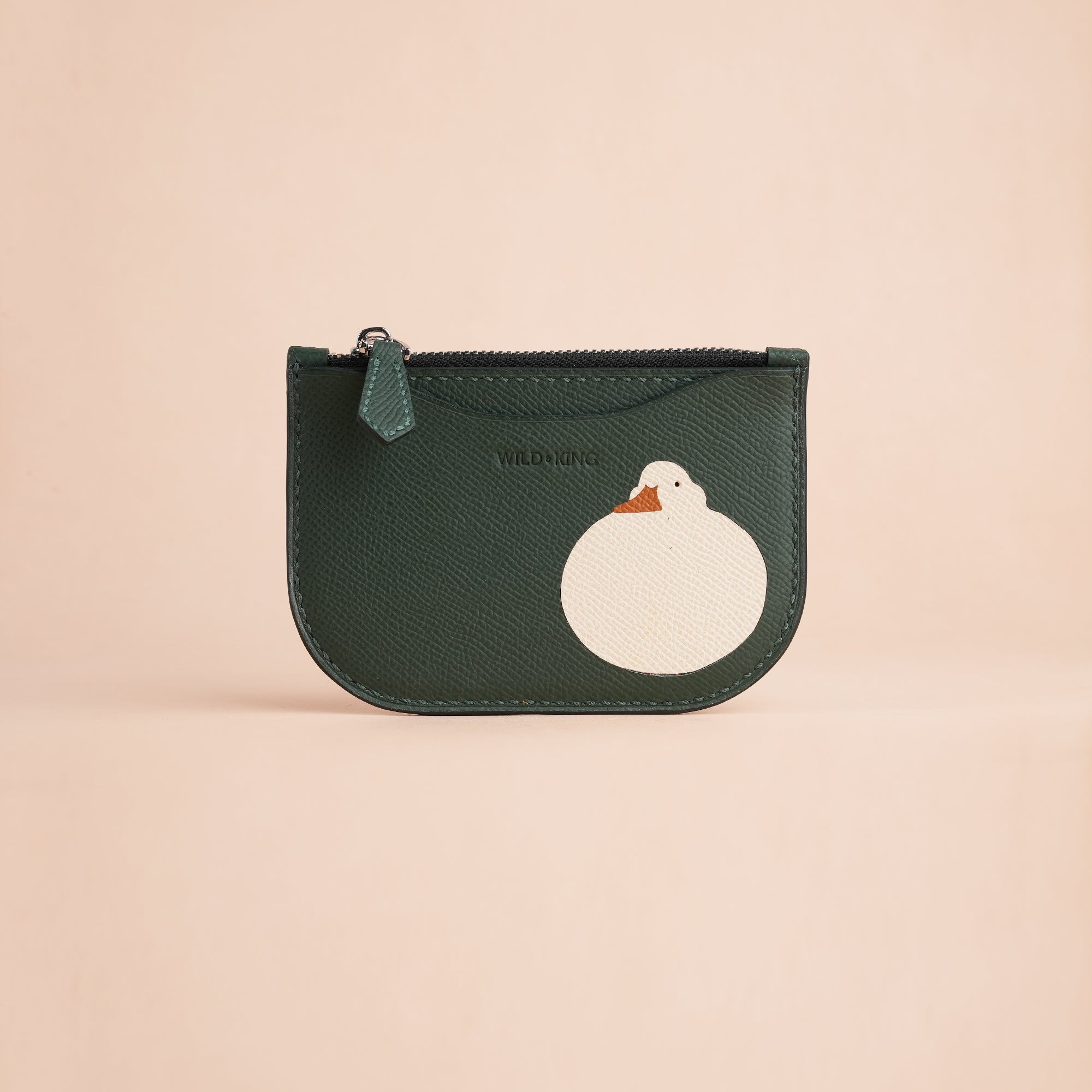
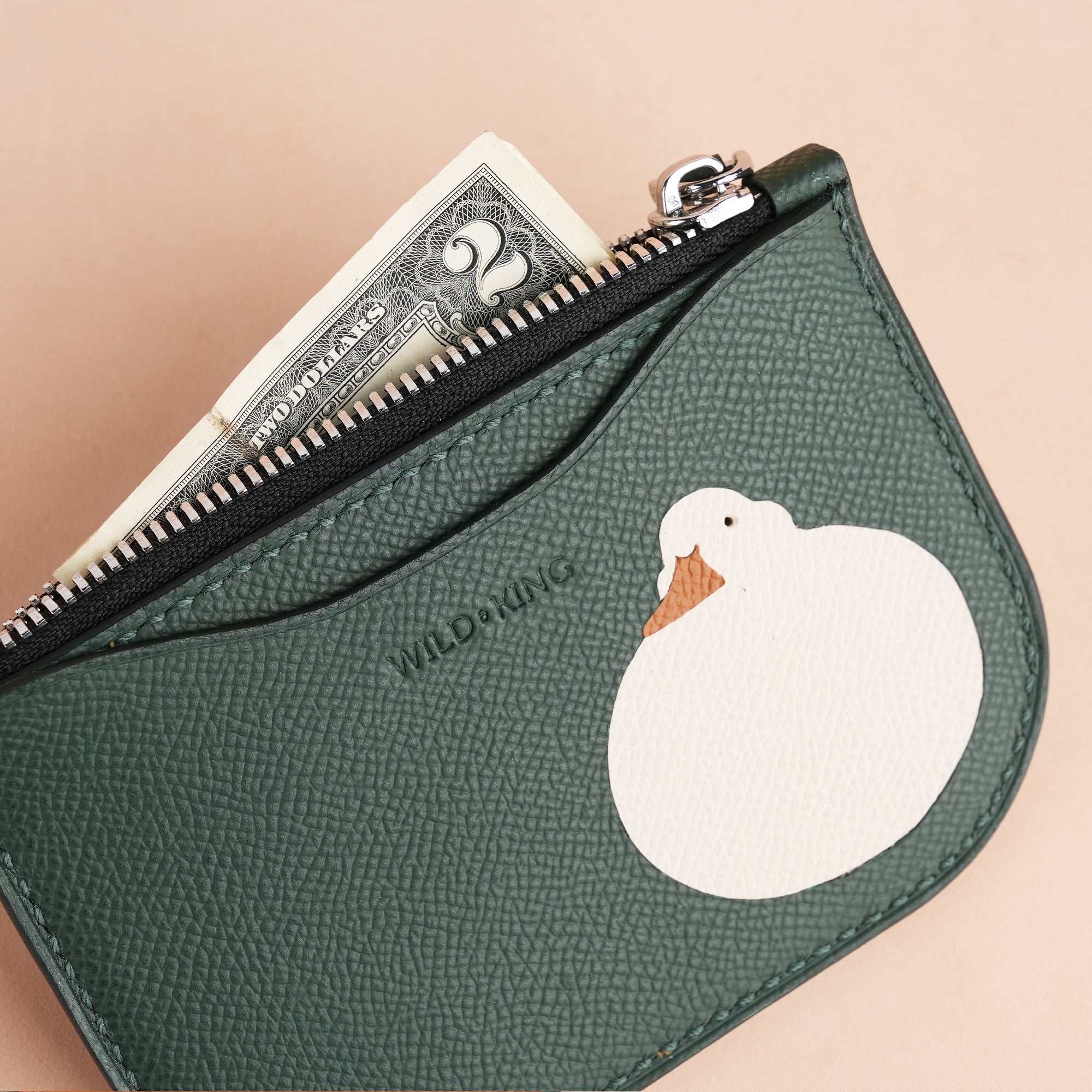
Epsom's compressed grain means the walls of a card holder stay rigid and upright even after years of daily use. The slots do not stretch. The edges do not curl. What you buy is what you keep, which is exactly why our Epsom leather card holders are built from this material specifically.
For wallets, the same logic applies. The Minimalist Epsom Leather Bifold Wallet stays flat in your pocket because the material refuses to sag, even when fully loaded with cards.
Epsom combine exotic leather
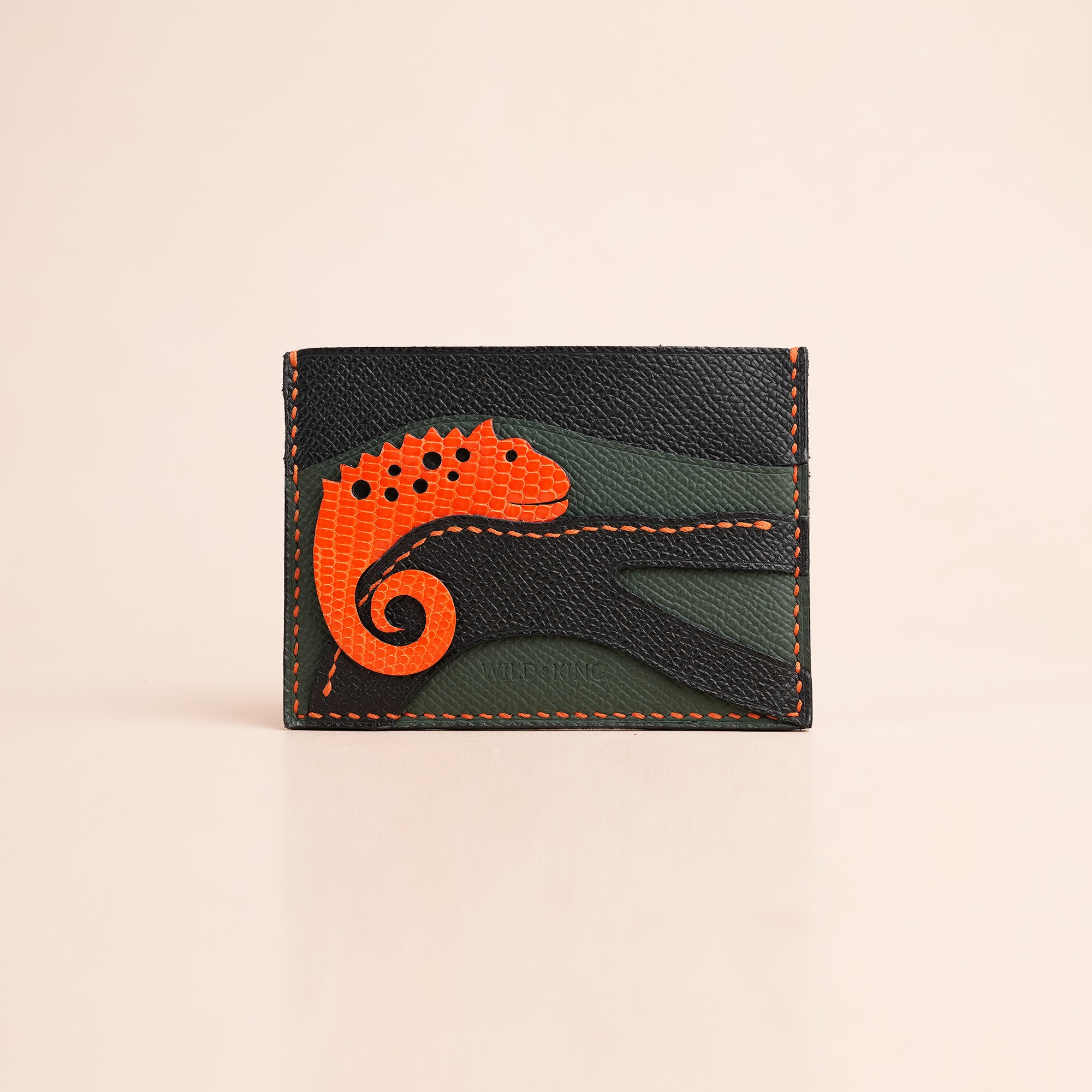
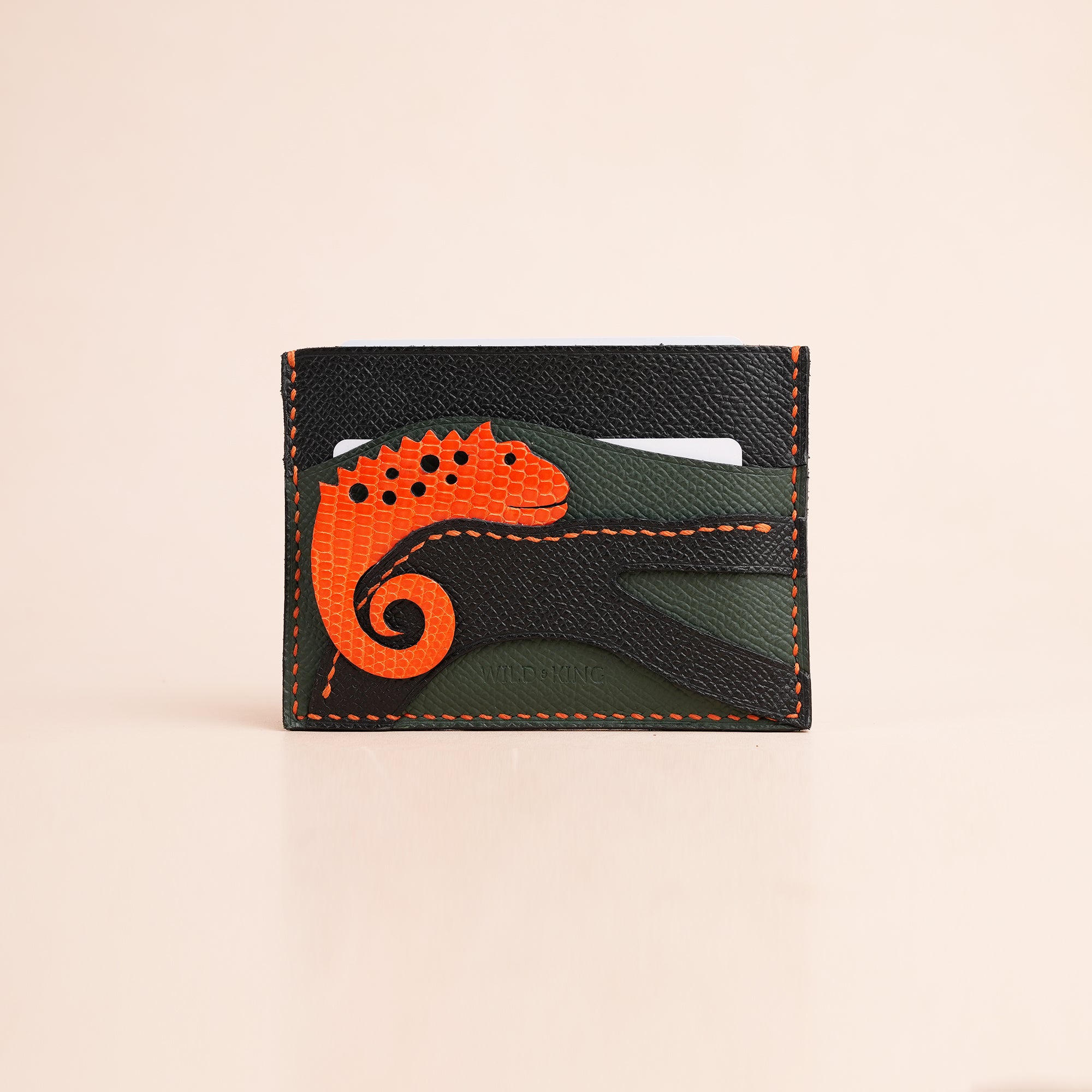
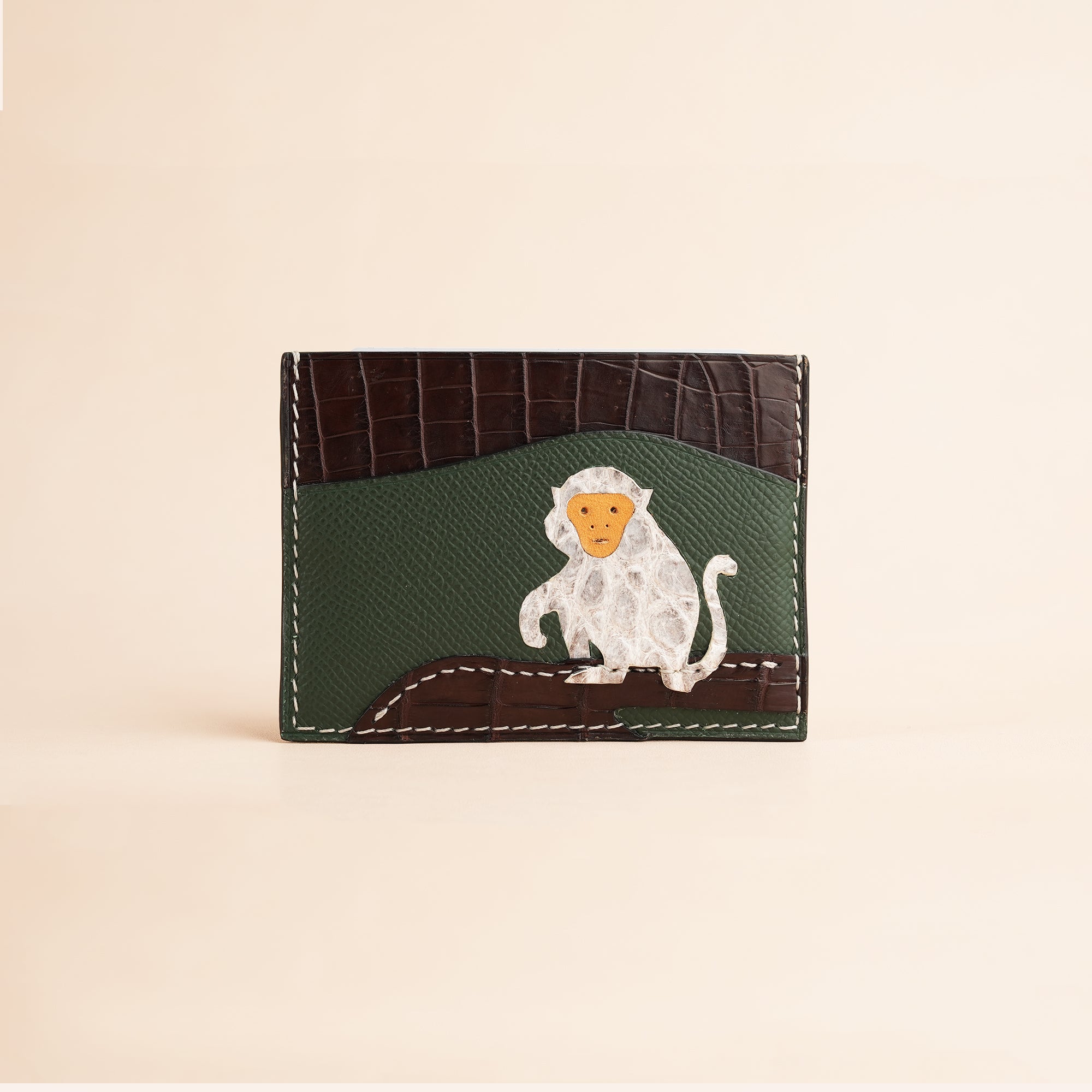
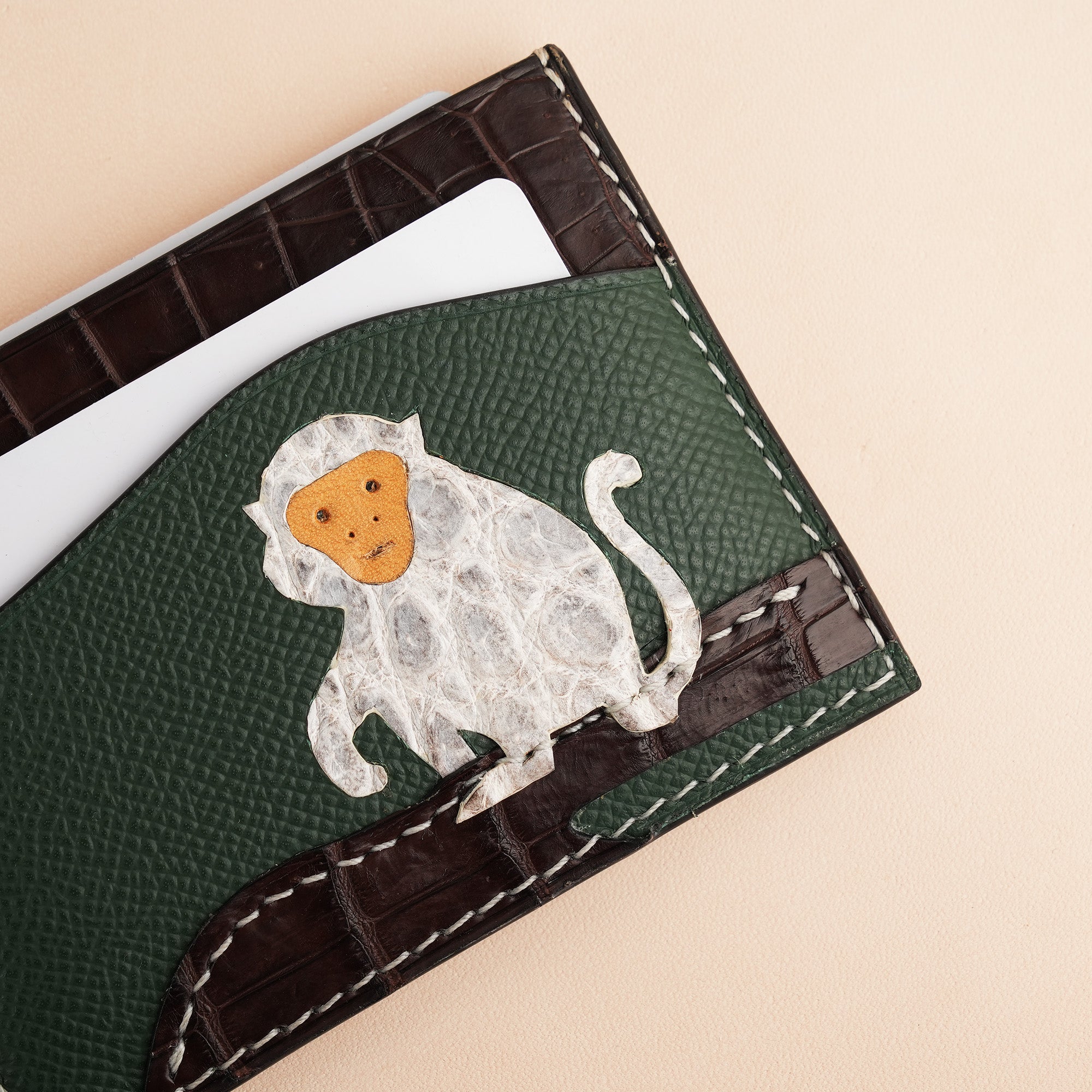
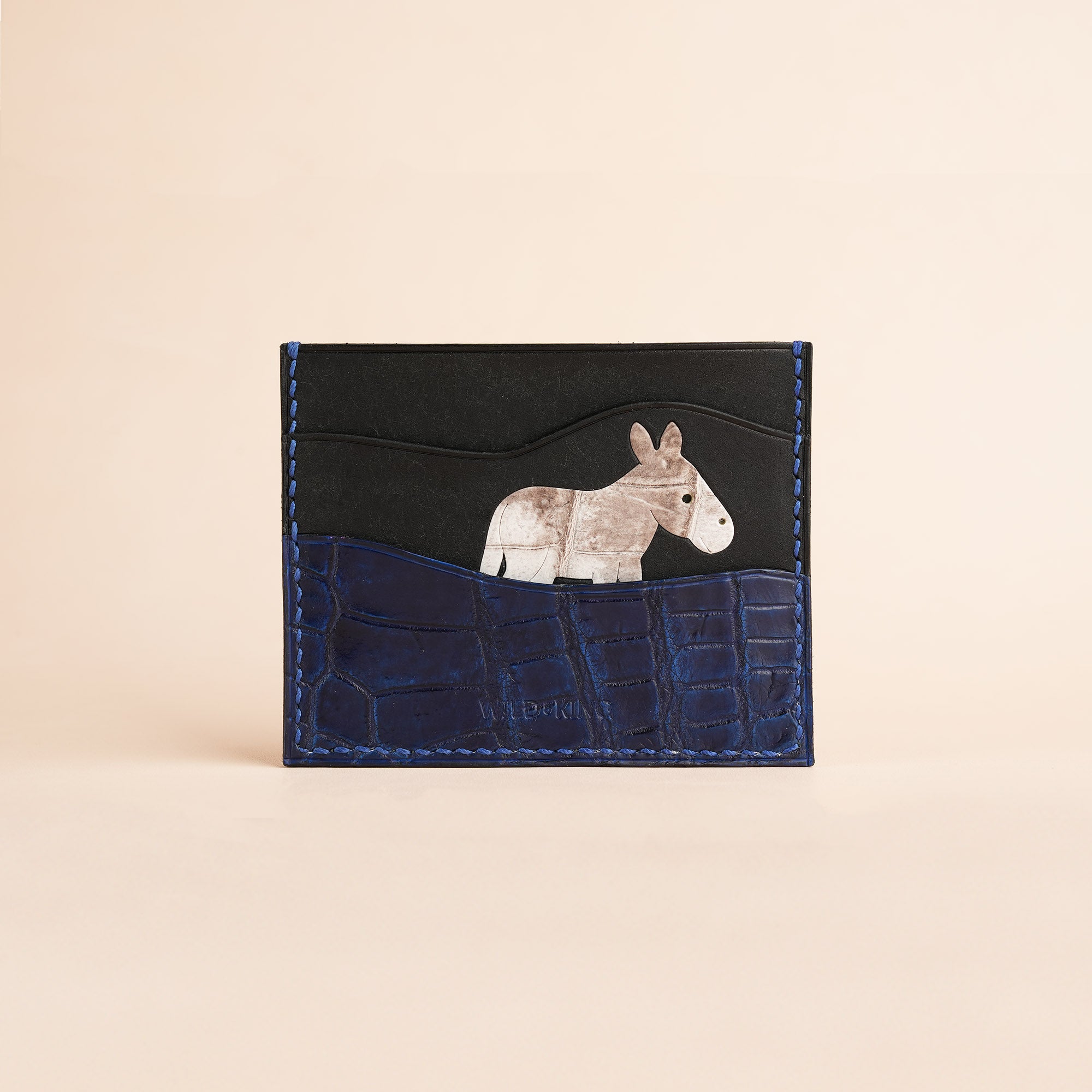
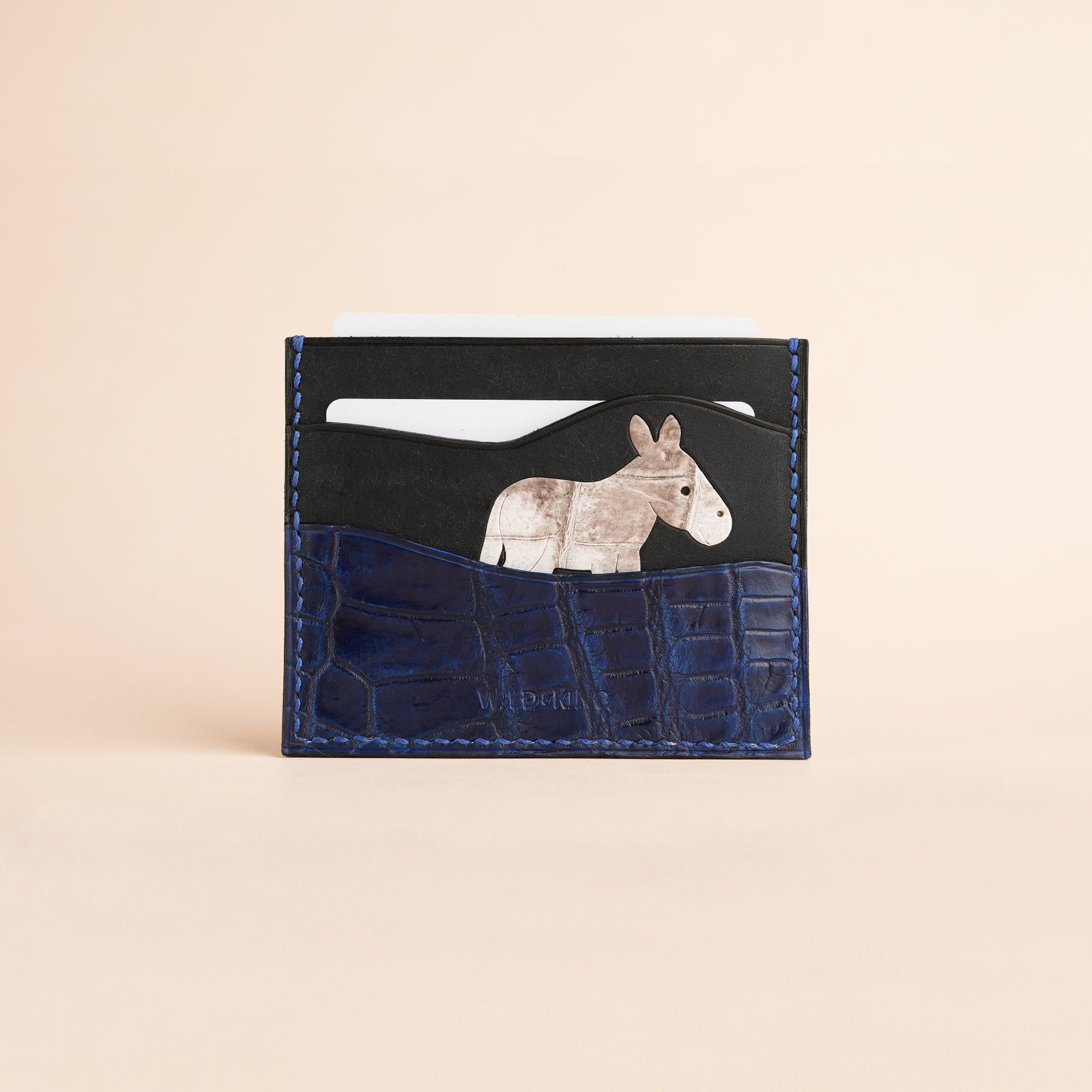
One of the most distinctive things Wild & King does with Epsom is pair it with exotic leathers. The firm, clean surface of Epsom creates a sharp visual contrast with the fine scales of lizard leather or the rugged texture of alligator leather.
The result is a card holder or money clip that carries two completely different textures, each one making the other look better. You can see this in pieces like the Epsom Leather Money Clip with Alligator detail - a combination that no mass-produced wallet can replicate.
Who is Epsom leather for?
Epsom is built for you if…
-
You want a wallet or card holder that looks identical after three years of daily use
-
You carry it in a pocket or bag where it faces constant friction and light abrasion
-
Your style is minimalist, clean lines, no visible wear, no surprises
-
You live somewhere humid or rainy and need leather that does not absorb moisture
-
You want a bold, vivid color that does not fade or shift over time

Epsom might not be your match if…
-
You love the feel of soft, warm leather in your hand, look at our Pueblo leather or vegetable-tanned options instead
-
You want your wallet to develop a patina and carry the marks of the years you have lived with it
-
You prefer natural, uneven grain with visible character and texture variation
How to care for epsom leather
Epsom leather care is one of its strongest advantages, it asks almost nothing of you.
Daily care
Wipe the surface with a slightly damp cloth when needed. Epsom does not absorb dust or oils into its pores the way natural leathers do, so most marks sit on the surface and wipe off cleanly. Avoid alcohol-based cleaners, they can strip the surface coating over time.
Deep conditioning
Unlike pull-up or vegetable-tanned leather, Epsom does not need frequent conditioning. The surface coating seals the hide. Apply a small amount of lanolin-based leather conditioner, no more than a thin layer, every three to four months. That is enough.
Do not use mink oil or thick wax-based creams. They cannot penetrate the coating and will leave a greasy residue on the surface instead.

Store Epsom leather goods away from direct sunlight for extended periods. The coating protects against UV exposure in normal use, but prolonged direct sunlight will eventually dull the color in any coated leather.
Frequently asked questions
Is Epsom leather real leather?
Yes. Epsom is full-grain calfskin, genuine animal hide. The embossed grain and surface coating are finishing techniques applied to real leather, not a synthetic substitute.
Does Epsom leather scratch easily?
No. It is one of the most scratch-resistant leathers available. The compressed grain and surface coating work together to deflect light abrasion. Deep cuts from sharp objects will mark any leather, but everyday wear leaves Epsom largely untouched.
Is Epsom leather good for wallets?
It is one of the best materials for wallets and card holders specifically. The rigid structure keeps the wallet slim and shaped permanently, and the scratch-resistant surface handles the daily friction of pocket carry better than softer leathers.
How long does Epsom leather last?
With basic care, Epsom leather goods last well over a decade. Because the leather does not soften or stretch, the structural integrity stays intact far longer than most natural leathers under the same conditions.
Is Epsom leather worth buying?
If your priority is durability, low maintenance, and consistent appearance over years of daily use, yes, without question.
Conclusion
Epsom leather does one thing better than almost any other leather on the market: it stays exactly as you bought it. The color holds. The shape holds. The surface holds.
That consistency is not for everyone. But for the person who wants a card holder or wallet that performs quietly, looks sharp without effort, and never needs attention, there is no better material.
Our Collection
Epsom Leather Wallet