
Alligator Leather
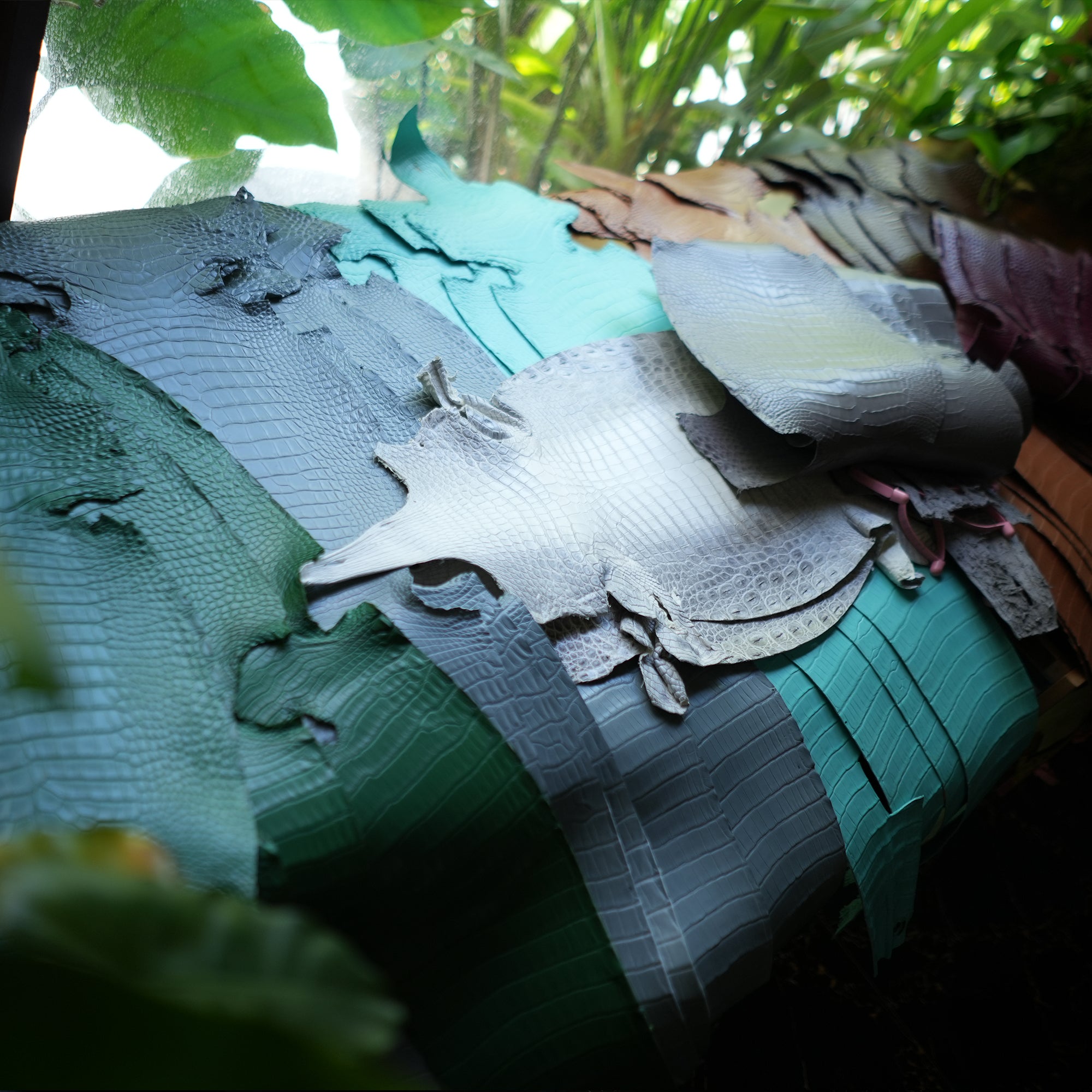
In the world of luxury goods, alligator leather has always been the one to beat. For decades, it was the symbol of excess, shiny, loud, and often misunderstood. But at Wild & King, we see it differently.
We don't look at a hide and see a price tag. We see a canvas that demands respect. As craftsman who cut, skive, and stitch these materials by hand every day, we know that genuine handmade alligator leather is not about showing off. It is about the "Quiet Luxury" of owning a material that has survived the prehistoric age, crafted into a modern minimalist companion.

This guide is not a sales pitch. It is a deep dive into the workshop. We will strip away the marketing fluff to help you understand what you are actually paying for, how to spot the real deal, and why this material is the ultimate upgrade for your everyday carry.
How to spot genuine american Alligator
If you are looking for alligator leather, the first hurdle is trust. The market is flooded with "crocodile" labeled as alligator, or worse, embossed cowhide (leather stamped with a pattern).
To the untrained eye, they look similar. To a Wild & King craftsman, they are worlds apart. Here is how we identify the Alligator Mississippiensis (American Alligator) before we even make the first cut.
The myth of "Sensory Pores"
This is the fastest way to tell if you are holding Alligator or Crocodile.
- Crocodile & Caiman: Evolution gave them sensory hairs on each scale to detect vibrations in the water. Even after tanning, you will see a tiny dot (pore) near the edge of every scale.
- American Alligator: They do not have these follicular markings on the body. The scales are clean, smooth, and uninterrupted.
For a minimalist, this difference is crucial. The lack of pores gives alligator leather a cleaner, less "busy" aesthetic. It looks sharper on a Minimalist Card Holder than the dotted texture of a crocodile.

Comparison:
View Gray Crocodile Leather Bifold Wallet
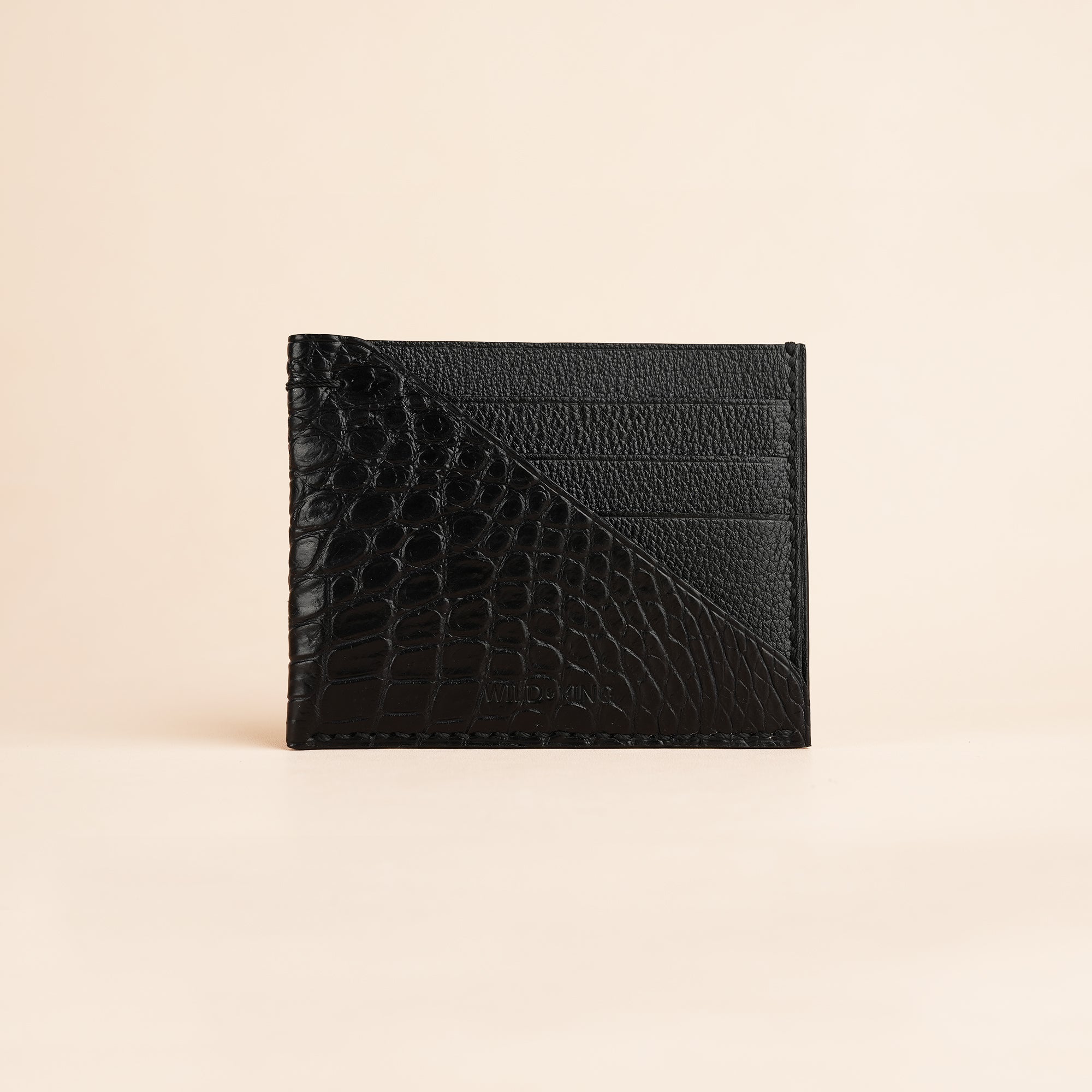
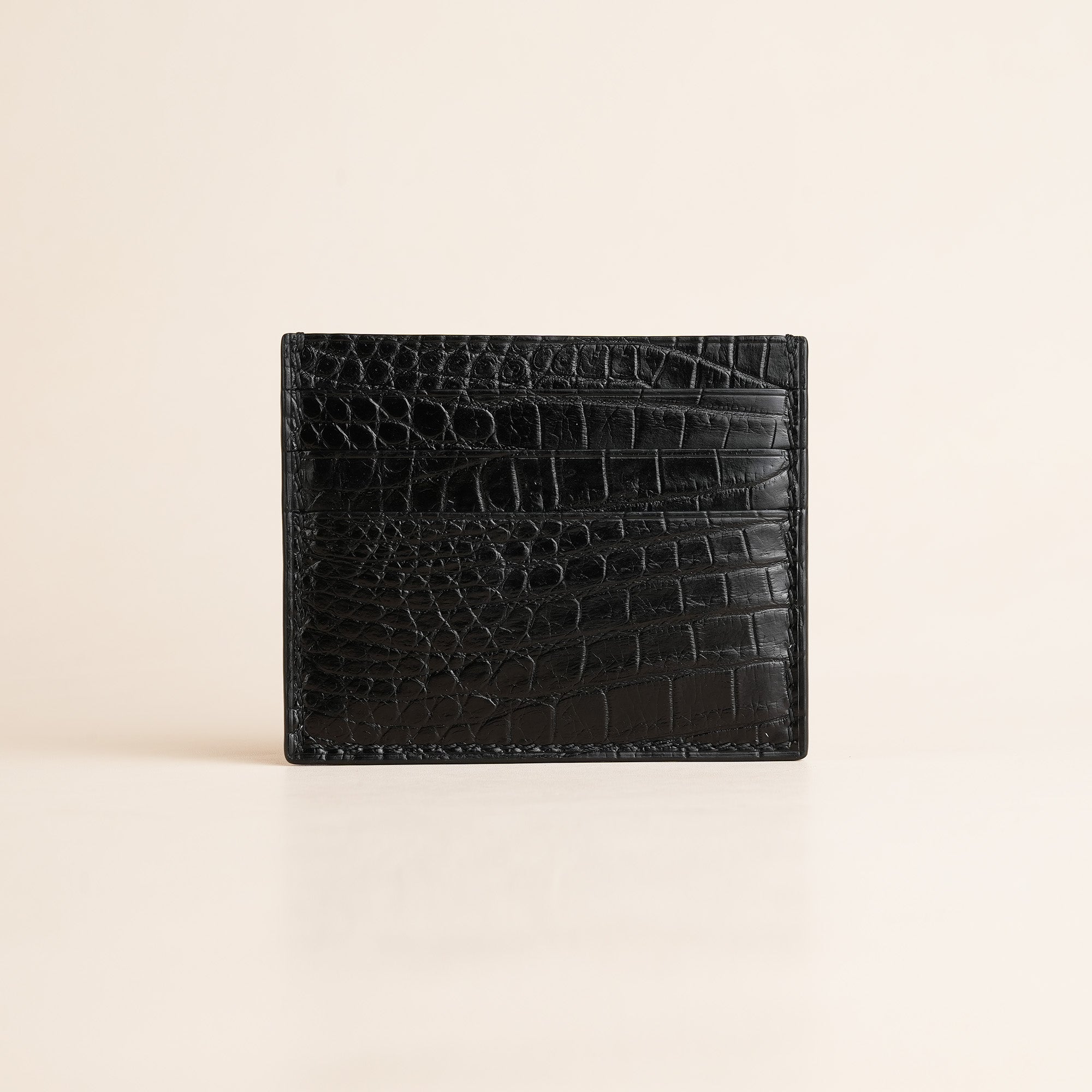
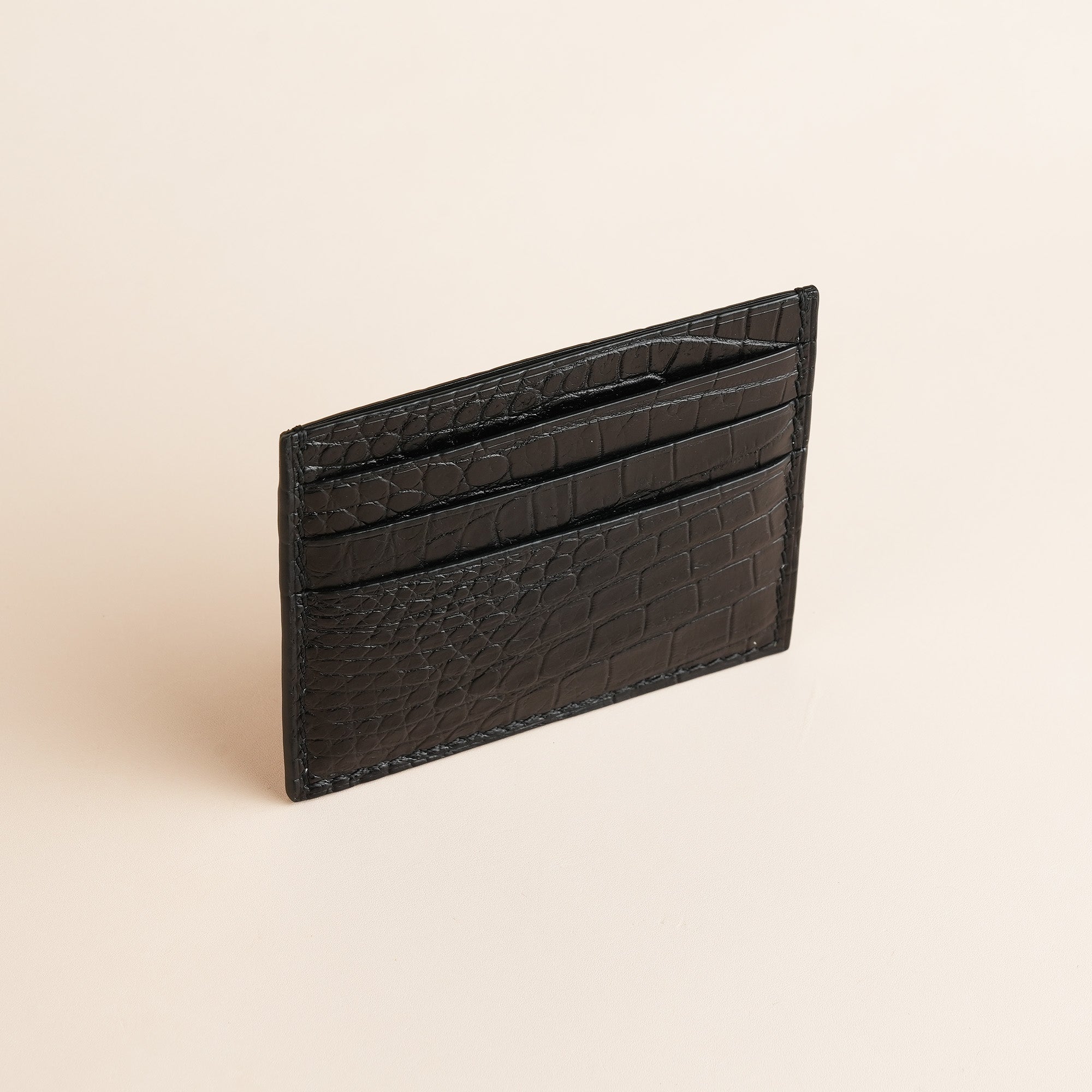
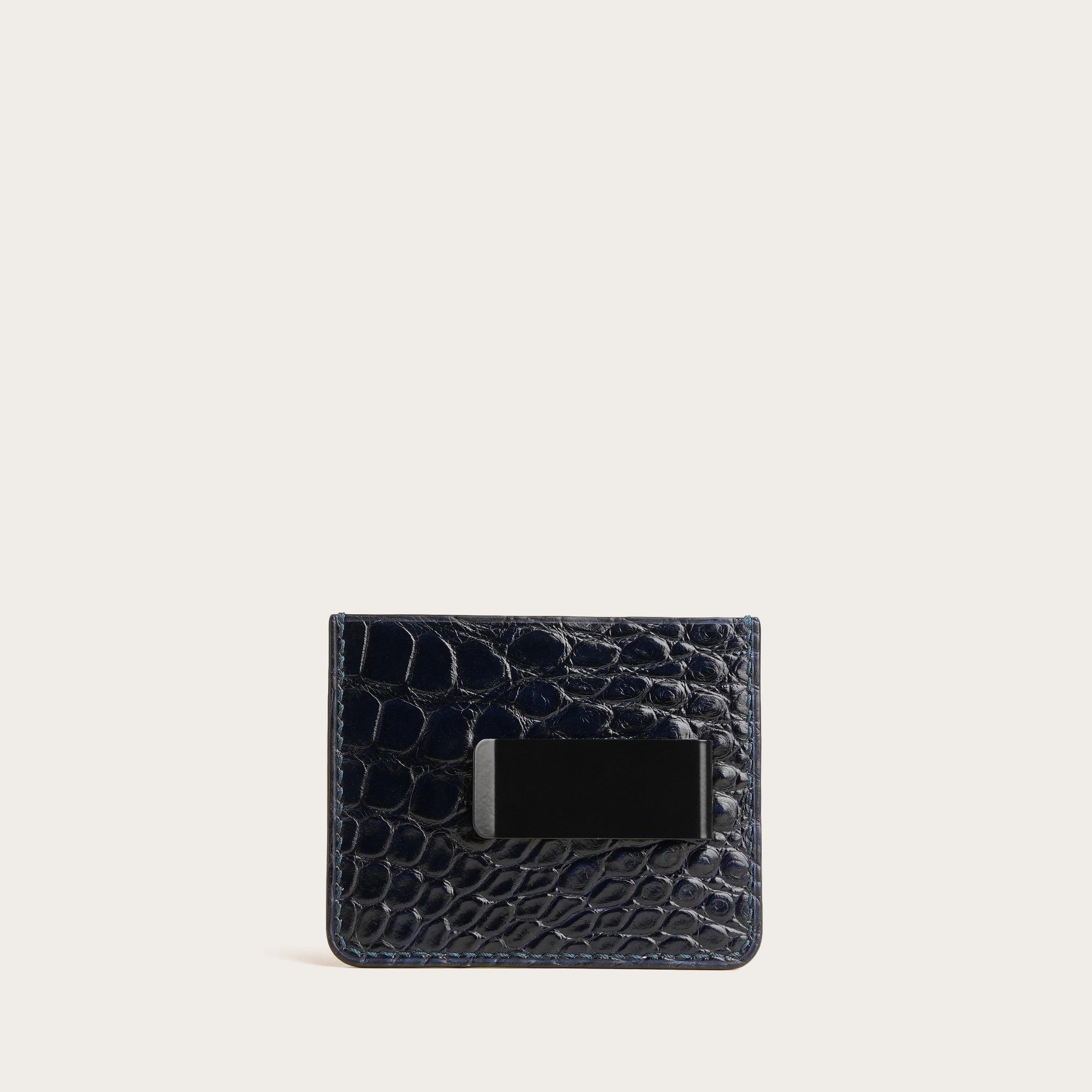
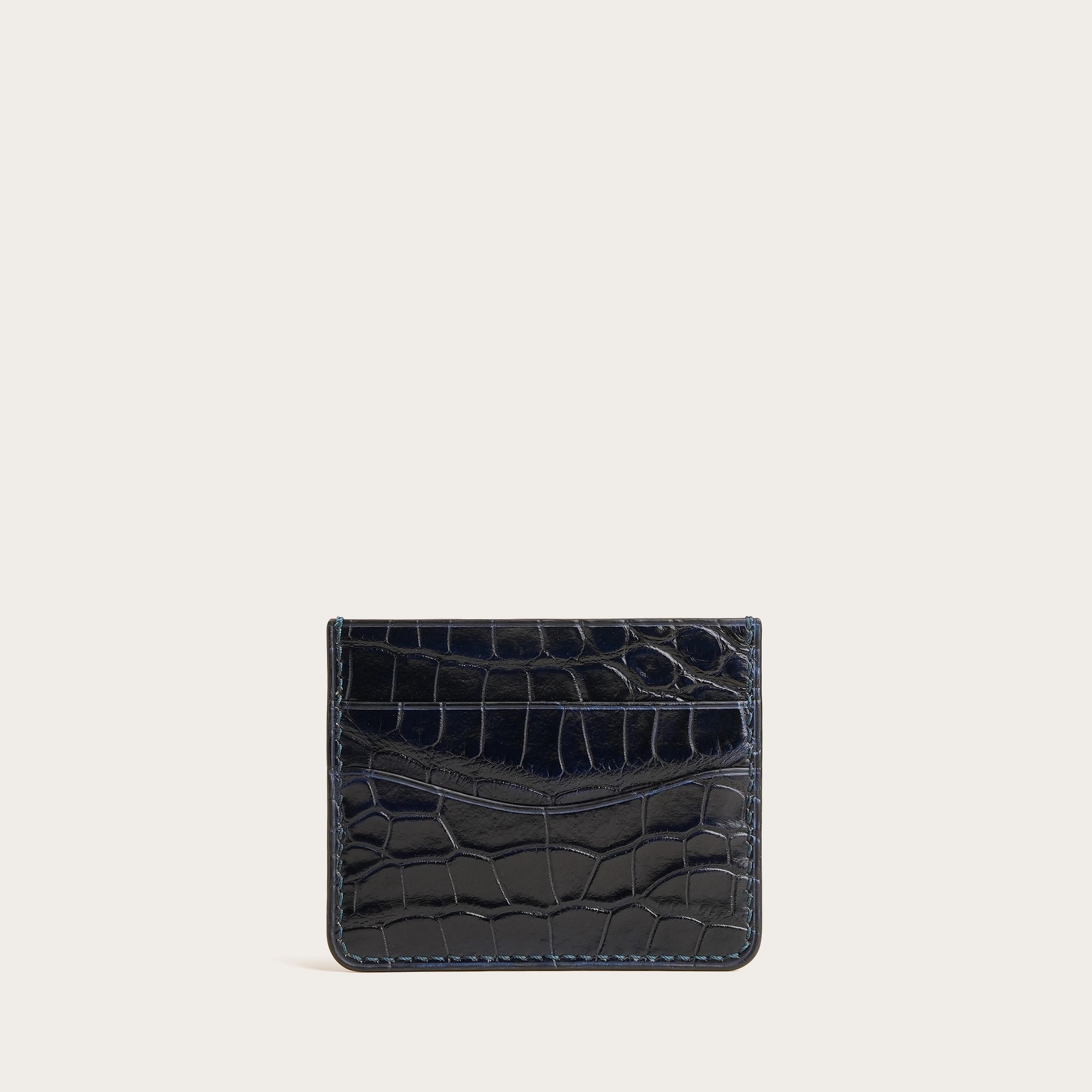
View Black Alligator Leather Card Holder - Full Alligator Edition
The Umbilical Scar
Every alligator has an umbilical scar, a cluster of tiny, webbed scales located in the center of the belly. This is the "fingerprint" of the animal. Embossed fake leather cannot replicate the complex, organic randomness of this scar.
From the craftsman’s Bench:
When crafting a high end wallet, we don't hide this scar. We celebrate it. A master cutter will use a technique called "centering," positioning the pattern, so the umbilical scar sits perfectly in the middle of the wallet's interior or back panel. It is the ultimate proof of authenticity and skilled craftsmanship.

Beyond the material: The hidden Craftsmanship
Why does a handmade alligator leather wallet cost significantly more than a regular one? It is not just the cost of the raw skin, it is the risk and the skill required to work with it.
The challenge of the scales
Working with cowhide is like cutting butter. Working with alligator is like sculpting stone.

The scales of an alligator, particularly the hornback or older belly skins, are calcified. They are hard.
- Cutting: One slip of the knife can ruin a $500 hide. We have to navigate the blade between the scales or slice through them with surgical precision.
- Stitching: This is where machines fail. A sewing machine tries to punch through blindly, often shattering the calcified scales or leaving ugly, jagged holes.
At Wild & King, we use the traditional Saddle Stitch. We use a diamond shaped awl to pierce the leather manually, feeling the resistance of the fiber. We adjust the angle of the needle to slide between the structural fibers of the scale, ensuring the leather never cracks under tension.
Leather marquetry
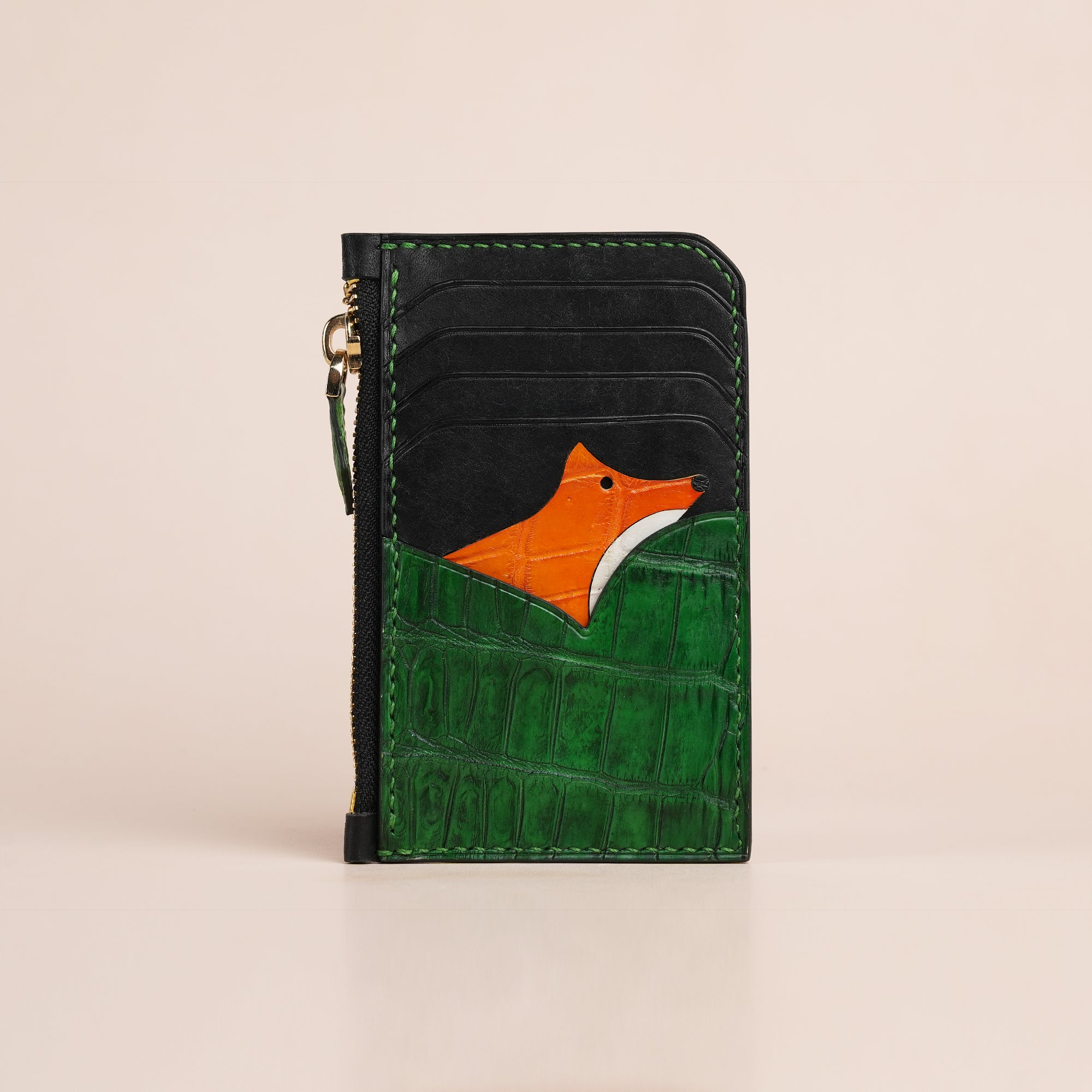
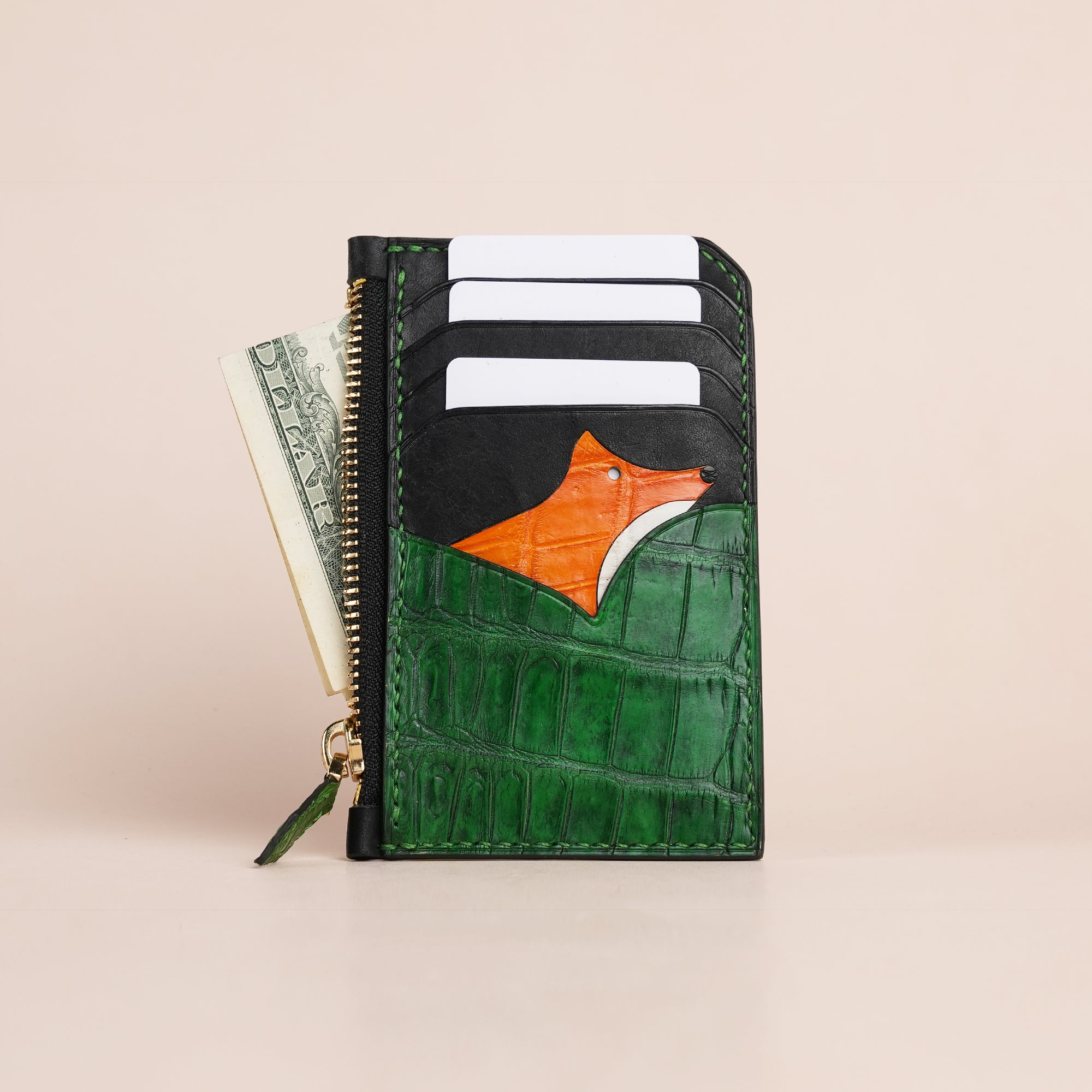
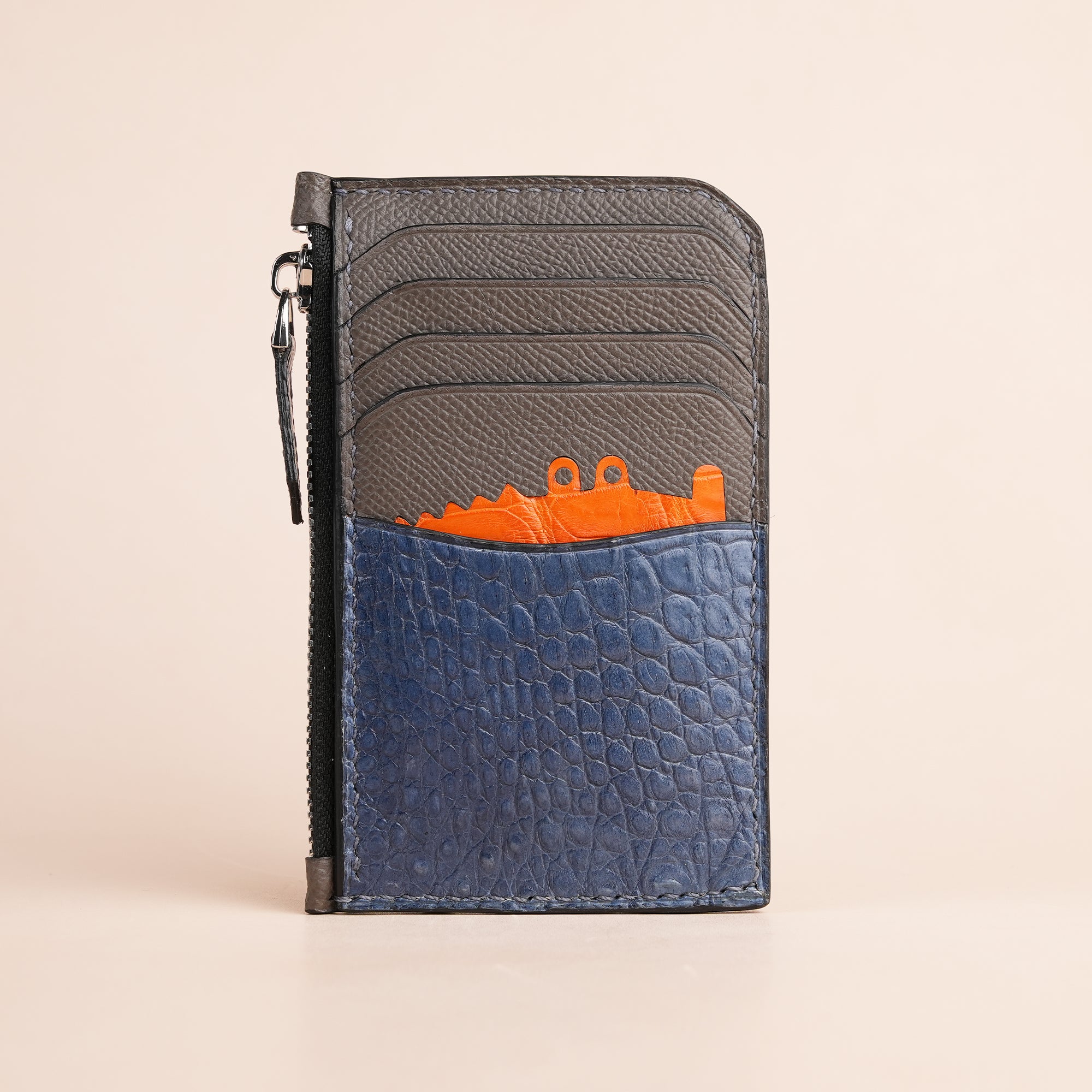
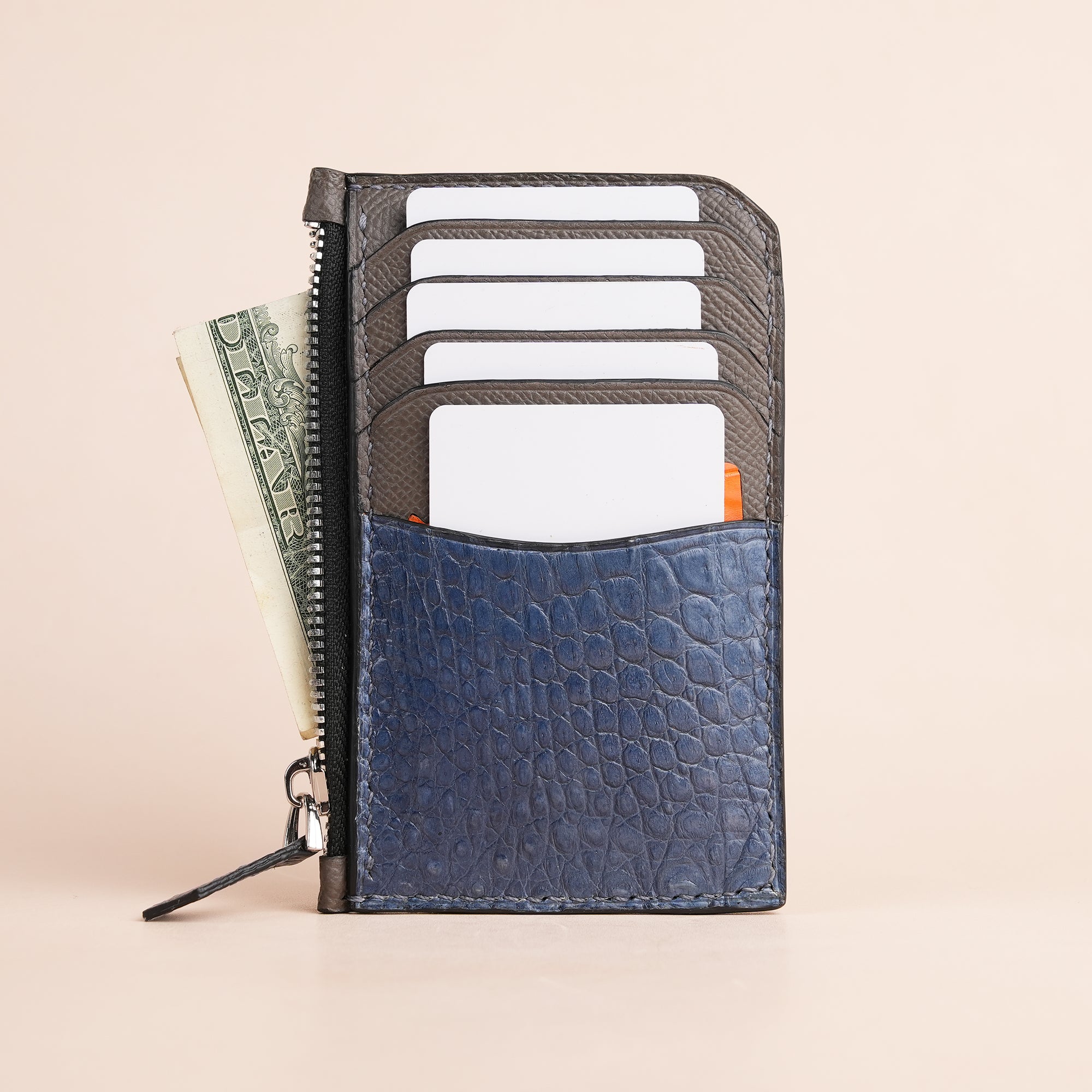
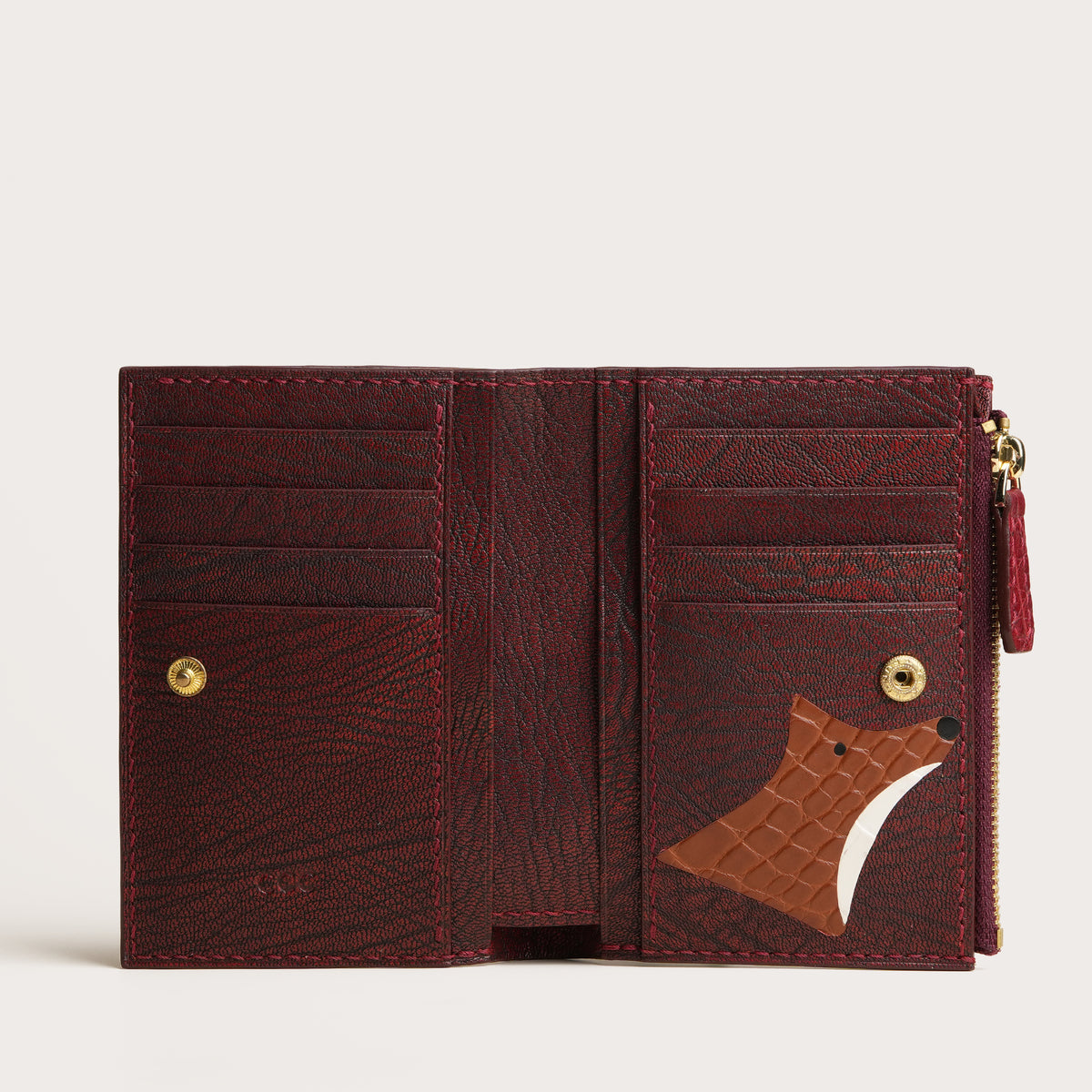
Because alligator leather has such a distinct pattern, using it for complex designs requires a technique called "Leather Marquetry." We treat the leather like wood inlays, splicing different colors or textures together to create seamless patterns (like "Stupid Animal" collection). This ensures that even though the design is complex, the wallet remains slim and durable, without bulky overlapping layers.
Alligator vs. The world: Choosing your exotic leather
You are ready to invest in a luxury piece, but is Alligator the right choice for your lifestyle? Let's compare the "King" against other exotic contenders available at Wild & King.
| Feature | Alligator Leather | Lizard Leather | Ostrich Leather | Shell Cordovan | Peccary Leather |
| Texture & Visuals |
Bold & clean Large, square scales. No sensory pores, creating a smooth, glass like or matte finish. |
Uniform & subtle. Tiny scales resembling grains of rice. Elegant and less "aggressive". |
Unique "Quills" Famous for raised bumps (follicles). Distinct, playful look. |
Mirror like Smoothness Horse rump leather with zero grain and high gloss shine. |
Velvet & Matte Soft, spongy texture with groups of three hair pores visible. |
| Durability & Structure |
High Rigidity "Armor" like. Stiff, holds shape perfectly. |
Scratch Resistant Hard, tiny scales deflect scratches well. Less structural. |
The Survivor Oily, resists drying and cracking. Flexible, not rigid. |
Indestructible Dense, non porous. Does not crease, it "rolls". |
Soft but Tough Durable against tearing but very soft/floppy. |
| Tactile Experience |
3D Feel Distinct ridges and valleys. Substantial and premium. |
Fine Grain Feels like smooth beadwork. Cool to the touch. |
Oily & Soft Quills provide texture, skin feels moisturized. |
Glassy Slick, smooth, dense and heavy. |
Spongey Softest leather, like cashmere or velvet. |
| Ideal For... | The Statement Minimalist | The Refined Professional | The Tactile Lover | The Heritage Fan | The Comfort Seeker |
Alligator for the Modern Minimalist
There is a misconception that alligator leather is for "old money" or people who wear flashy suits. In the 21st century, Wild & King is reclaiming this material for the Minimalist.
Why matte finish beats glossy
For a long time, alligator wallets were finished with a high gloss glaze (using a protein binder called casein and a glazing jack machine). This makes them look like plastic.
We prefer the Matte or Semi Matte finish.
- It’s Honest: It doesn't hide the natural grain.
- It Patinas: Like raw denim or vegetable tanned leather, matte alligator will absorb the oils from your hands. Over months and years, it will develop a natural, deep shine that is unique to you. This is the essence of owning a handmade product.
Small goods, big impact
You don't need a bulky bifold to enjoy this material. In fact, alligator looks most sophisticated when applied to compact, purposeful designs.
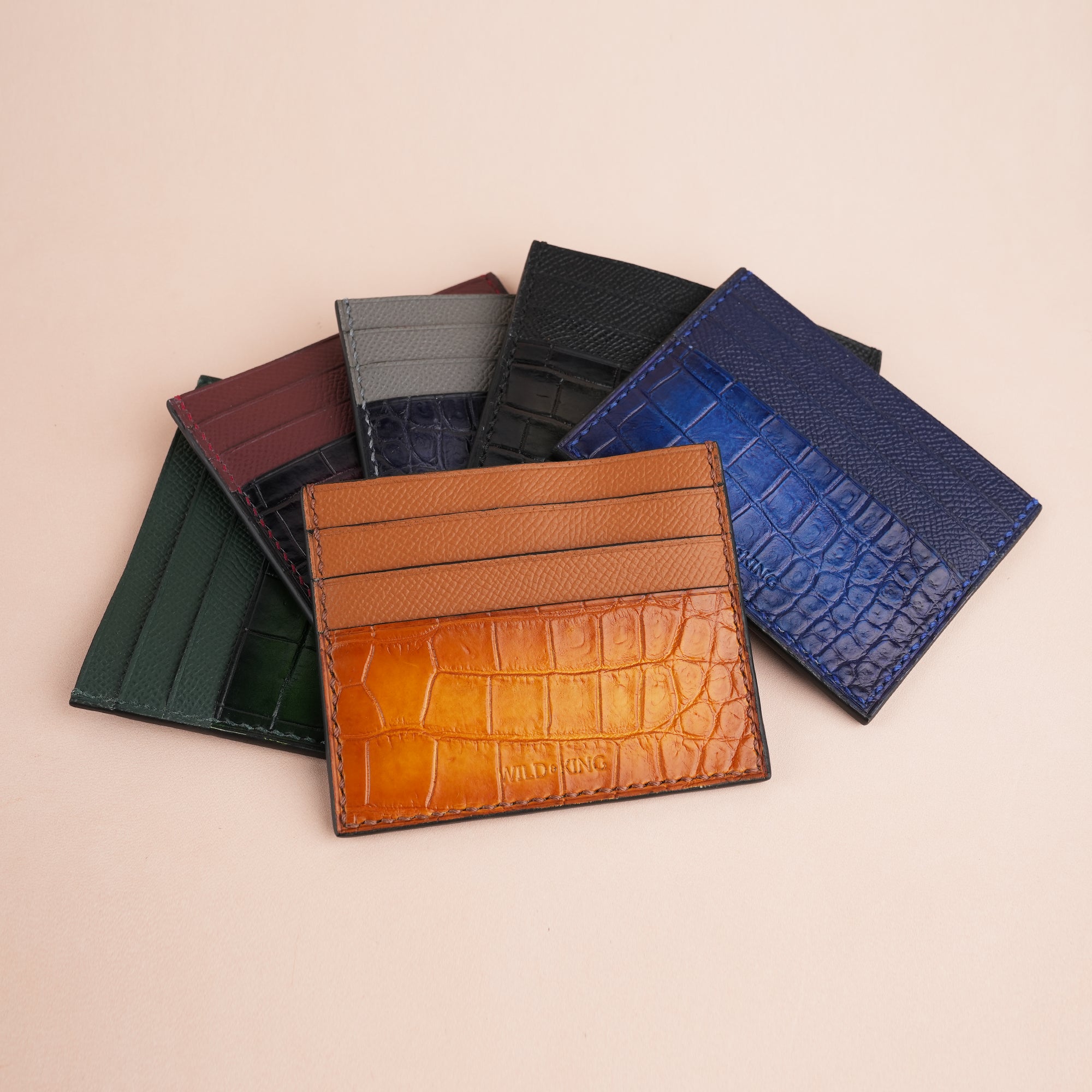
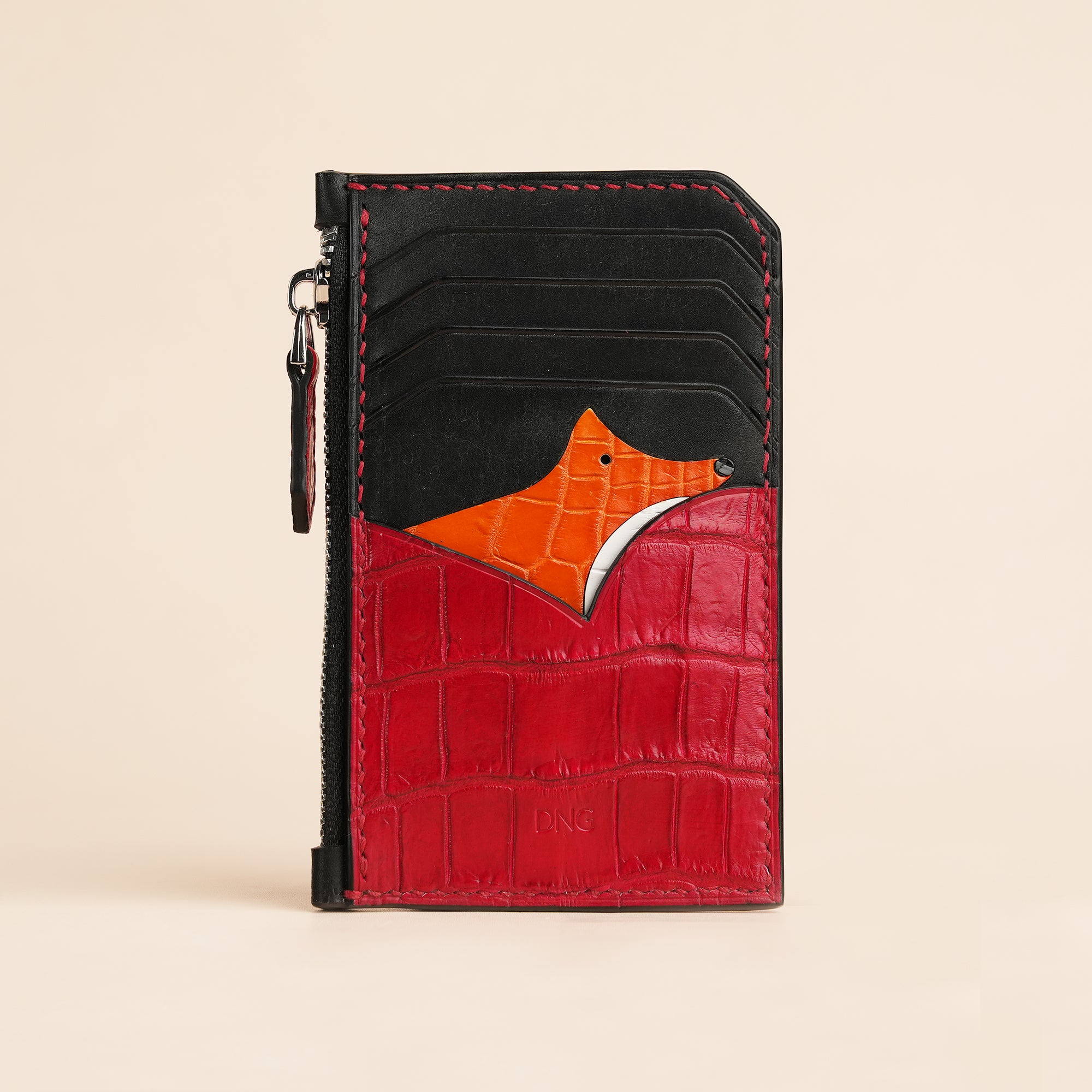
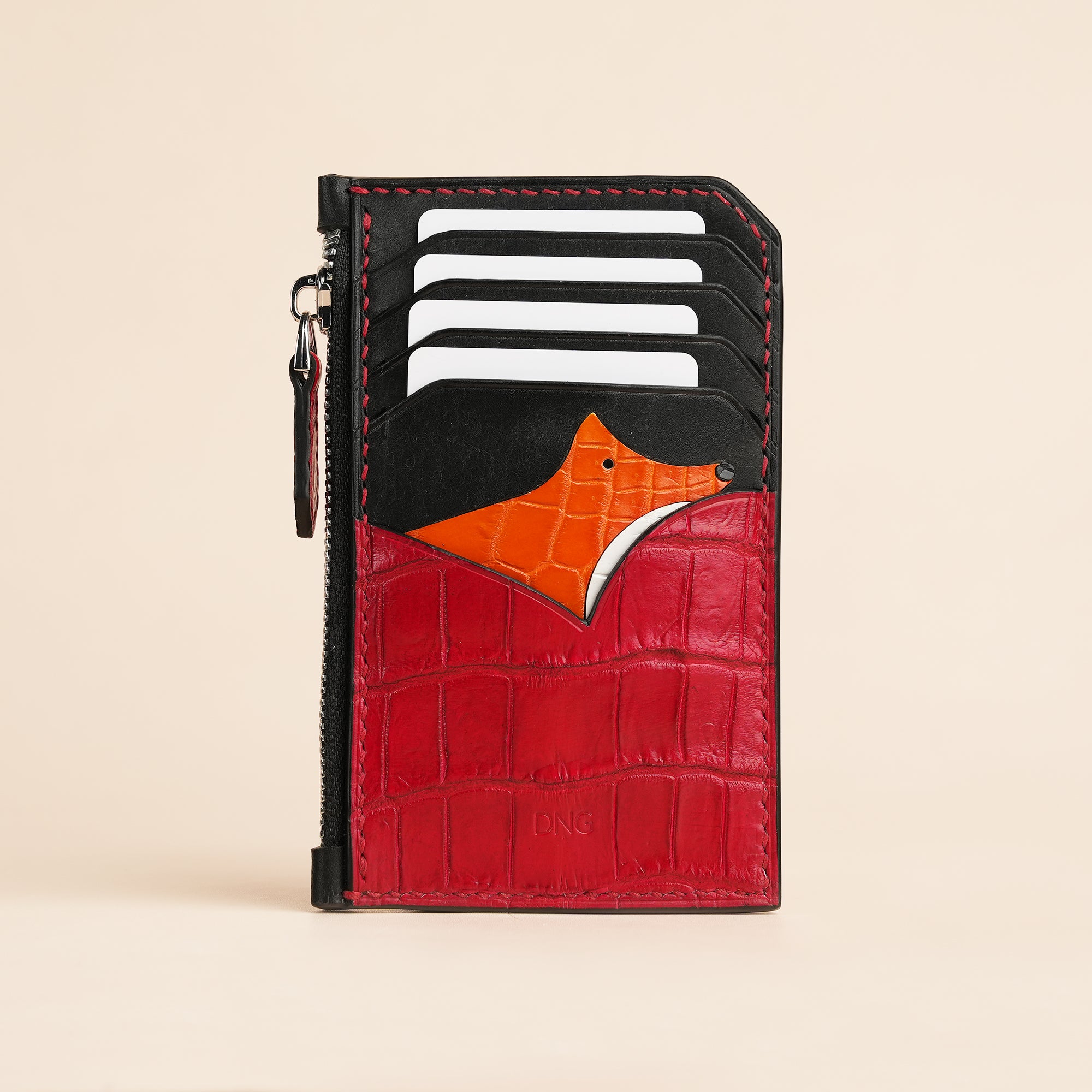
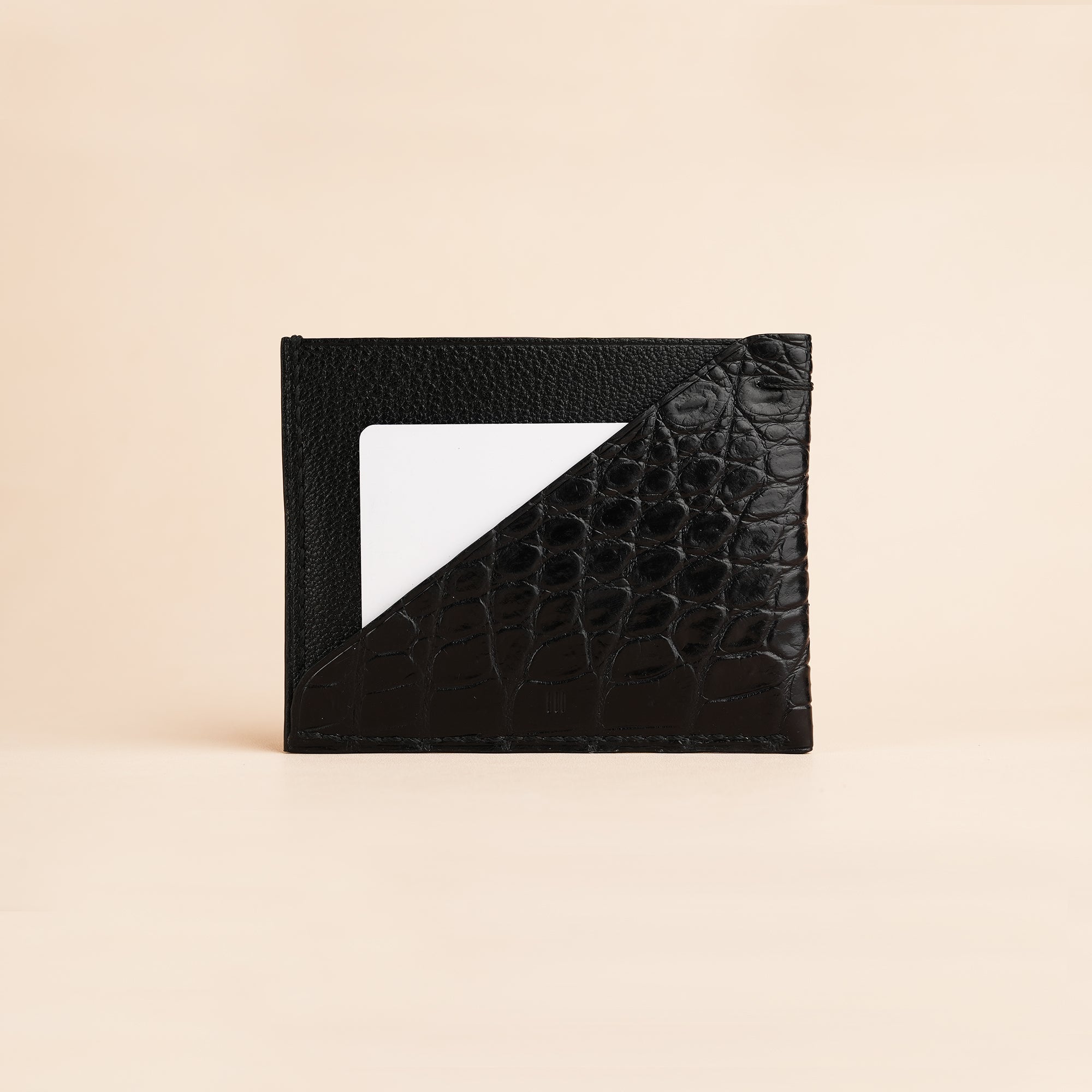
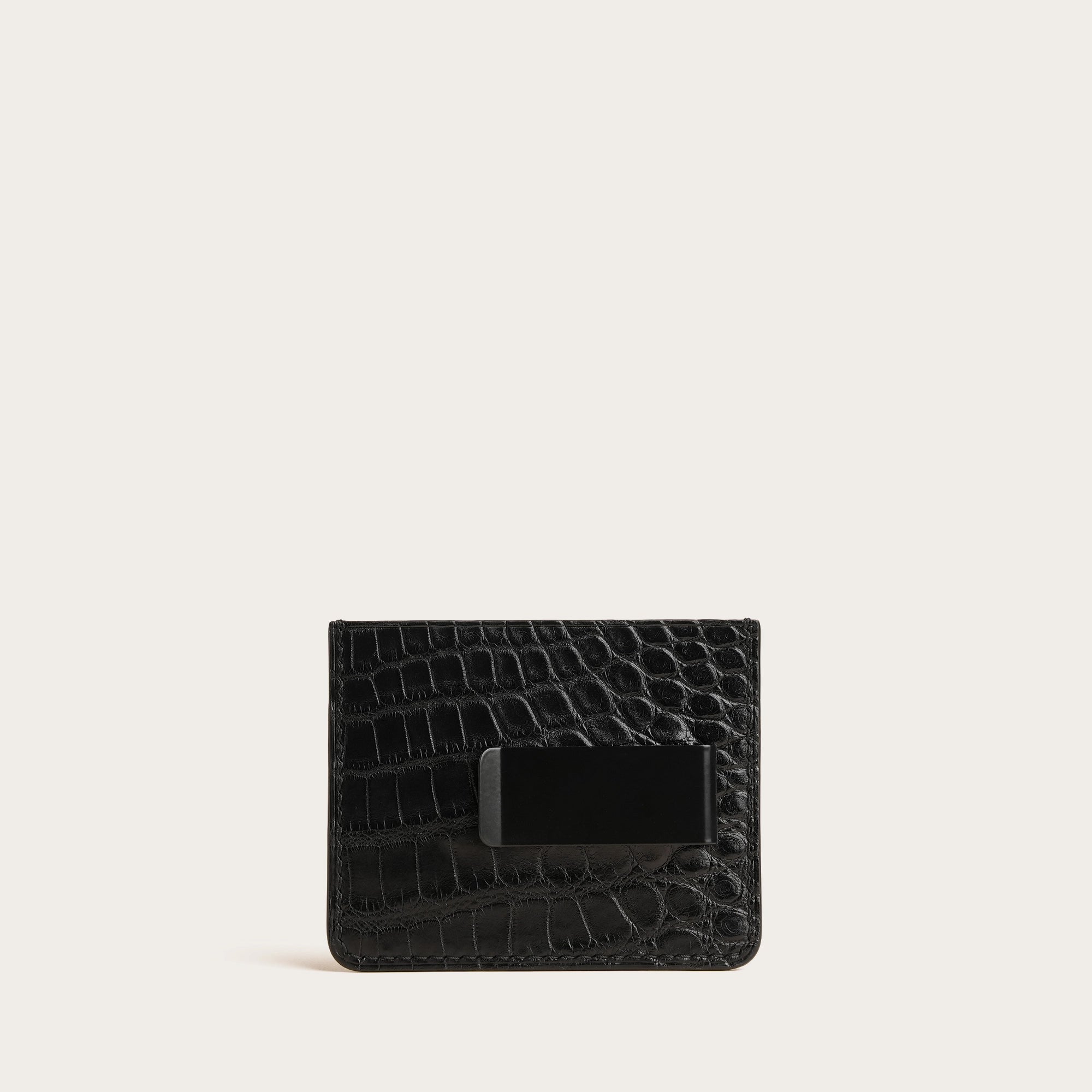
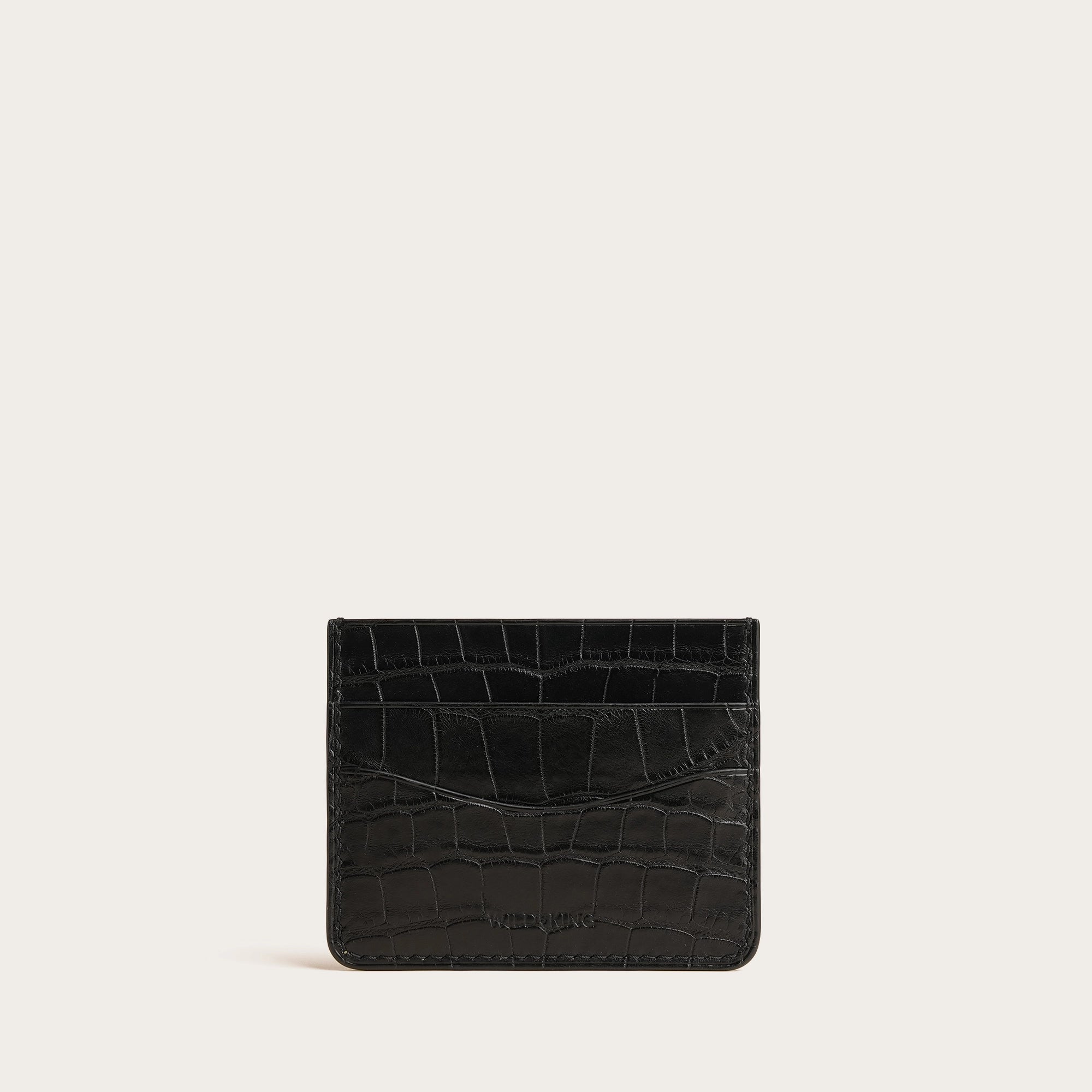
Take the Black Alligator Leather Card Holder - Full Alligator Edition as a prime example. Most brands compromise by using alligator only on the outside and cheap lining on the inside. We don't do that. This piece is fully crafted from premium alligator leather, showcasing the natural texture and depth of the material in its purest form. Designed to hold up to 7 cards, it remains incredibly slim and elegant. It is a confident statement for a discerning everyday carry, proving that you can have the luxury of a "King" without the bulk of the past.

Durability & Care
A handmade alligator leather wallet is an investment. If you treat it right, it will outlast you. If you treat it wrong, you can ruin it in a day.
It gets better with age
When you first receive your Wild & King alligator wallet, it might feel stiff. The card slots might feel tight.
Do not force it.
Alligator fiber is dense. It needs time to relax. Use it normally. Within 2 3 weeks, the collagen fibers will loosen slightly and mold perfectly to the contents of your wallet, locking your cards in place securely. This "break in" process is a sign of full grain quality, not a defect.
What to do when it gets wet?
It happens. You get caught in the rain, or a drink spills.
The Golden Rule: Never, ever use heat.
- Do not use a hair dryer.
- Do not put it on a radiator.
- Do not leave it in direct hot sun.
Heat will cook the proteins in the skin. The scales will curl up, the leather will shrink, and it will crack.
The Fix: Simply wipe off the excess water with a clean, soft cloth. Leave the wallet open in a cool, dry room with good airflow. Let it dry naturally for 24 hours. Once dry, you can apply a tiny amount of exotic leather conditioner (specifically designed for reptiles) to restore the moisture.

Frequently asked questions (FAQ)
Is alligator leather waterproof?
No, it is water resistant, but not waterproof. Alligators live in water, but their processed leather skin behaves differently. Prolonged exposure to water can darken the leather or cause water spots. Always dry it naturally if it gets wet.
Can I customize the color of my alligator wallet?
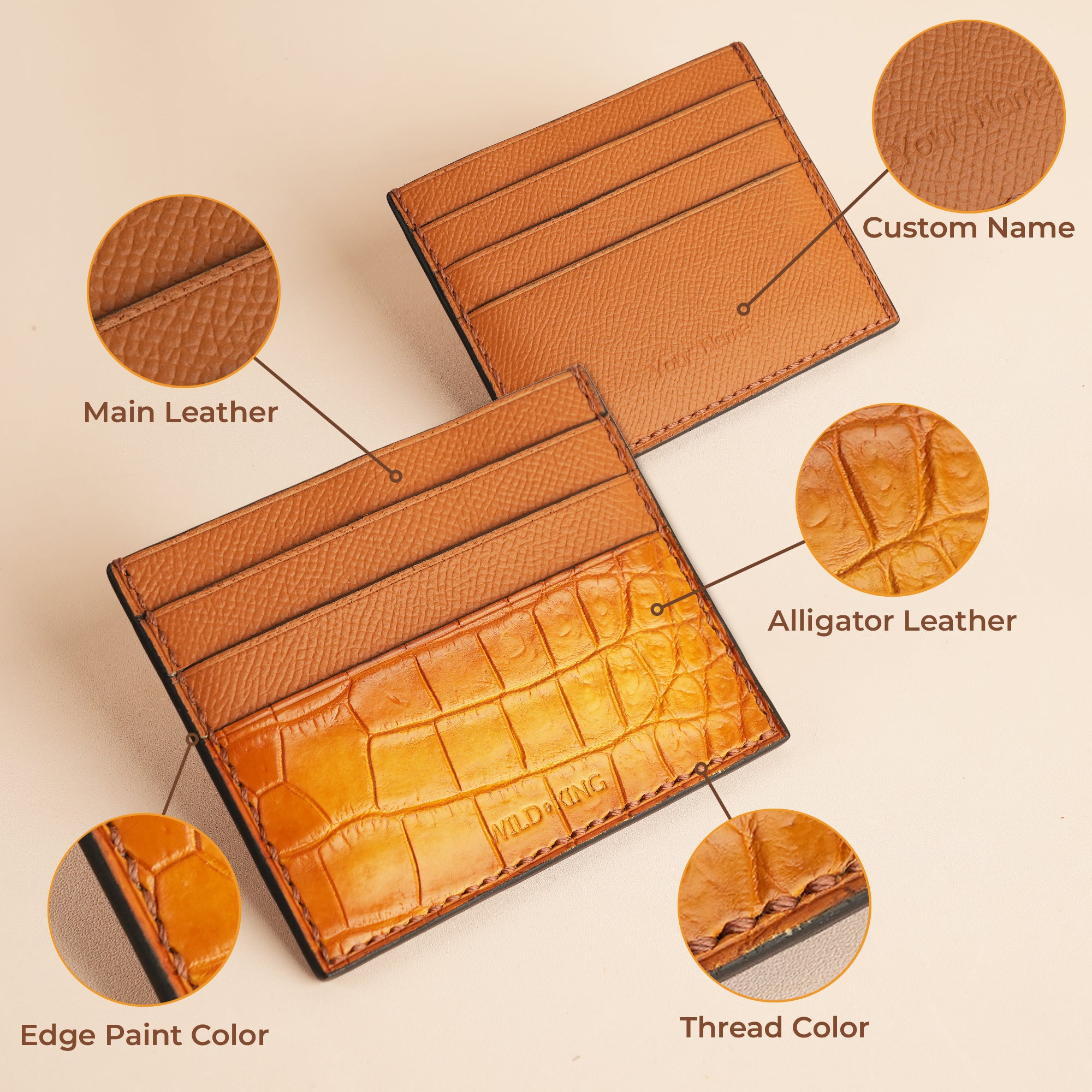
Absolutely. We believe in "Authentic materials deserve authentic hands." We offer a bespoke service where you can choose the specific cut of the hide, the color of the thread, and the edge paint. Visit our W&K Customer Bespoke page to start your creation.
Does Wild & King ship internationally?
Yes, we serve customers globally, primarily in the US and Europe. For details on timelines and costs, please review our Shipping Policy.
What if I am not satisfied with the product?
We stand behind our craftsmanship. However, we understand that buying online can be tricky. Please read our Refund Policy for detailed information on returns and exchanges.
Conclusion
Handmade alligator leather is not just a material, it is a testament to nature's durability and the craftsman's patience. At Wild & King, we craft these pieces for those who understand that true luxury doesn't shout, it whispers.
Whether you are looking for a rugged companion or a sleek minimalist statement, alligator leather offers a texture and character that no other material can match.
Ready to find your unique piece? Explore our [Alligator Leather Collection] or discover other [Wallets] crafted with the same dedication to quality.
Our Collection
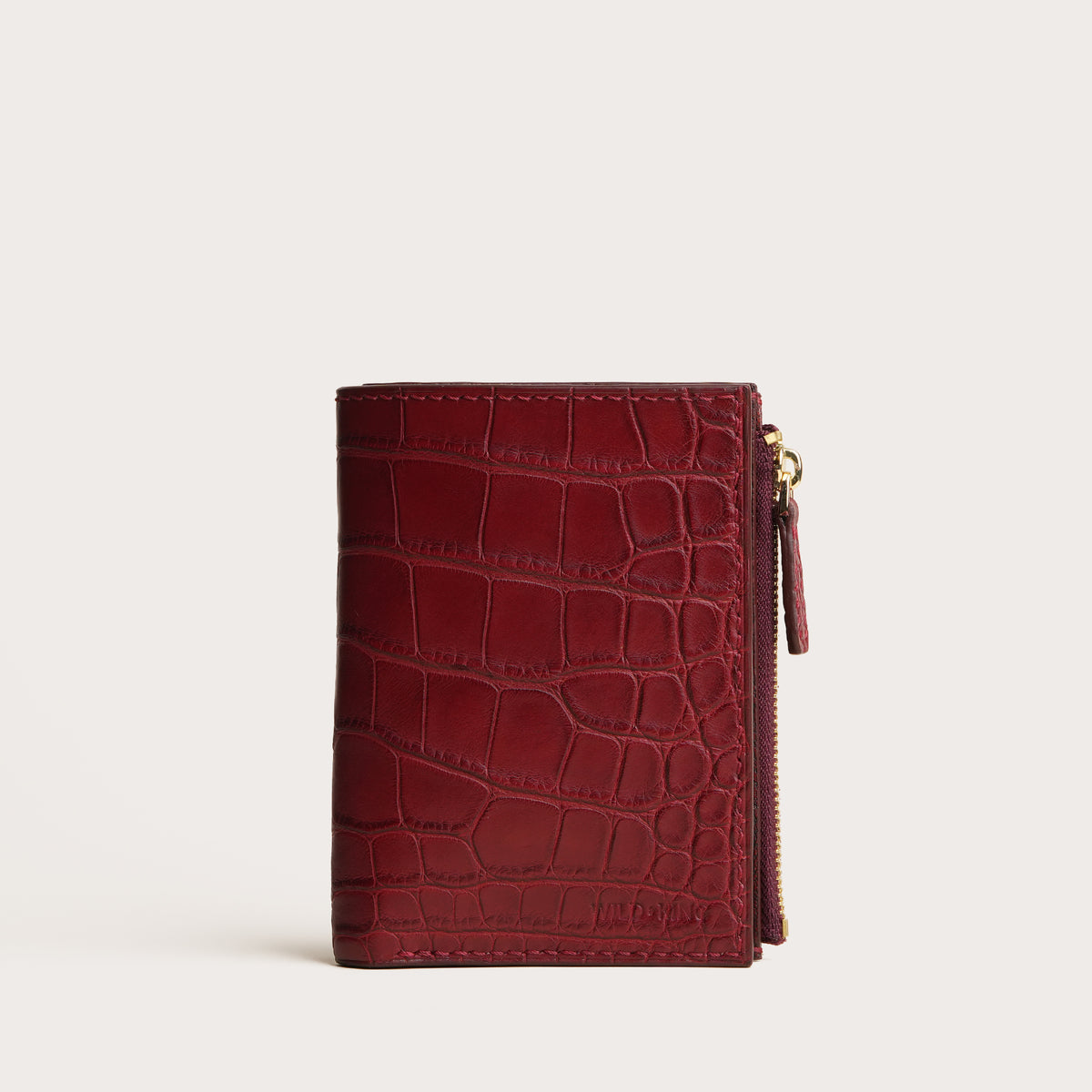
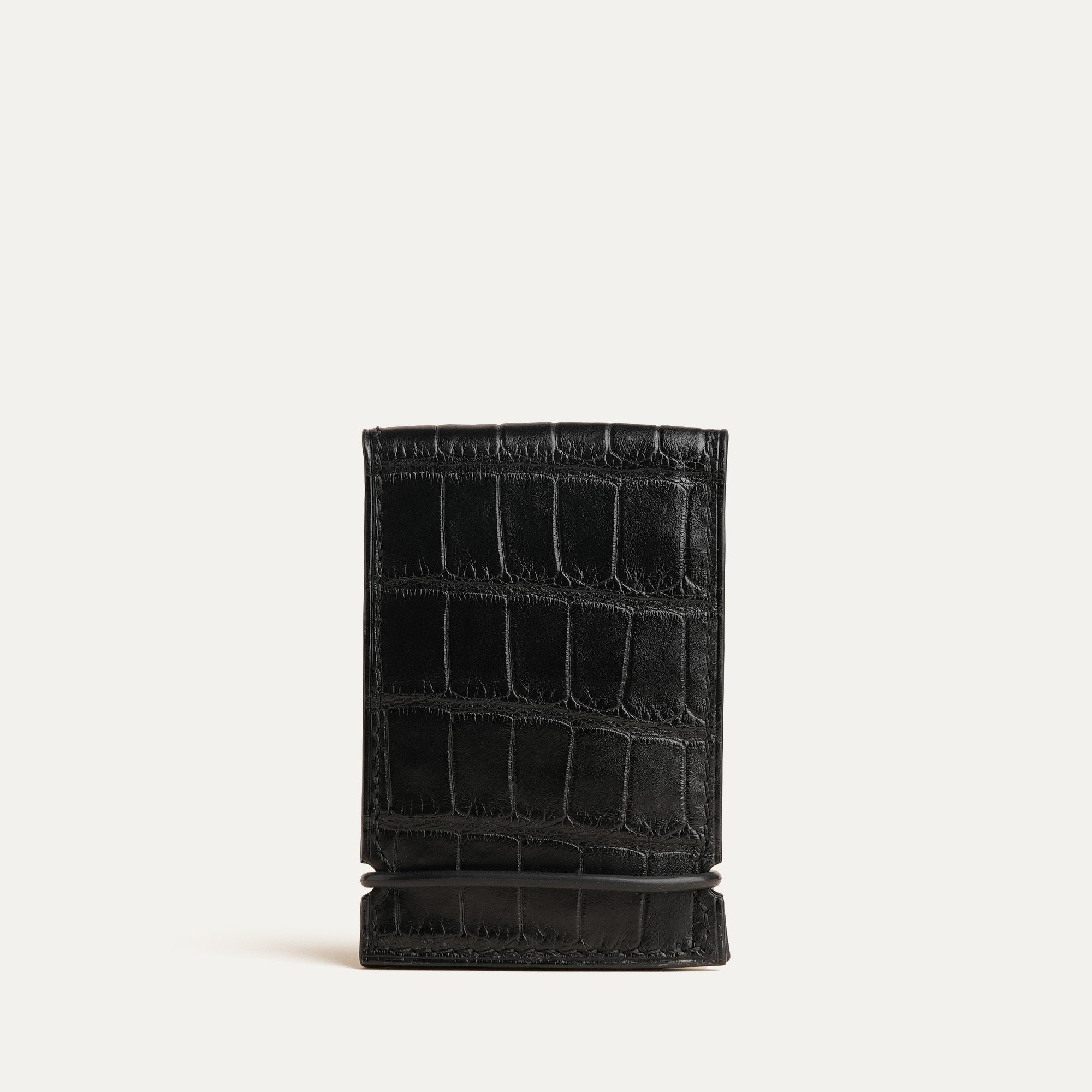
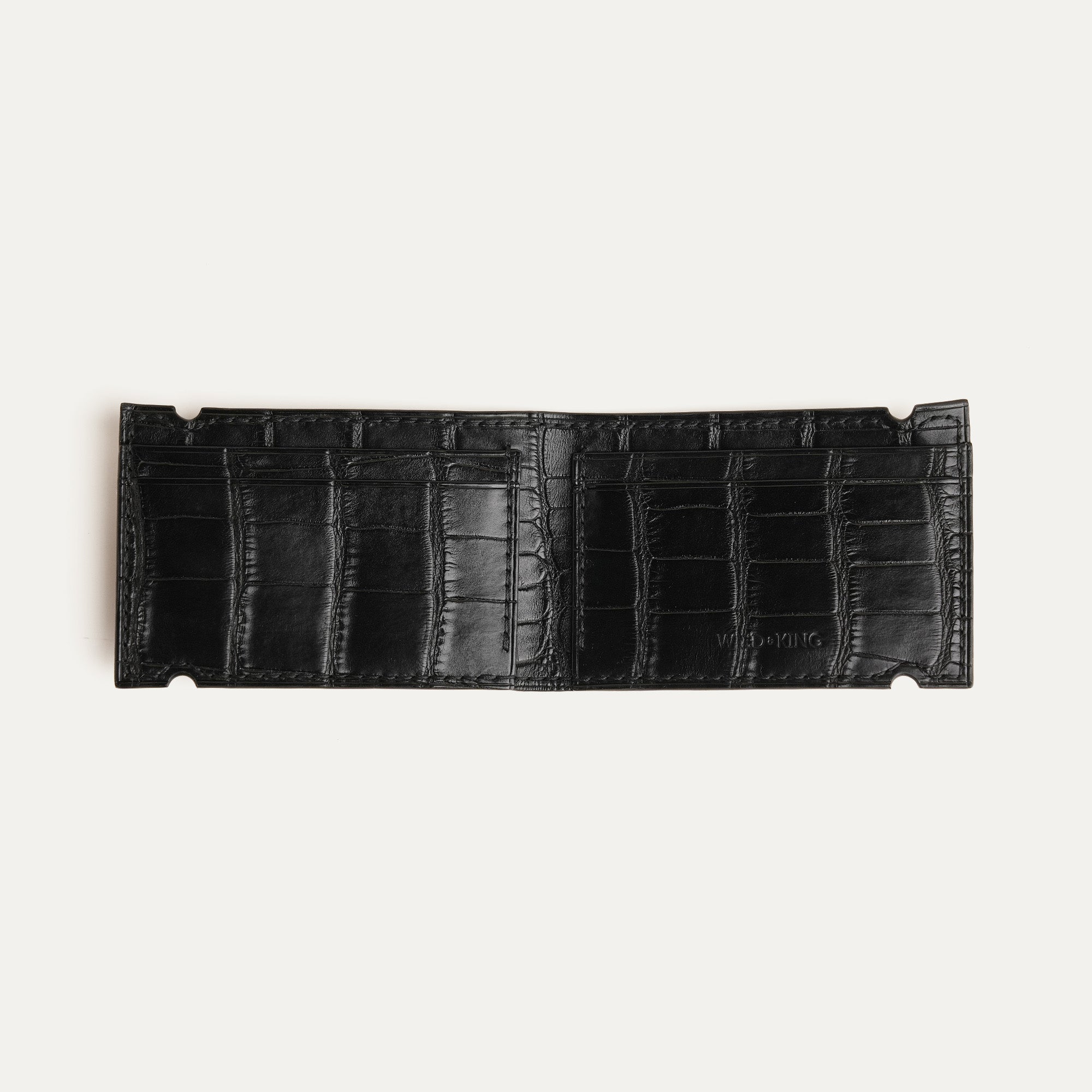
Alligator Leather Wallet










Need help?
Frequently Asked Questions
What is the difference between Full-Grain, Top-Grain, and Genuine Leather?
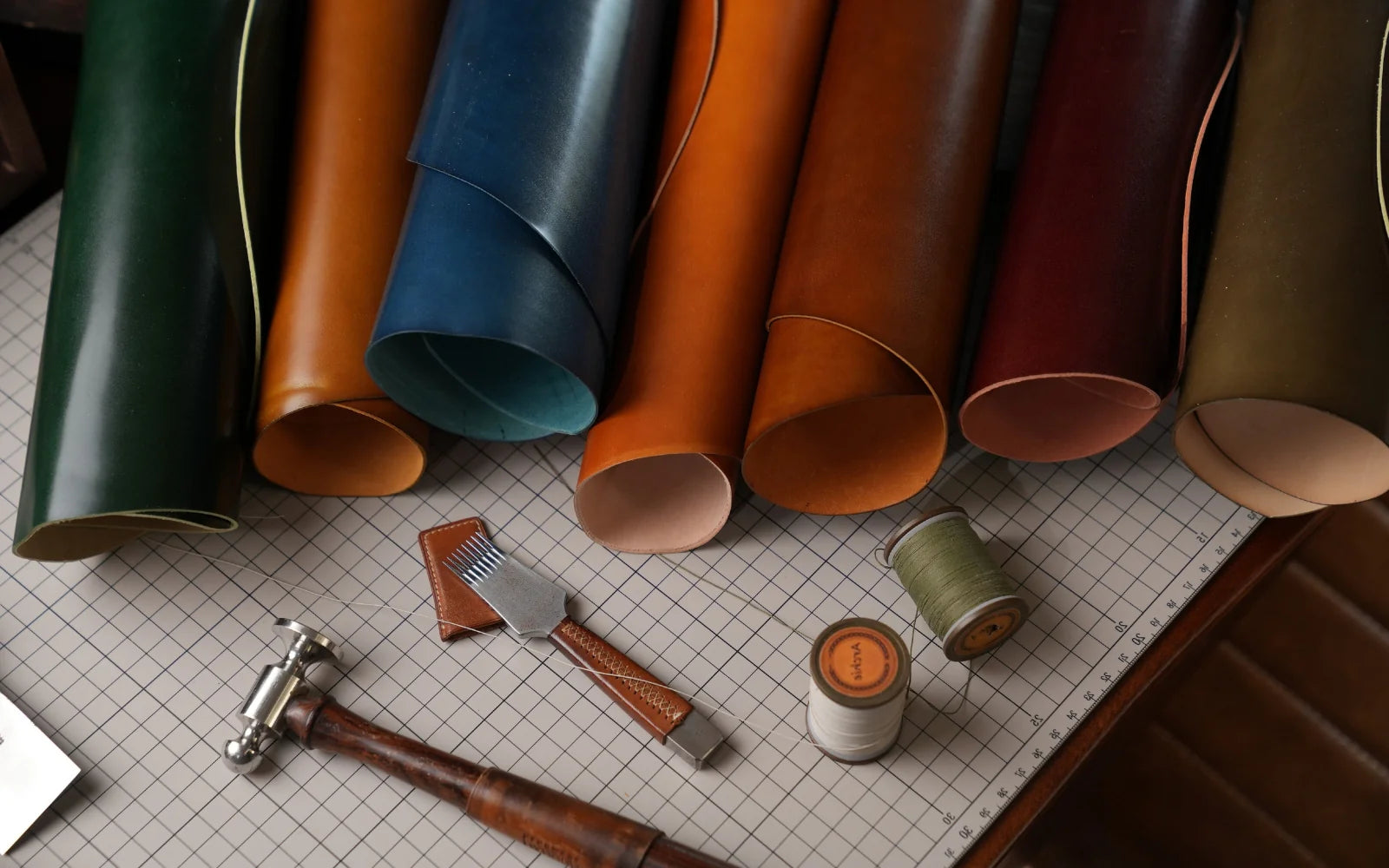
Understanding leather grades is the foundation of choosing a quality men's leather wallet. Genuine leather and top-grain leather are often sanded down to remove imperfections, losing their natural strength. Full-grain leather retains the entire outermost layer of the hide, keeping the fibers densely packed for maximum durability. At Wild & King, we strictly handcraft our products and do not distribute mass-produced third-party brands. Every piece in our workshop, from our classic bifold to our minimalist card holders, is made exclusively from 100% full-grain leathers, including Italian Pueblo, Habana, and premium exotic hides.
Do you ship overseas?
For an everyday carry (EDC) item that lasts a lifetime, you need a material that balances structural integrity with a slim profile. Many users look for a wallet that can survive decades of use. Here is a breakdown of our top-performing artisan materials to help you choose the best fit for your lifestyle:
| Leather Material | Core Characteristic | Patina Development | Scratch Resistance | Best Wallet Style |
|---|---|---|---|---|
| Pueblo (Italy) | Rustic matte texture | Very Fast | Medium | Vintage bifold wallets |
| Habana | Waxy "pull-up" effect | Fast | Medium | Heritage / Workwear EDC |
| Epsom | Embossed rigid structure | None (Color stays true) | Very High | Modern minimalist cardholders |
| Lizard | Beaded scales & slim profile | Slow | High | Elegant front pocket wallets |
| Himalayan, Alligator, Crocodile | Pronounced scales & tough | Slow | Very High | Statement luxury pieces |
Is exotic leather like Crocodile or Ostrich actually better for wallets, or is it just about looks?
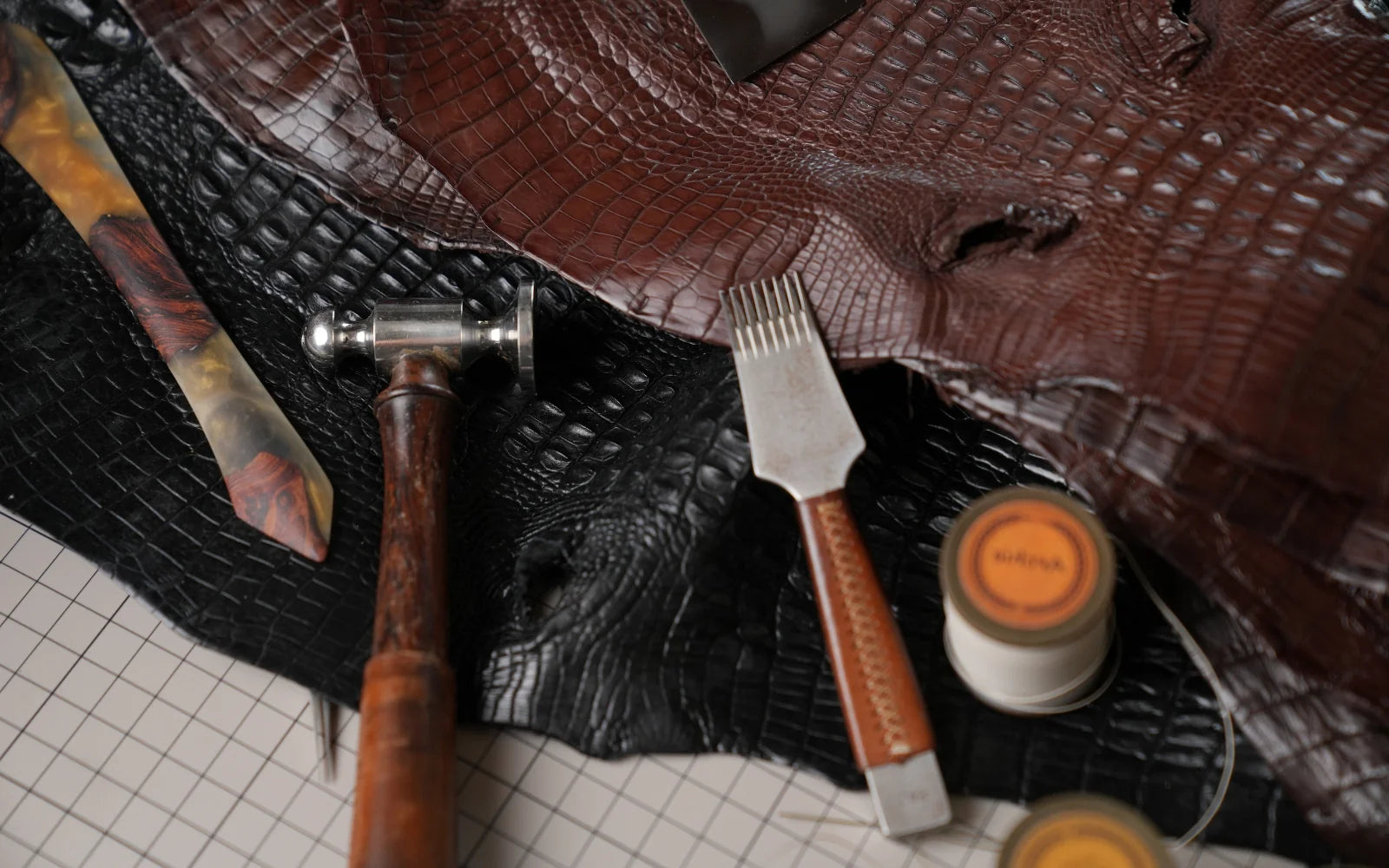
It is not just about aesthetics; exotic leathers offer exceptional real-world performance. Crocodile leather is incredibly tough and provides excellent scratch resistance. Ostrich leather, on the other hand, contains deep natural oils making it softer and lighter than standard cowhide. When these robust exotic leather materials are combined with a traditional hand-sewn saddle stitch, the resulting wallet is structurally superior to machine-stitched luxury fashion brands, ensuring it will never unravel even under heavy daily use.
Which leather develops the best patina for an everyday carry (EDC) wallet?
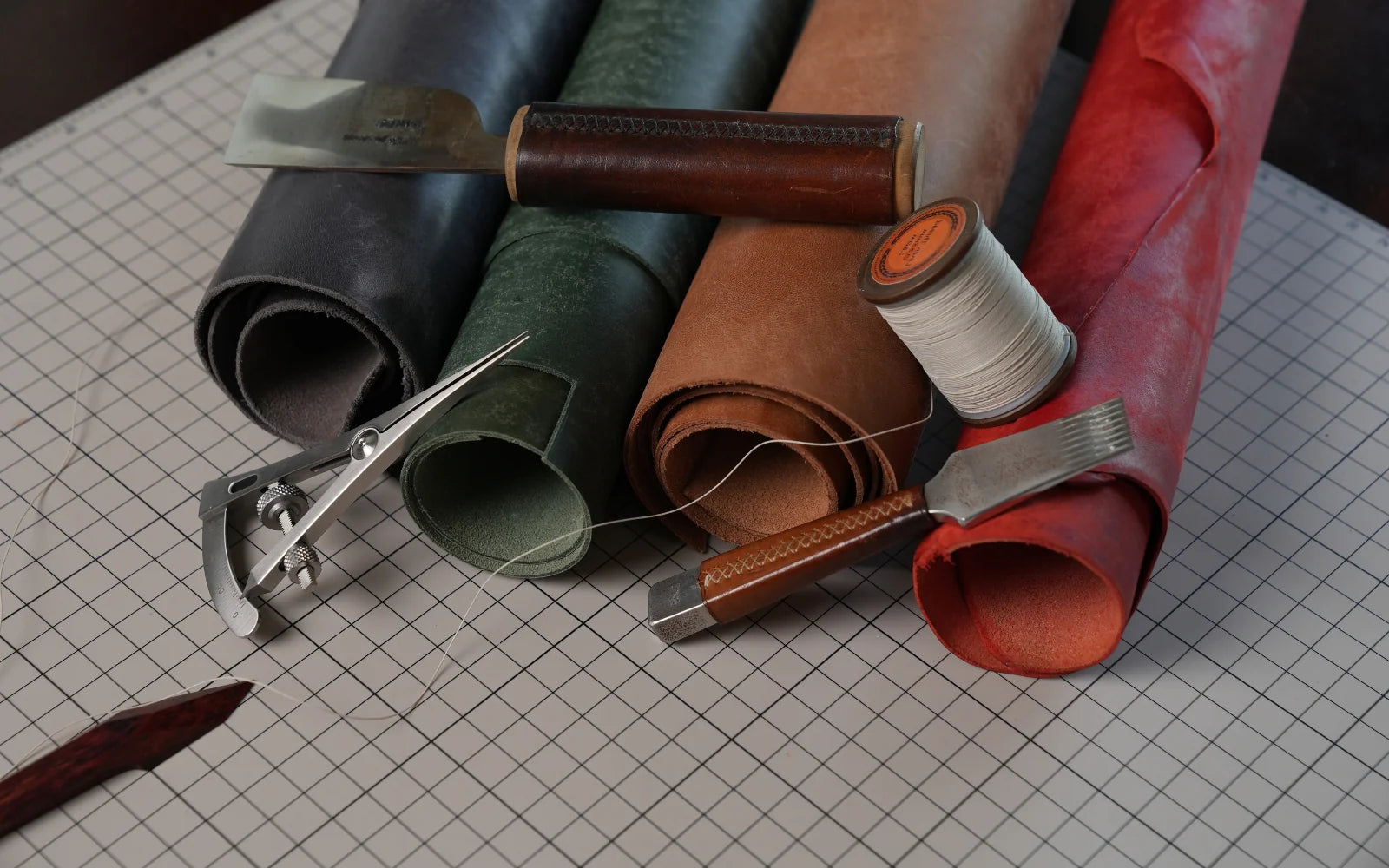
A rich patina is the hallmark of a high-quality leather good that ages alongside its owner. If you want your custom leather wallet to develop a unique, glossy protective glaze over time, vegetable-tanned leathers are your best option. Our Pueblo and Habana leathers are specifically chosen for their rapid and gorgeous patina development. They absorb natural oils from your hands, healing superficial scuffs and turning a simple minimalist wallet into a deeply personal artifact.
How can I tell if a handmade leather wallet is made from genuine full-grain leather when buying online?
Buying online can make it difficult to judge quality. To ensure you are investing in true full-grain craftsmanship rather than plastic-coated substitutes, look closely at the product photos, specifically the edges. Industrial wallets use thick, rubbery edge paint to hide weak layers. Artisan workshops showcase their full-grain leather by naturally burnishing the edges with beeswax and friction. Additionally, look for brands that explicitly detail their tanning processes and leather origins (like Badalassi Carlo for Pueblo), which is a strong indicator of authentic handmade leather craftsmanship.