
Ostrich Leather
Ostrich leather presents a stark paradox in the exotic leather market. It is simultaneously one of the most mechanically durable substrates available and one of the most visually polarizing. Consumers approaching this material must navigate a minefield of biological anxieties (trypophobia), extreme vulnerability to moisture, and intense ethical scrutiny.

This guide from Wild & King establishes the scientific baseline for understanding, authenticating, and maintaining authentic exotic hides.
What is ostrich leather?
Ostrich leather is harvested directly from the ostrich bird. While cowhide relies on thick, dense layers of overlapping collagen to achieve strength, the biological engineering of an ostrich hide is entirely different.

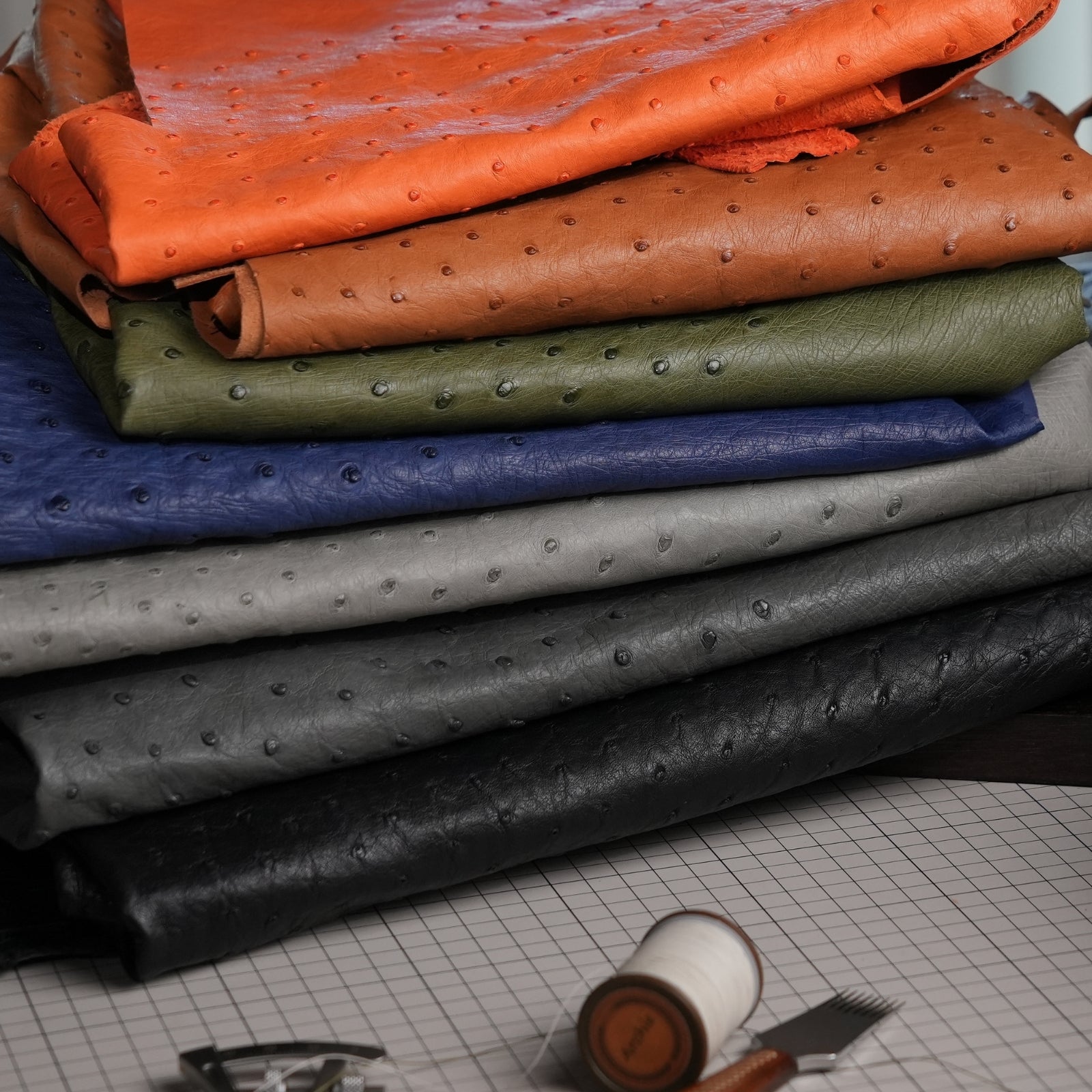
The defining visual characteristic of ostrich leather is the "quill follicle", the distinct, circular bumps left behind after the bird's feathers are removed. However, these bumps are not merely decorative, they are indicators of the hide's structural composition.
Biological properties
Ostrich skin contains an abnormally high concentration of natural, internal oils. These oils continuously lubricate the collagen fibers on a microscopic level. This internal lipid matrix prevents the fibers from drying out, stiffening, and cracking under severe mechanical stress.

Because of this natural lubrication, ostrich leather can be skived (thinned) to fractions of a millimeter for delicate accessories while retaining a tensile strength that vastly outperforms standard cowhide.
Aesthetic appeal
This biological oil content is the exact mechanism that creates the leather's unique beauty. The oils give the hide a deep, natural luster and a remarkably soft hand-feel. When the leather is tanned and dyed, this rich oil content allows the material to absorb pigments deeply and unevenly.

The dye settles differently into the smooth skin compared to the dense tissue of the quill bumps, creating a striking, natural contrast that makes the distinct grain pattern stand out brilliantly. The biology of the bird literally engineers a material that is both functionally indestructible and visually arresting.
The 4 ostrich leather cuts
The topography of an ostrich hide is highly asymmetrical, and the anatomical origin of the cut dictates its market value, aesthetic, and structural application. For bespoke small leather goods, only specific zones of the hide are viable.
Full Quill (premium applications)
Sourced strictly from the central back of the bird. This zone contains the dense, highly raised quill follicles (bumps) where the primary feathers grew. Because the crown comprises only about one-third of a standard hide, full quill ostrich commands the highest market premium.

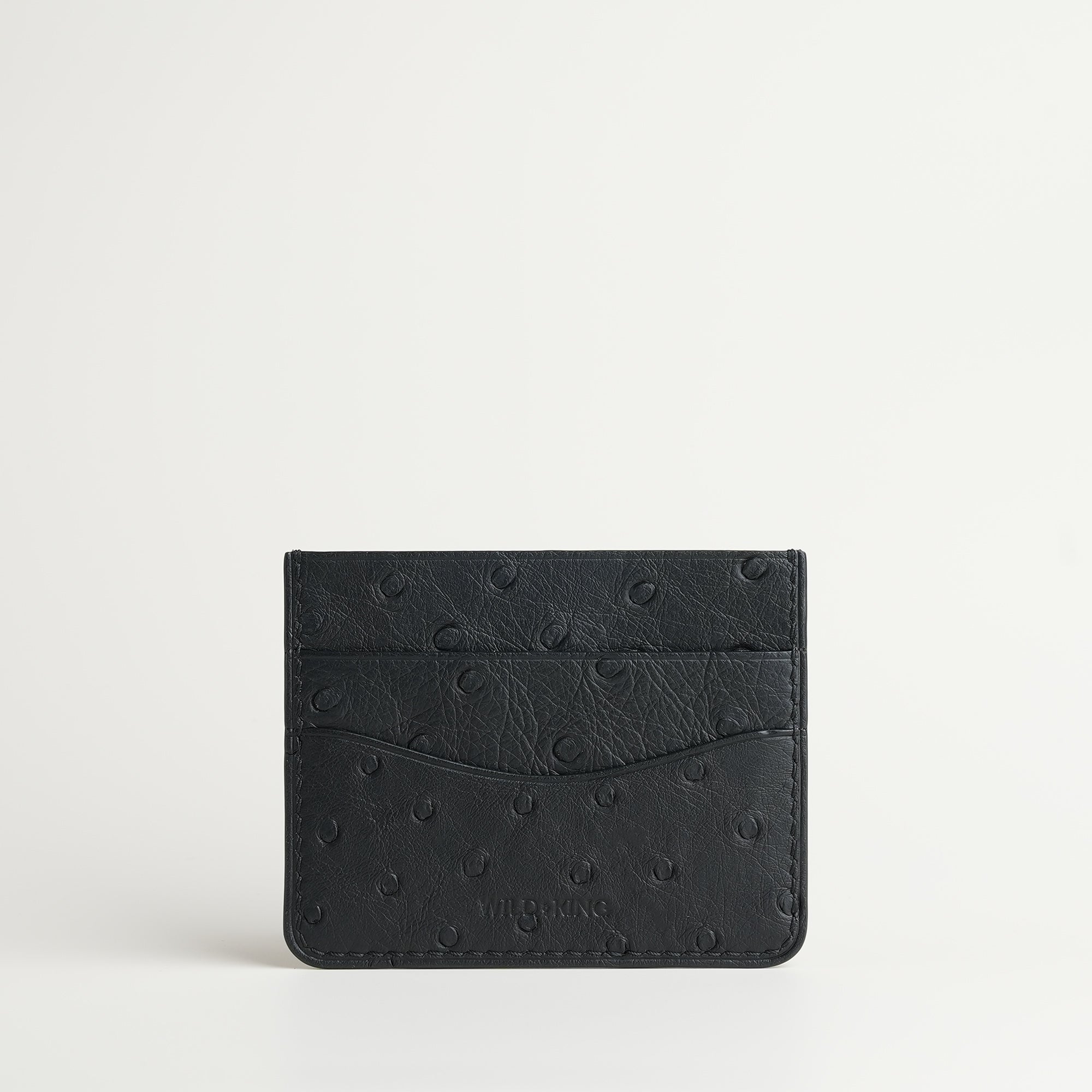
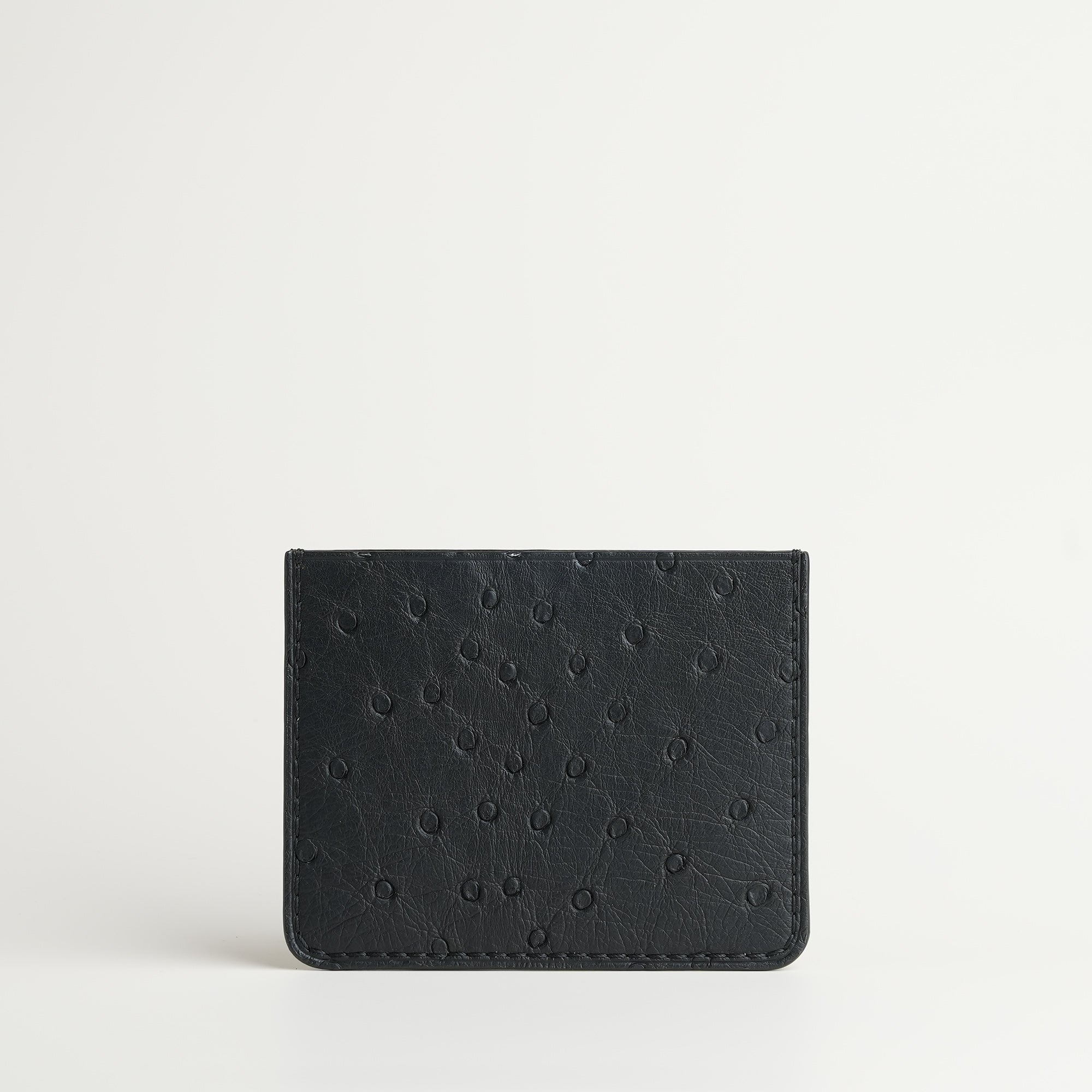
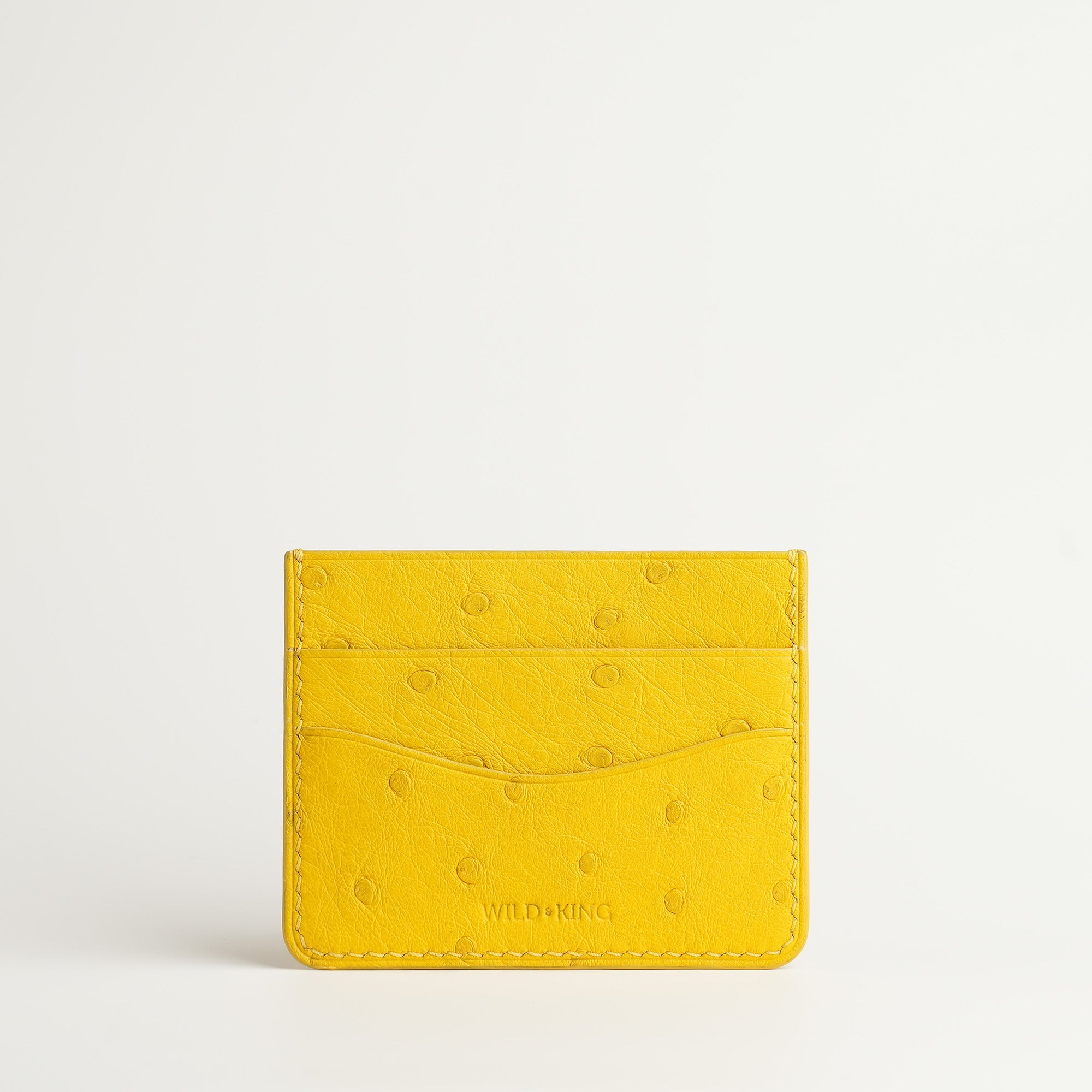
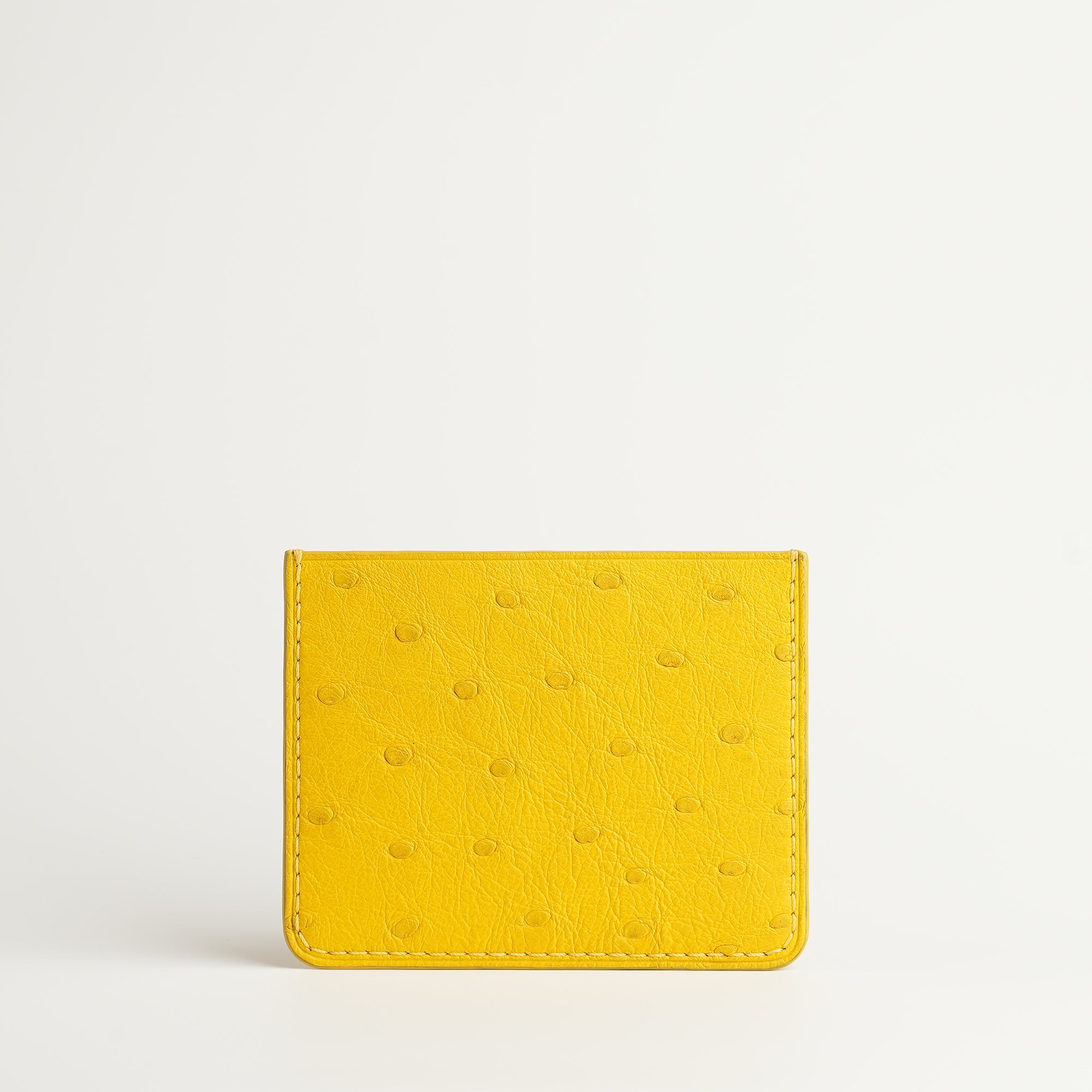
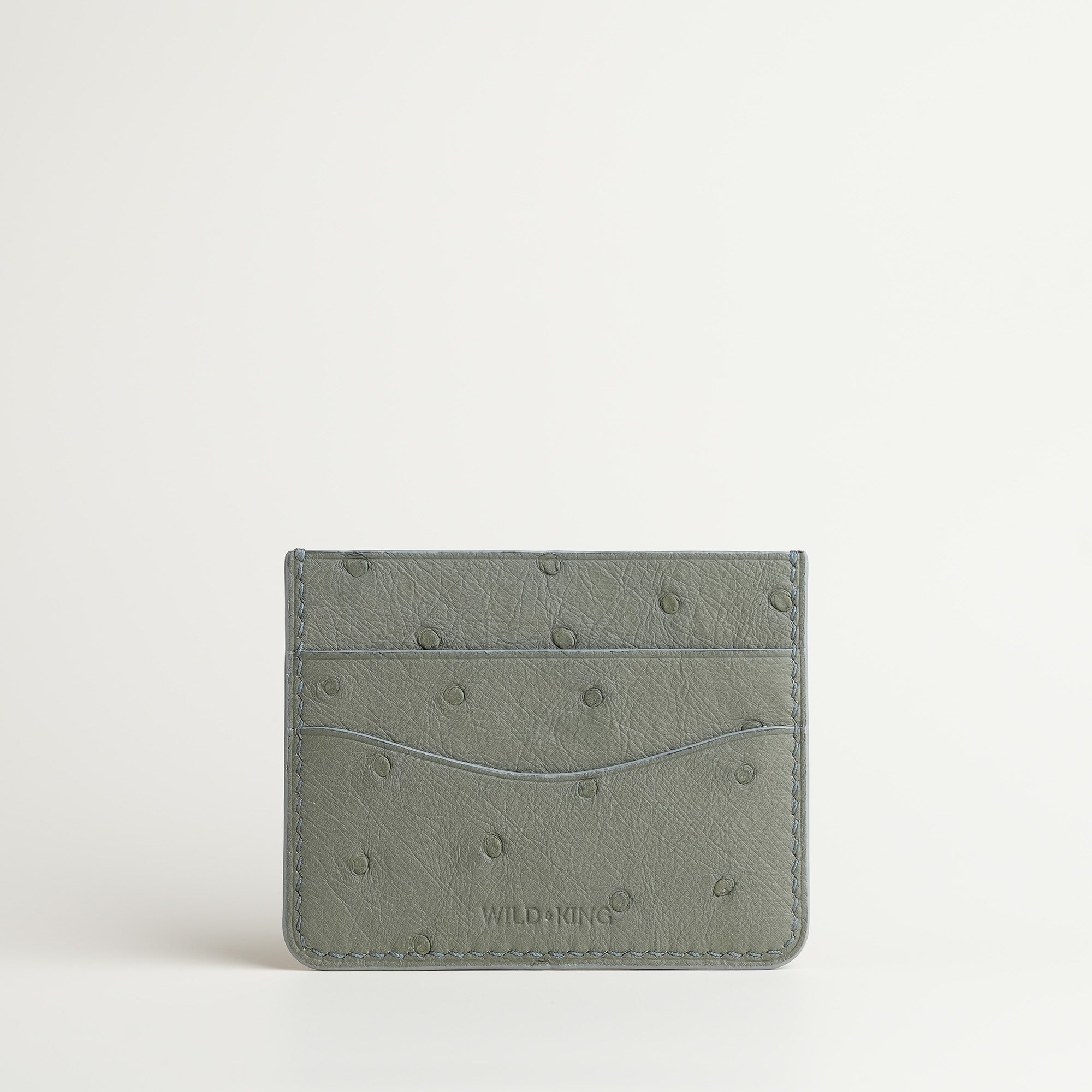
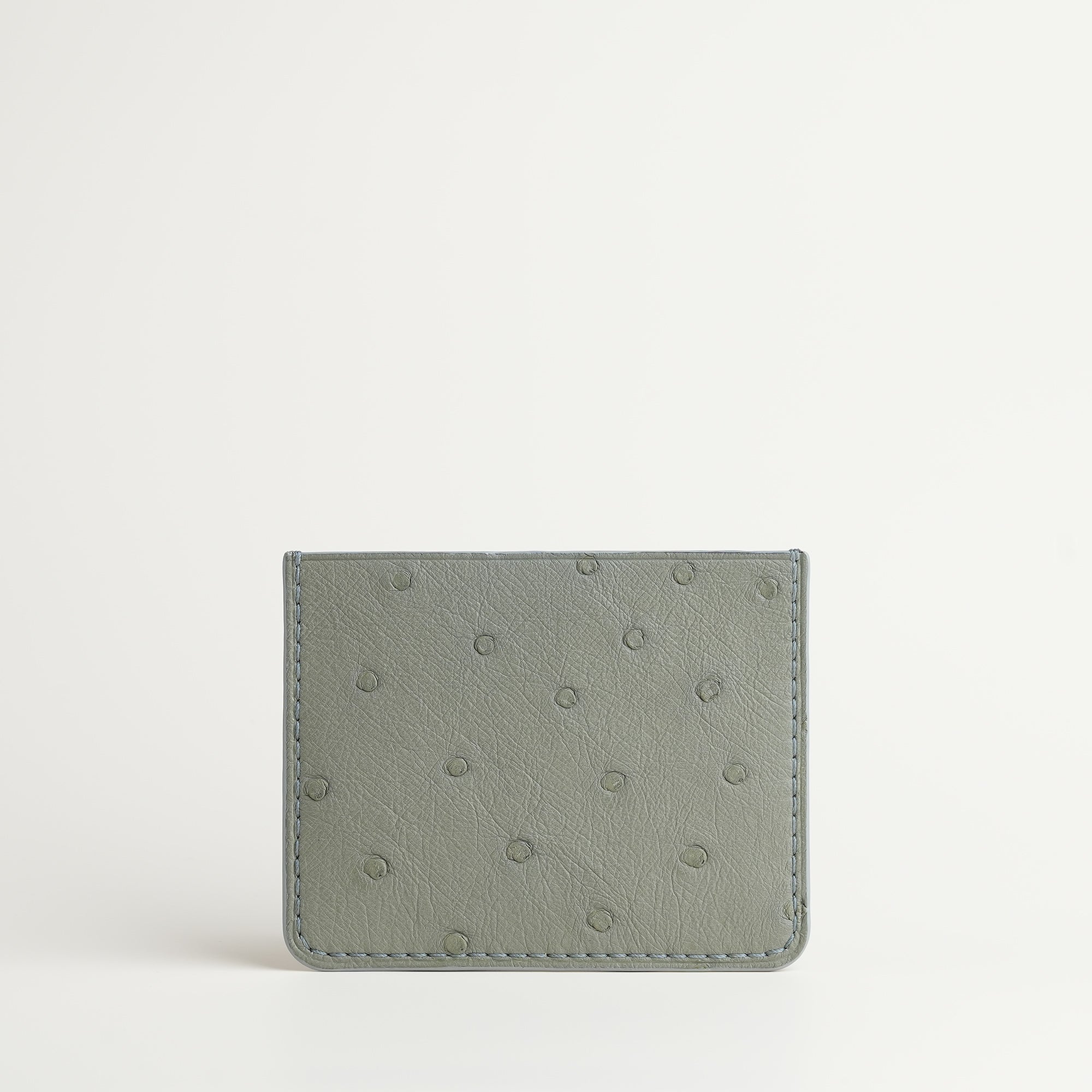
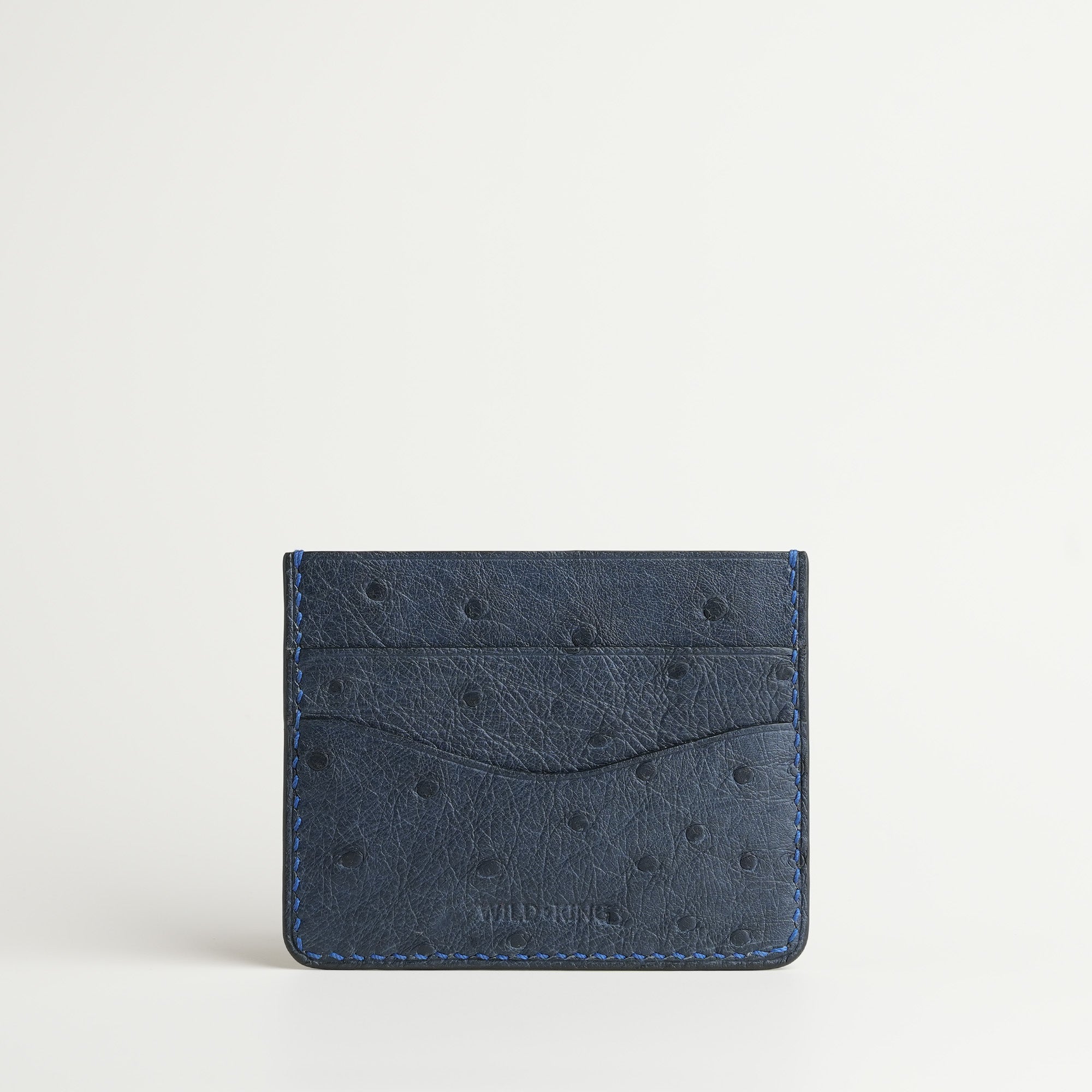
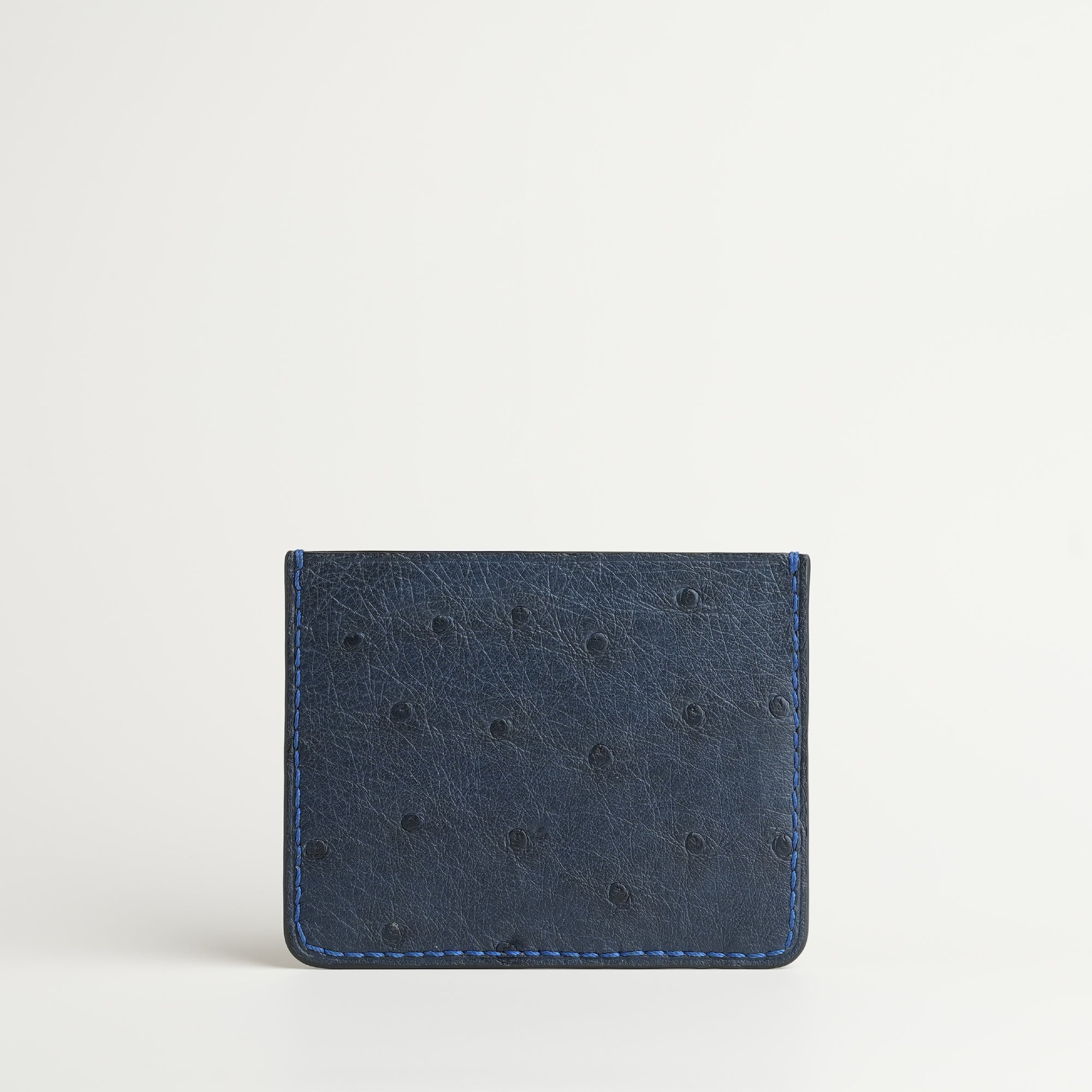
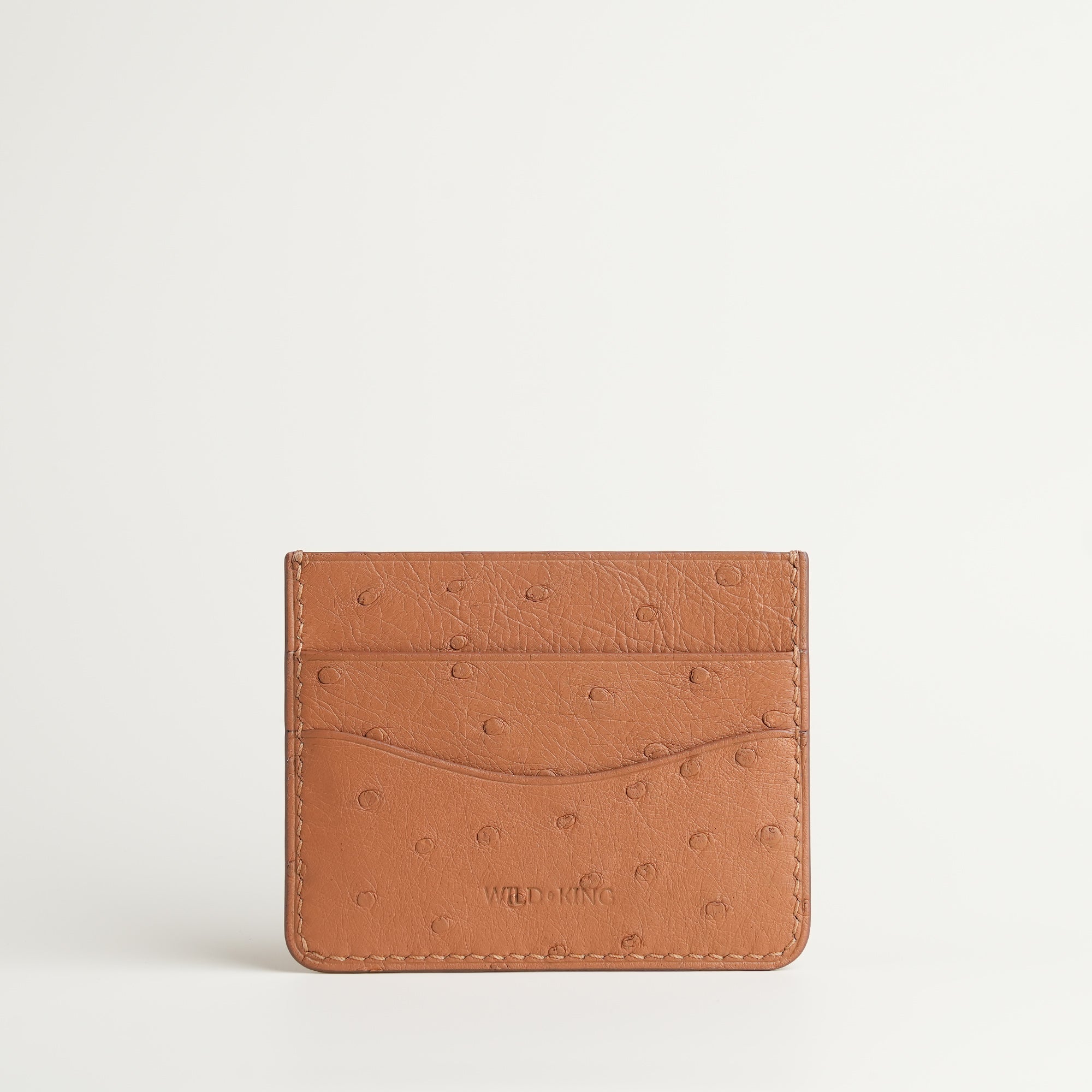
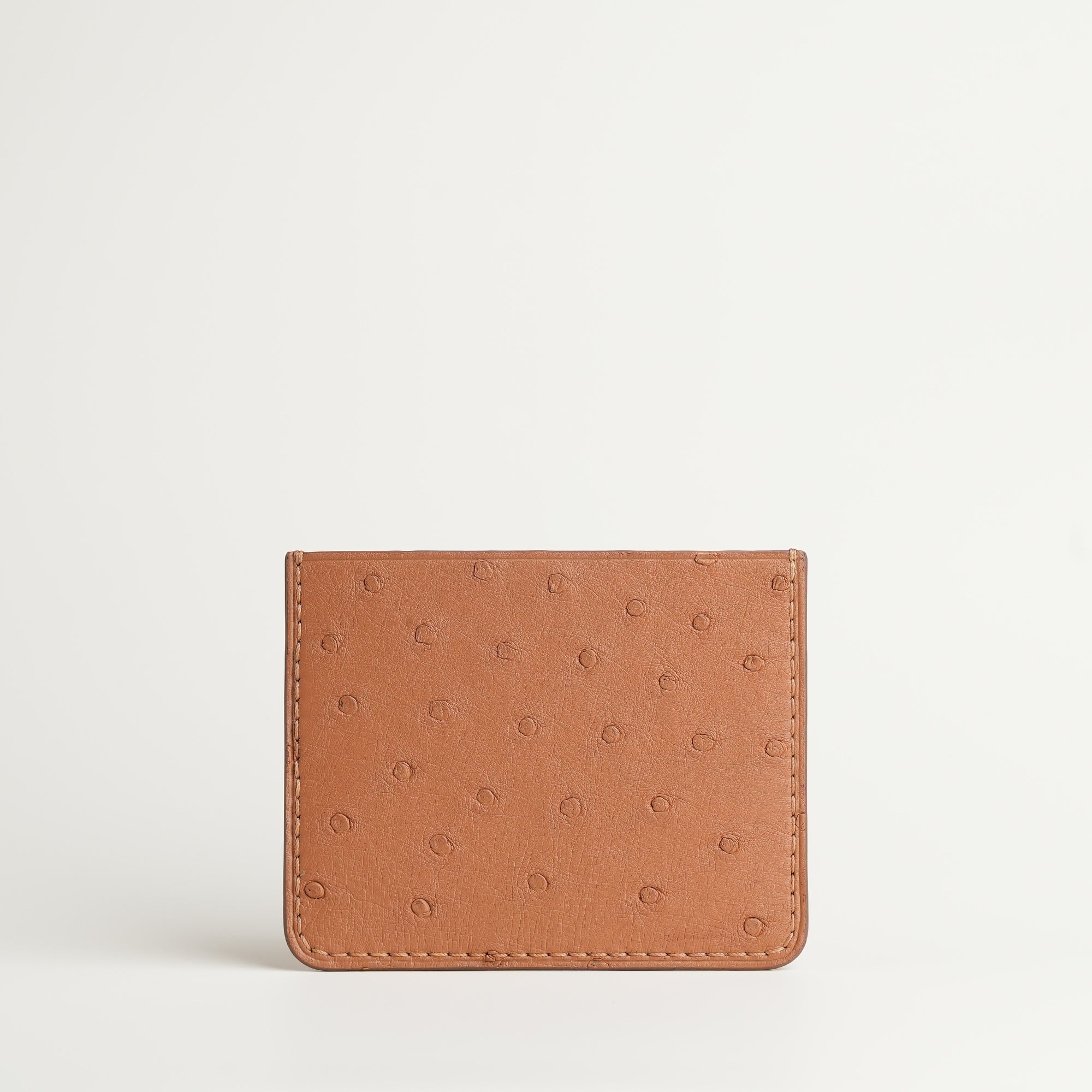
It is the primary cut utilized for structural exteriors on premium Brown Ostrich Leather Bifold Wallet and Ostrich Leather Card Holder collection.
Ostrich Leg Skin
Sourced from the lower limbs of the bird. It completely lacks quill follicles, featuring instead a highly reflective, distinct scale-like pattern resembling reptilian hide (similar to alligator or lizard). Due to its narrow dimensions and linear flex, it is the optimal cut for bespoke watch straps.

Half Quill
The transition zone between the central crown and the outer flanks. The follicle bumps here are sparser and unevenly distributed. It is utilized for mid-tier goods where uniform texture is not required.

Smooth Ostrich
Sourced from the belly and lower flanks. It completely lacks bumps, exhibiting a flat, highly supple surface. While it retains the biological durability of the hide, it lacks the exotic aesthetic and is generally relegated to interior linings or budget footwear.
Comparative Analysis of Ostrich Hide Topography
| Cut Designation | Anatomical Origin | Visual Characteristics | Market Application & Structural Utility |
| Full Quill | Central back (Crown) | Dense, raised follicle bumps with apex pores | Premium exteriors; high structural integrity |
| Ostrich Leg | Lower limbs | Reflective, overlapping reptilian scales | Watch straps, small panel accents |
| Half Quill | Flank transition zones | Asymmetrical, sparse follicle distribution | Mid-tier accessories, gussets |
| Smooth Ostrich | Belly and lower flanks | Flat, supple, devoid of quill bumps | Interior linings, concealed panels |
Ostrich vs. exotic leathers
When selecting a bespoke accessory, understanding how ostrich leather compares to other premium exotics is critical. Each hide possesses distinct mechanical properties and demands specific maintenance parameters.
| Feature | Ostrich (Full Quill) | Alligator (Belly) | Peccary (Wild Boar) | Lizard (Ring Mark) |
| Visual Texture | Prominent, raised circular quill follicles. | Structured, geometric rectangular scales. | Distinctive 3-prong hair follicle pore pattern. | Small, uniform, tightly packed pebble-like scales. |
| Mechanical Durability | Extreme tensile strength; highly resistant to tearing. | Very high; wears like iron, but scales can scuff. | High; exceptionally resilient to stretching. | Moderate; requires care to prevent scale curling. |
| Flexibility | Extremely high; fibers lubricated by natural oils. | Moderate to Low; rigid scales require a break-in period. | Supreme; incredibly soft, glove-like suppleness. | Moderate; bends well but vulnerable at the scale hinges. |
| Patina Potential | Excellent; absorbs hand oils to create a deep, rich glaze. | Minimal; protective glazes lock in original color. | Excellent; darkens rapidly and evenly with friction. | Minimal; finishes are designed to remain static over time. |
| Maintenance Level | Strict; highly vulnerable to water spotting and organic grease. | Strict; requires specialized reptile cream to prevent joint cracking. | Low; highly forgiving and easily revived with basic conditioning. | Very Strict; neglect leads rapidly to scale dry-rot and flaking. |
Ostrich leather color strategy
Ostrich leather faces a severe optical barrier: trypophobia. This is an evolutionary biological disgust response triggered by patterns of clustered holes or bumps.
When ostrich leather is dyed in light, flesh-toned colors (such as pale beige, nude, or soft pink), the trypophobic reaction is aggressively exacerbated because the texture mimics human skin conditions, rashes, or biological anomalies.
So what solution does Wild & King propose?
It's dark jewel tones. Dyeing the hide in highly saturated, deep colors, such as matte black, dark navy, or black cherry, visually absorbs the shadows cast by the protruding quill follicles. This neutralizes the biological "ick" factor, transforming a potentially unsettling biological texture into a sophisticated, high-contrast aesthetic suitable for luxury carry.

3 physical tests to spot fake ostrich leather
The high capital cost of full quill ostrich has generated a massive market for embossed cowhide imitations (fakes stamped with heavy steel plates to simulate bumps). Authentic exotic hides possess biological markers that heavy machinery cannot replicate.
-
The fingernail lift test
A genuine quill follicle is not a solid mass of leather. It is a biological cavity that once anchored a feather shaft, containing connective tissue and a "fat pocket". If you press your thumb against a genuine bump, it will yield slightly.
You can gently slip a fingernail beneath the crown of the follicle. Embossed cowhide vs ostrich is easily exposed here: stamped leather is completely solid and flat underneath the bump, offering no lip or pocket to lift.

-
The apex pore
Because the follicle housed a physical feather, genuine ostrich skin features a microscopic open pore (a physical hole) at the very top of each bump. Stamping dies cannot replicate this open biological channel. If the apex of the bump is completely smooth and sealed under a loupe or macro lens, the leather is fake.

-
Pattern scatter
Biological growth is inherently chaotic. The distribution, size, and spacing of genuine quill follicles exhibit natural pattern scatter, no two square inches are identical. Embossed fakes are created using a repeating metal die, resulting in a tiled, perfectly uniform grid of bumps.
Hidden ostrich leather facts
A pervasive myth in the commercial leather market is that ostrich leather must be shielded from human contact to prevent degradation.
Flattening Quills
First, consumers often mistake flattened quill bumps for structural failure. In reality, the deliberate flattening of quills is a hallmark of premier luxury craftsmanship.
Our craftsman proactively press and "iron" the ostrich hides during the tanning and crafting phases. This technique flattens the pronounced bumps into a smooth, flush surface. It refines the aesthetic, eliminating any abrasive, overly bumpy texture while preserving the distinct, beautiful pore pattern embedded in the grain.

Natural Patina
Second, full-grain ostrich leather thrives on human contact. Exposure to the natural lipids (oils) from your hands does not degrade the leather, it catalyzes the patina process.
Over time, the leather will organically darken, soften, and develop a rich, localized glaze that makes the accessory a bespoke reflection of your usage patterns.

However, there is a strict dividing line between a beautiful, natural patina and environmental damage. If the leather is exposed to severe environmental grime, dirt, and neglected moisture, the item will look permanently soiled rather than elegantly aged. To ensure your ostrich leather patinas correctly without succumbing to external dirt, you must adhere to a strict care protocol.
Ostrich leather care
Because of the open follicle channels identified in the apex pore test, ostrich leather is exceptionally vulnerable to liquid penetration. Strict adherence to a chemical maintenance protocol is required.
Water stain extraction
Moisture entering the open follicle channels causes localized swelling and severe darkening. If exposed to water, never apply direct, artificial heat (hairdryers or radiators), as this bakes the collagen and permanently shrinks the hide. Immediately blot the surface with a dry microfiber cloth (do not rub, which forces water deeper) and allow it to air-dry naturally.

Oil spills
Do not use liquid leather cleaners on an oil stain; they will act as a solvent and disperse the grease further into the hide matrix. Immediately cover the spill with dry talcum powder or cornstarch to draw the lipid out of the pores. Leave for 12 hours and brush away with a horsehair brush.
Conditioning protocol
To maintain the leather lipid balance without clogging the pores, strictly avoid silicone-based waterproofing sprays, mink oil, or heavy waxes. These will permanently darken the leather and destroy the follicles' breathability. Utilize only thin, non-silicone exotic conditioners specifically formulated for reptile and avian leathers, applied no more than twice a year.
Wild & King: 100% Bespoke Ostrich Craftsmanship
Wild & King operates on a strict, unyielding 100% in-house production model. We handcraft every single piece in our workshop and absolutely do not distribute third-party brands. Our operational mandate is focused solely on engineering bespoke handmade leather items that survive the rigors of modern carry.
We apply the protocols detailed in this guide directly to our manufacturing process. By utilizing hybrid construction, precise manual skiving, and hand-sewn saddle stitching, we isolate the vulnerabilities of exotic hides while maximizing their tensile strength. These exacting standards are applied across our entire catalog, including Bifold Wallet, Card Holder and money clips.
Discover unique hand-stitching techniques of Wild & King's craftsman
Conclusion
Ostrich leather is an uncompromising material that demands expert structural engineering and informed maintenance. In return, it rewards the owner with an unparalleled strength-to-weight ratio and a remarkably soft hand-feel that outlasts standard cowhide. Far from a disposable accessory, it is a century-grade investment designed to absorb the natural oils of your hands, developing a profoundly unique, evolving patina that becomes a bespoke reflection of your daily life.
Experience the definitive intersection of exotic durability and unadulterated in-house craftsmanship by exploring our strictly engineered [Ostrich Leather Wallet] collection.
Our Collection
Ostrich Leather Wallet


Need help?
Frequently Asked Questions
What is the difference between Full-Grain, Top-Grain, and Genuine Leather?
Understanding leather grades is the foundation of choosing a quality men's leather wallet. Genuine leather and top-grain leather are often sanded down to remove imperfections, losing their natural strength. Full-grain leather retains the entire outermost layer of the hide, keeping the fibers densely packed for maximum durability. At Wild & King, we strictly handcraft our products and do not distribute mass-produced third-party brands. Every piece in our workshop, from our classic bifold to our minimalist card holders, is made exclusively from 100% full-grain leathers, including Italian Pueblo, Habana, and premium exotic hides.
Do you ship overseas?
For an everyday carry (EDC) item that lasts a lifetime, you need a material that balances structural integrity with a slim profile. Many users look for a wallet that can survive decades of use. Here is a breakdown of our top-performing artisan materials to help you choose the best fit for your lifestyle:
| Leather Material | Core Characteristic | Patina Development | Scratch Resistance | Best Wallet Style |
|---|---|---|---|---|
| Pueblo (Italy) | Rustic matte texture | Very Fast | Medium | Vintage bifold wallets |
| Habana | Waxy "pull-up" effect | Fast | Medium | Heritage / Workwear EDC |
| Epsom | Embossed rigid structure | None (Color stays true) | Very High | Modern minimalist cardholders |
| Lizard | Beaded scales & slim profile | Slow | High | Elegant front pocket wallets |
| Himalayan, Alligator, Crocodile | Pronounced scales & tough | Slow | Very High | Statement luxury pieces |
Is exotic leather like Crocodile or Ostrich actually better for wallets, or is it just about looks?
It is not just about aesthetics; exotic leathers offer exceptional real-world performance. Crocodile leather is incredibly tough and provides excellent scratch resistance. Ostrich leather, on the other hand, contains deep natural oils making it softer and lighter than standard cowhide. When these robust exotic leather materials are combined with a traditional hand-sewn saddle stitch, the resulting wallet is structurally superior to machine-stitched luxury fashion brands, ensuring it will never unravel even under heavy daily use.
Which leather develops the best patina for an everyday carry (EDC) wallet?
A rich patina is the hallmark of a high-quality leather good that ages alongside its owner. If you want your custom leather wallet to develop a unique, glossy protective glaze over time, vegetable-tanned leathers are your best option. Our Pueblo and Habana leathers are specifically chosen for their rapid and gorgeous patina development. They absorb natural oils from your hands, healing superficial scuffs and turning a simple minimalist wallet into a deeply personal artifact.
How can I tell if a handmade leather wallet is made from genuine full-grain leather when buying online?
Buying online can make it difficult to judge quality. To ensure you are investing in true full-grain craftsmanship rather than plastic-coated substitutes, look closely at the product photos, specifically the edges. Industrial wallets use thick, rubbery edge paint to hide weak layers. Artisan workshops showcase their full-grain leather by naturally burnishing the edges with beeswax and friction. Additionally, look for brands that explicitly detail their tanning processes and leather origins (like Badalassi Carlo for Pueblo), which is a strong indicator of authentic handmade leather craftsmanship.