

Pueblo Leather Care: How To Clean, Condition & Protect Your Wallet
Table of Contents
- 1. What Is Pueblo Leather?
- 1.1. How It’s Made (Full-Grain, Oil-Pull-Up, Distressed Finish)
- 1.2. Is Pueblo Leather Genuine/Full-Grain?
- 2. Why Pueblo Leather Needs Special Care
- 2.1. Differences From Smooth Full-Grain Leather
- 2.2. Comparing Pueblo vs Epsom & Exotic Leather Care Needs
- 3. General Do’s and Don’ts of Pueblo Leather Care
- 3.1. Common Mistakes To Avoid (Harsh Cleaners, Over-Oiling, Sun Exposure)
- 4. How To Clean Pueblo Leather Step By Step
- 4.1. What You’ll Need
- 4.2. Spot Test First
- 4.3. Gentle Wipe & Light Damp Cloth Method
- 4.4. Drying & Air-Dry Instructions
- 5. Conditioning Pueblo Leather Safely
- 5.1. What Conditioner Or Oil Is Safe?
- 5.2. How To Apply Lightly & Evenly
- 5.3. How Often To Condition
- 6. Handling Water, Stains & Scuffs
- 6.1. Can Pueblo Leather Get Wet? (Water-Resistant vs Water-Proof)
- 6.2. Removing Stains & Light Scuffs
- 7. Storing Pueblo Leather To Prevent Drying & Cracking
- 8. Understanding Patina In Pueblo Leather
- 8.1. Why It Develops Patina & If It’s Normal
- 8.2. How Care Affects Patina Development
- 9. Pueblo Leather Care For Wallets Specifically
- 10. Further Leather-Wallet Care Resources
- 11. Frequently Asked Questions
- 11.1. What exactly is Pueblo leather and how is it made?
- 11.2. Is Pueblo leather genuine/full-grain leather and worth the price?
- 11.3. How do I clean a Pueblo leather wallet without damaging the finish?
- 11.4. Can Pueblo leather get wet or is it water-resistant?
- 11.5. What conditioner or oil is safe for Pueblo leather?
- 11.6. Why does Pueblo leather develop a patina and is that normal?
- 11.7. How do I remove stains or scuffs from Pueblo leather?
- 11.8. How should I store Pueblo leather items to prevent drying/cracking?
- 12. Conclusion
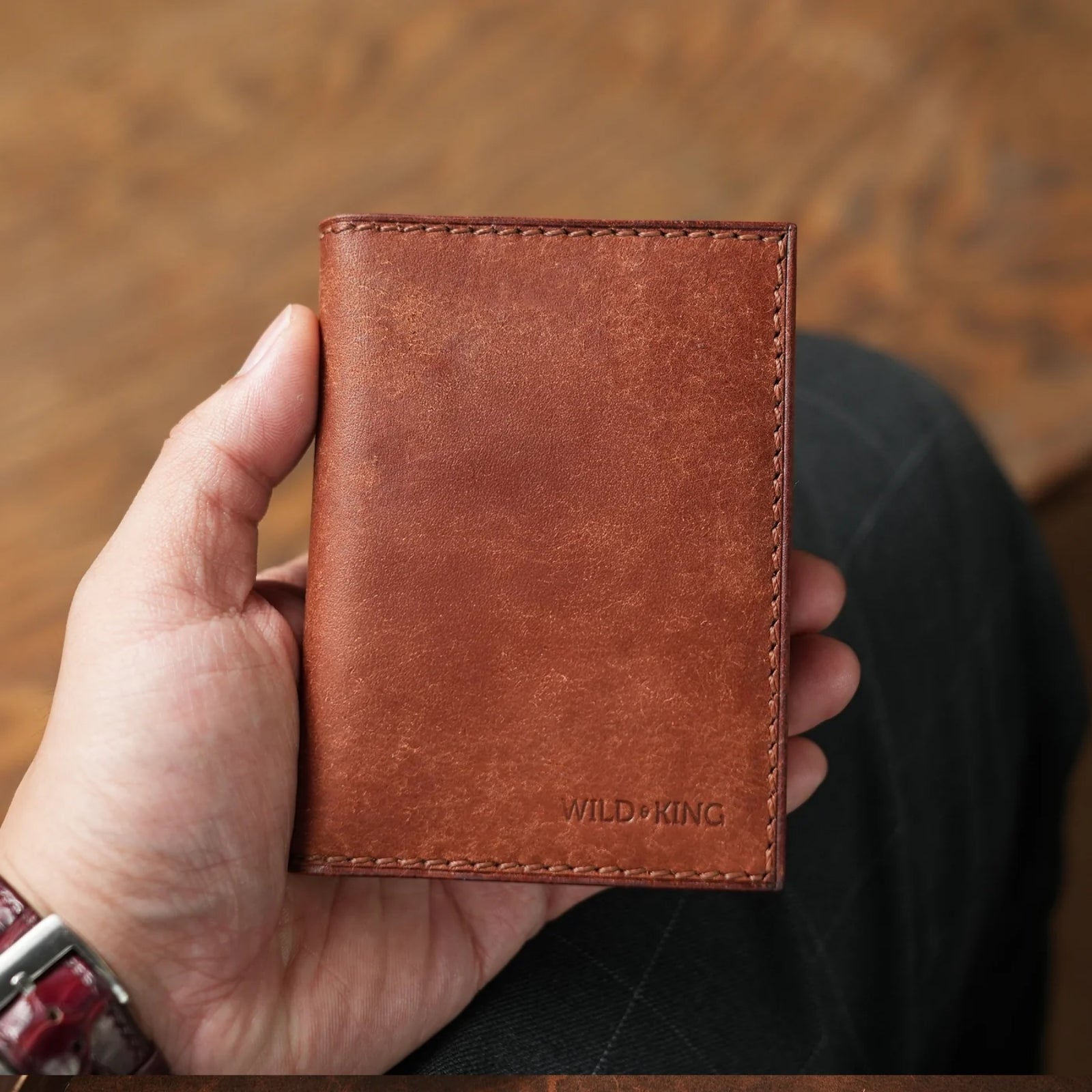
Pueblo leather is a distressed, oil-pull-up full-grain leather with a soft, slightly fibrous surface that shifts color when you flex or handle it. That living quality is exactly why it develops a rich patina over time. Good pueblo leather care is not complicated, but it is specific. This leather rewards gentle cleaning and light conditioning, and it dislikes harsh cleaners, heavy soaking, and over-oiling.

In this guide by Wild & King expert, you will learn how to clean, condition, protect, and store your pueblo leather wallet, bag, or accessory without ruining the finish you paid for.
What Is Pueblo Leather?
Pueblo leather is a full-grain, vegetable-tanned leather known for its raw, matte look and hand-buffed surface. It feels natural rather than coated, and it reacts to touch, light, and use.
How It’s Made (Full-Grain, Oil-Pull-Up, Distressed Finish)
Pueblo starts as full-grain hide, which means the top layer of the skin is left intact. It is then finished with oils and buffed to create that soft, textured, distressed effect. Because it is an oil-pull-up leather, bending or scratching the surface pushes the oils around, so the color lightens and darkens as you handle it. That is a feature, not a flaw.
Is Pueblo Leather Genuine/Full-Grain?
Yes. Pueblo is a genuine full-grain leather, not a corrected or heavily coated split. That is a big part of why it holds up well and ages with character. Whether it is worth the price comes down to what you value. If you like a raw, natural finish that changes with you, pueblo leather delivers that in a way smooth, sealed leathers cannot.

Why Pueblo Leather Needs Special Care
The same open, oil-rich surface that makes pueblo beautiful also makes it more sensitive than sealed leathers. It absorbs more, marks more easily, and shows moisture more quickly.
Differences From Smooth Full-Grain Leather
Smooth full-grain leather usually has a slightly tighter, more even finish that resists surface marks. Pueblo is looser and more absorbent, so water spots, oils from your hands, and small scuffs show up faster. The upside is that these marks blend into the patina instead of looking like damage.

Comparing Pueblo vs Epsom & Exotic Leather Care Needs
Pressed, textured leathers like Epsom are more sealed and wipe-friendly, so their routine leans toward light surface cleaning. You can see how that differs in our guide to caring for Epsom leather. Exotic leathers such as crocodile and alligator need their own careful, scale-aware approach, which we cover in our exotic leather care guide. Pueblo sits apart from both. It is more absorbent than Epsom and does not have the scale structure of exotics, so it asks for gentle handling and very light conditioning.
General Do’s and Don’ts of Pueblo Leather Care
- Do wipe gently with a soft, dry cloth for regular upkeep.
- Do spot test any product in a hidden area first.
- Do condition lightly and rarely.
- Don’t soak, submerge, or scrub the leather.
- Don’t use harsh household cleaners, alcohol, or baby wipes.
- Don’t leave it in direct sun or near heat vents.
Common Mistakes To Avoid (Harsh Cleaners, Over-Oiling, Sun Exposure)
The most common way people damage pueblo leather is by over-treating it. Harsh cleaners strip the natural oils. Over-oiling darkens the leather too much and can leave it greasy or heavy. Direct sun and heat dry it out and can cause cracking. When in doubt, do less.
How To Clean Pueblo Leather Step By Step
Cleaning pueblo is mostly about being gentle and patient. Skip aggressive products and let the leather guide you.
What You’ll Need
- A soft, dry microfiber or cotton cloth
- A second slightly damp cloth
- A clean, dry towel for blotting
Spot Test First
Before you touch a visible area, test your damp cloth on a hidden spot such as an inside edge. Confirm the color does not lift or look strange. Only continue if the test area looks fine once dry.
Gentle Wipe & Light Damp Cloth Method
Start with a dry cloth to lift loose dust. For light grime, use a barely damp cloth and wipe in slow, even strokes. Do not press hard or rub in circles. You are lifting dirt off the surface, not driving water into the leather.
Drying & Air-Dry Instructions
Blot any dampness with a dry towel, then let the item air-dry at room temperature. Keep it away from radiators, hair dryers, and sunny windowsills. Fast heat is what causes stiffness and cracking, so patience matters here.

Conditioning Pueblo Leather Safely
Conditioning replaces some of the natural oils that time and handling pull out. With pueblo, the goal is a light touch, not a deep soak.
What Conditioner Or Oil Is Safe?
Use a mild, neutral leather conditioner made for full-grain leather. Test it first, since any conditioner can darken pueblo. Avoid heavy oils, waxes, and anything with strong solvents or fragrance. A small amount of a gentle, purpose-made conditioner is safer than a general household product.
How To Apply Lightly & Evenly
Put a small amount on a soft cloth, not directly on the leather. Work it in with thin, even passes across the whole surface so the color stays consistent. Wipe off any excess and buff gently once it settles.
How Often To Condition
Less is more. For most wallets and bags, a light conditioning a couple of times a year is plenty, or when the leather starts to look dry. If your item lives in a dry climate or gets heavy daily use, you may condition slightly more often, but always lightly.

Handling Water, Stains & Scuffs
Everyday life happens. A little care in the moment can keep small accidents from turning into lasting marks.
Can Pueblo Leather Get Wet? (Water-Resistant vs Water-Proof)
Pueblo has some natural water resistance thanks to its oils, but it is not waterproof. Light rain or a quick splash is usually fine if you blot it right away. Do not soak it or hold it under running water. If it does get wet, blot gently and let it air-dry slowly, then condition lightly once it is fully dry.
Removing Stains & Light Scuffs
Because pueblo is an oil-pull-up leather, many light scuffs can be reduced by rubbing gently with a dry finger or soft cloth to redistribute the oils. For light surface dirt, use the damp-cloth method above. For deeper stains, resist the urge to scrub. Aggressive cleaning usually does more harm than the stain itself, and many marks simply blend into the patina.

Storing Pueblo Leather To Prevent Drying & Cracking
Store your pueblo items in a cool, dry place out of direct sunlight. A breathable dust bag is ideal, since airtight plastic can trap moisture. Avoid stacking heavy objects on wallets and keep bags loosely stuffed to hold their shape. Good storage does more to prevent drying and cracking than any single product.
Understanding Patina In Pueblo Leather
Patina is one of the main reasons people choose pueblo leather in the first place.
Why It Develops Patina & If It’s Normal
Patina is the gradual shift in color, sheen, and depth that comes from handling, light, and everyday use. On pueblo, it develops faster than on many leathers because of the oils near the surface. This is completely normal and intended. Your item will slowly darken and take on a unique look that no two pieces share.
How Care Affects Patina Development
Gentle care lets patina build naturally and evenly. Over-cleaning can strip it back, while over-oiling can darken it too quickly and unevenly. If you enjoy the aging process, the best approach is simply to use the item and clean it lightly when needed.
Pueblo Leather Care For Wallets Specifically
Wallets take more abuse than most leather goods because they ride in pockets and get handled constantly. For pueblo wallets, keep the card slots from overstuffing, wipe the outside occasionally with a dry cloth, and condition lightly only when the leather looks dry. Many of the same habits apply to any bifold, and you can find focused pointers in our care tips for bifold wallets.
Further Leather-Wallet Care Resources
If you own more than one leather piece, it helps to understand the broader picture of upkeep across materials. Our general guide on taking care of your leather wallet covers the habits that keep any leather looking its best, and it pairs well with the pueblo-specific steps above.
Frequently Asked Questions
What exactly is Pueblo leather and how is it made?
It is a full-grain, vegetable-tanned, oil-pull-up leather that is buffed to a soft, distressed finish. The oils in the surface shift with handling, which is what creates its raw, textured look.
Is Pueblo leather genuine/full-grain leather and worth the price?
Yes, it is genuine full-grain leather. Whether it is worth it depends on your taste. If you like a natural, evolving finish, pueblo offers character that sealed leathers do not.
How do I clean a Pueblo leather wallet without damaging the finish?
Wipe with a dry cloth first, then use a barely damp cloth for light grime, always after spot testing. Avoid harsh cleaners and heavy water, and let it air-dry away from heat.
Can Pueblo leather get wet or is it water-resistant?
It is water-resistant but not waterproof. Light moisture is usually fine if you blot it quickly. Avoid soaking, and dry it slowly if it does get wet.
What conditioner or oil is safe for Pueblo leather?
Use a mild, neutral conditioner made for full-grain leather, applied lightly. Spot test first, since conditioners can darken pueblo. Avoid heavy oils and strong solvents.
Why does Pueblo leather develop a patina and is that normal?
The surface oils shift with use, light, and handling, which changes the color and sheen over time. This is normal and part of the appeal.
How do I remove stains or scuffs from Pueblo leather?
Rub light scuffs gently to redistribute the oils, and use a damp cloth for surface dirt. Avoid scrubbing deeper stains, since many marks simply blend into the patina.
How should I store Pueblo leather items to prevent drying/cracking?
Keep them in a cool, dry spot out of sunlight, ideally in a breathable dust bag. Avoid airtight plastic and direct heat, and store bags loosely to hold their shape.
Conclusion
Pueblo leather is a high-quality, full-grain material that rewards gentle, regular care. Wipe it lightly, condition it sparingly, keep it away from heat and soaking, and store it thoughtfully. Do that, and your wallet or bag will age into a patina that feels entirely your own, while lasting far longer than a neglected piece would.
If you enjoy this kind of raw, patina-forward look, our Burgundy Pueblo Leather Bifold Card Wallet - Dinosaur Deisgn carries a similar distressed, evolving finish in a modern everyday size. And if you want to go deeper on upkeep, our broader leather-wallet care resources are a good next stop.

Leave a comment
This site is protected by hCaptcha and the hCaptcha Privacy Policy and Terms of Service apply.