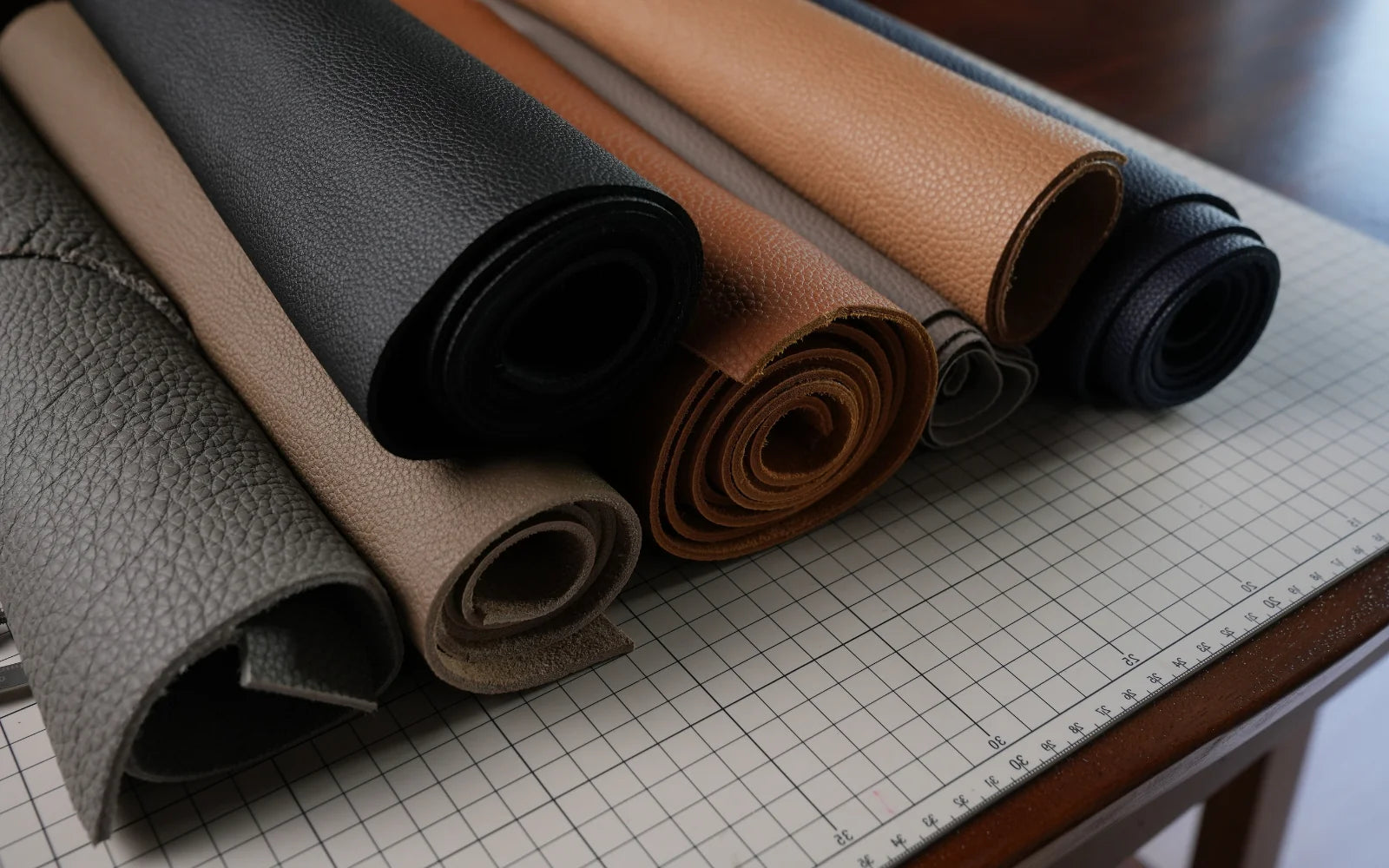


Himalayan Leather
When you step into the world of luxury leather goods, you will hear many names, but one stands above the rest: Himalayan leather. For years, this material has been considered the holy grail of exotic leathers.
However, there is a lot of misunderstanding about what it actually is, where it comes from, and how it behaves in daily life. At Wild & King, we believe that true minimalists value transparency just as much as they value aesthetics. You deserve to know exactly what you are carrying in your pocket.

This guide will give you the complete truth about Himalayan leather, explain why we exclusively use Alligator instead of the common Crocodile, and provide you with honest advice on how to care for it.
What is Himalayan Leather?
Let us clear up the most common misconception right away. Himalayan leather does not come from a specific type of animal that lives in the snowy Himalayan mountains.
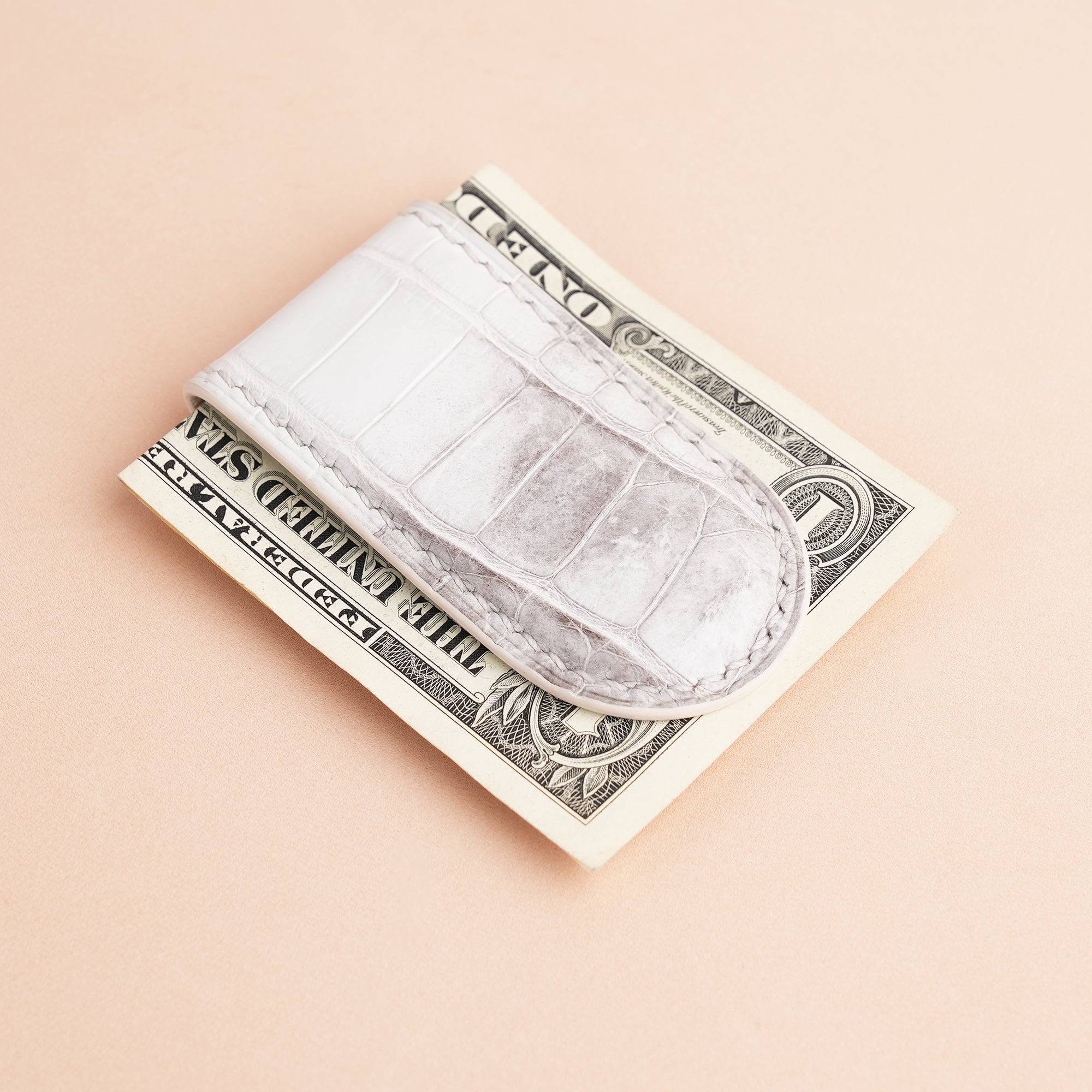
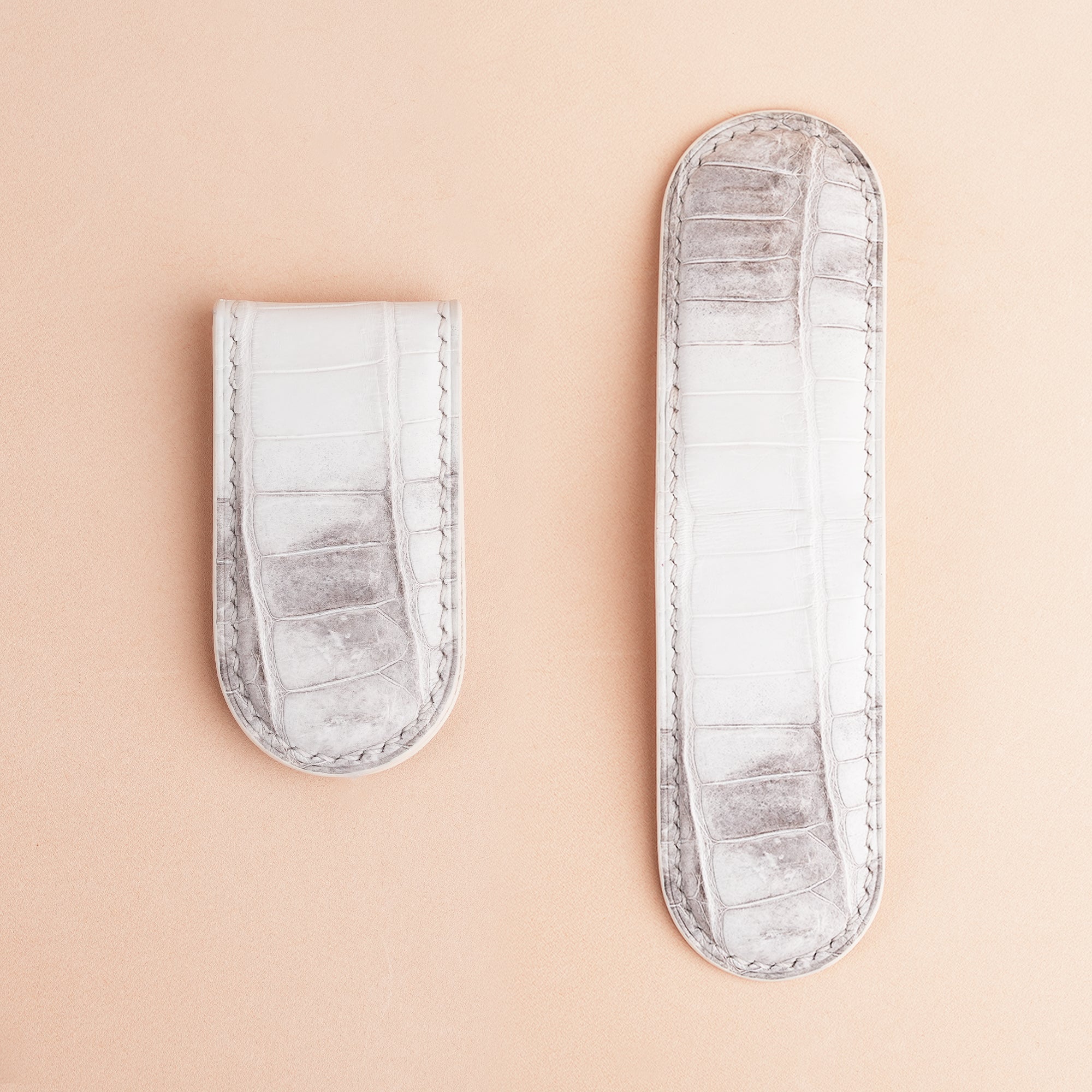
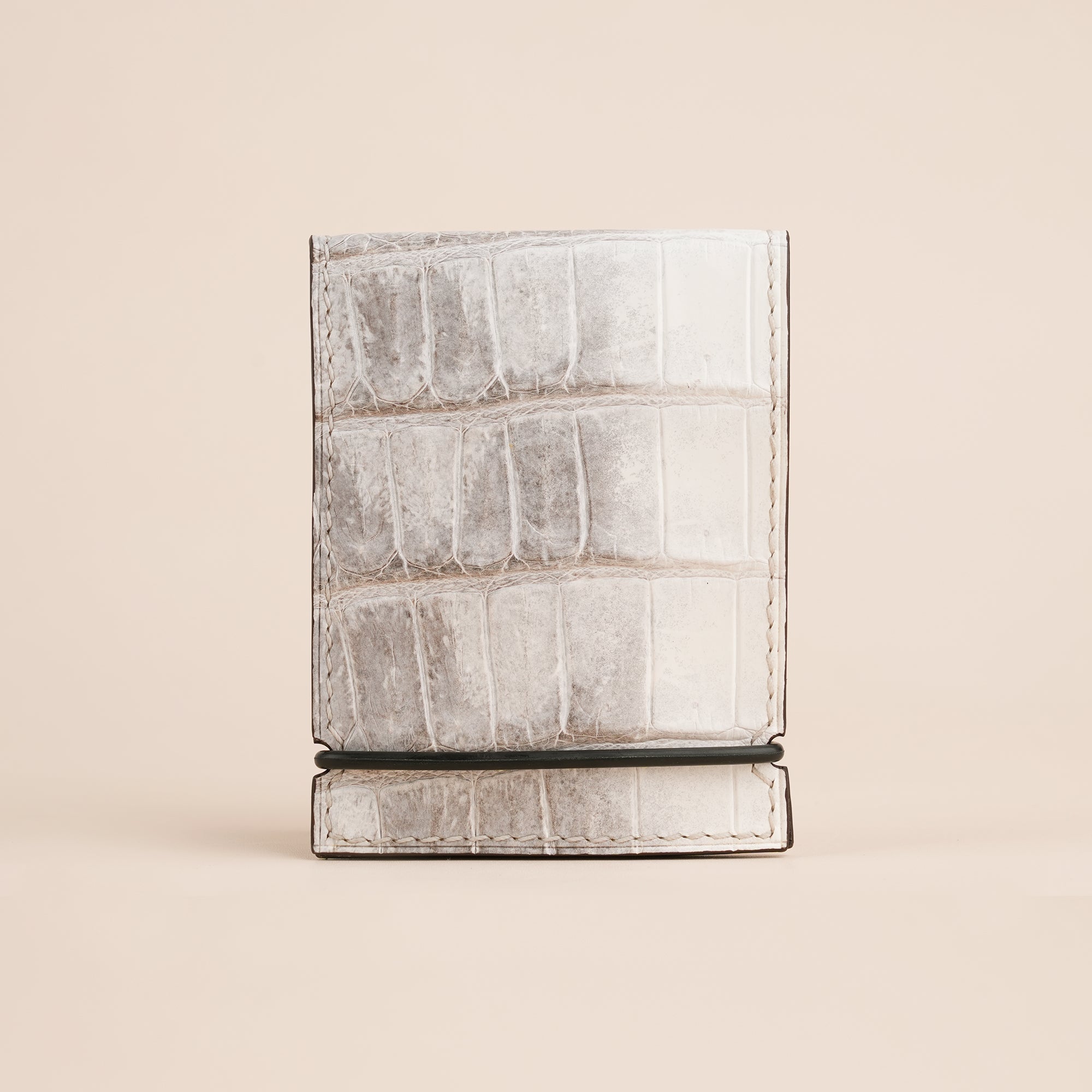
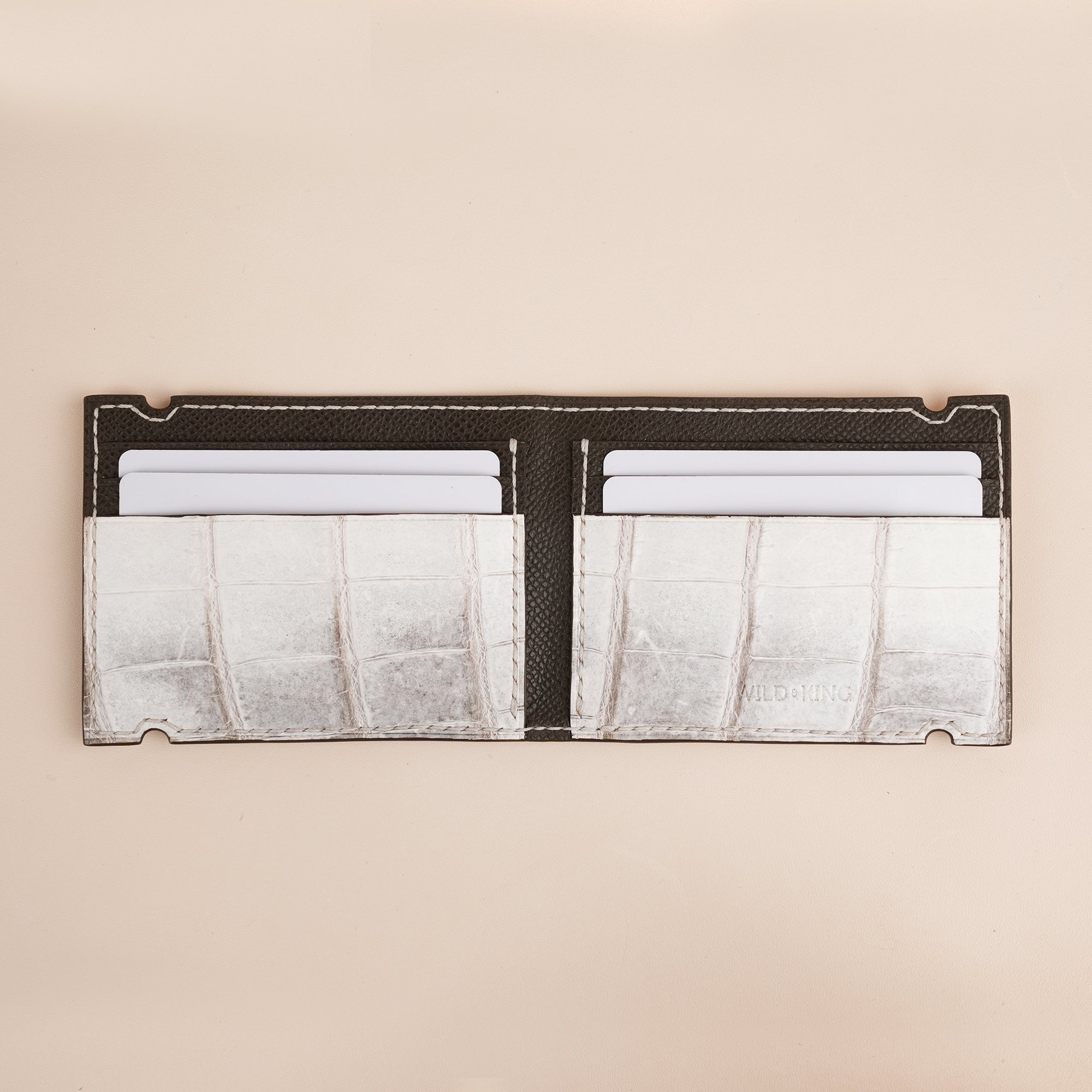
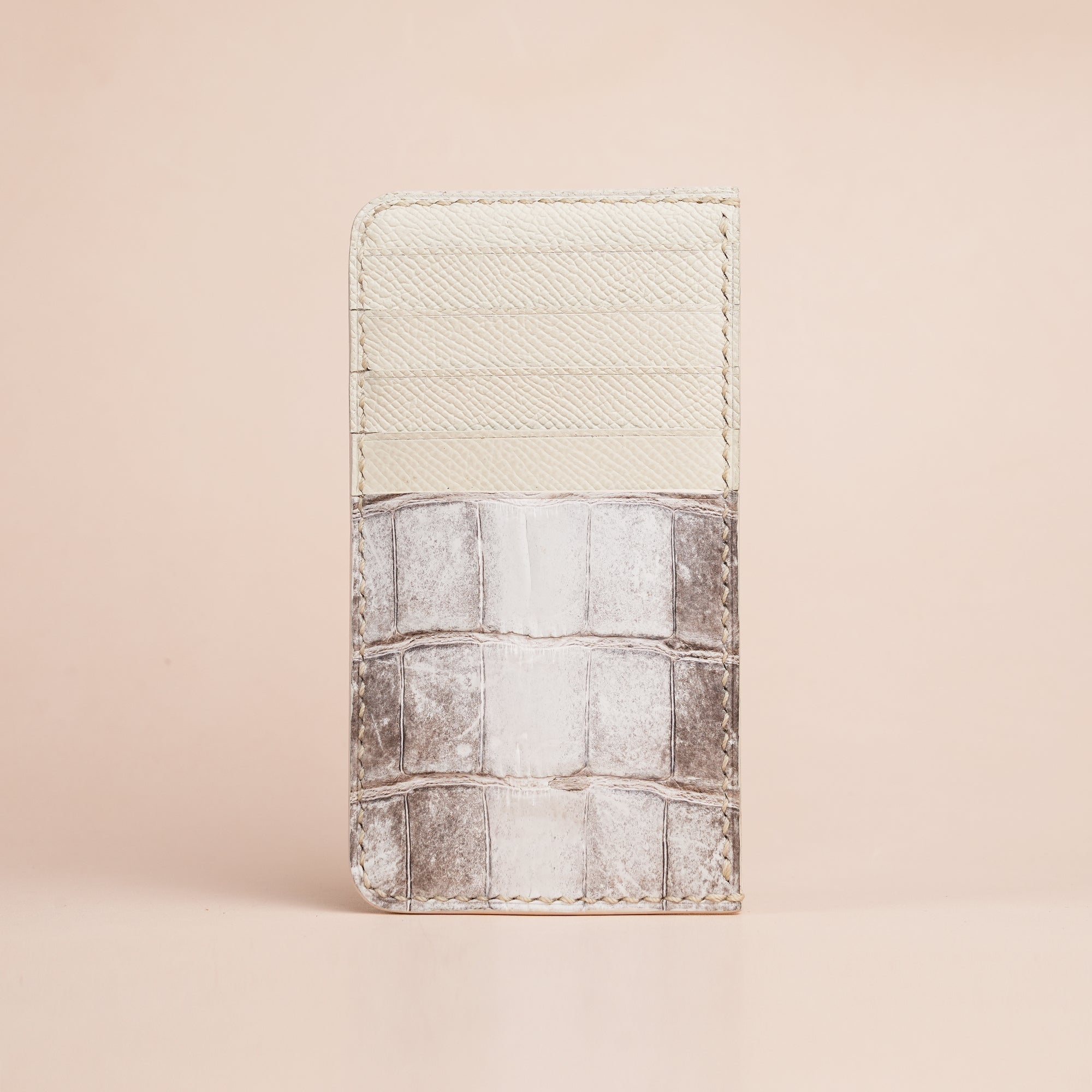
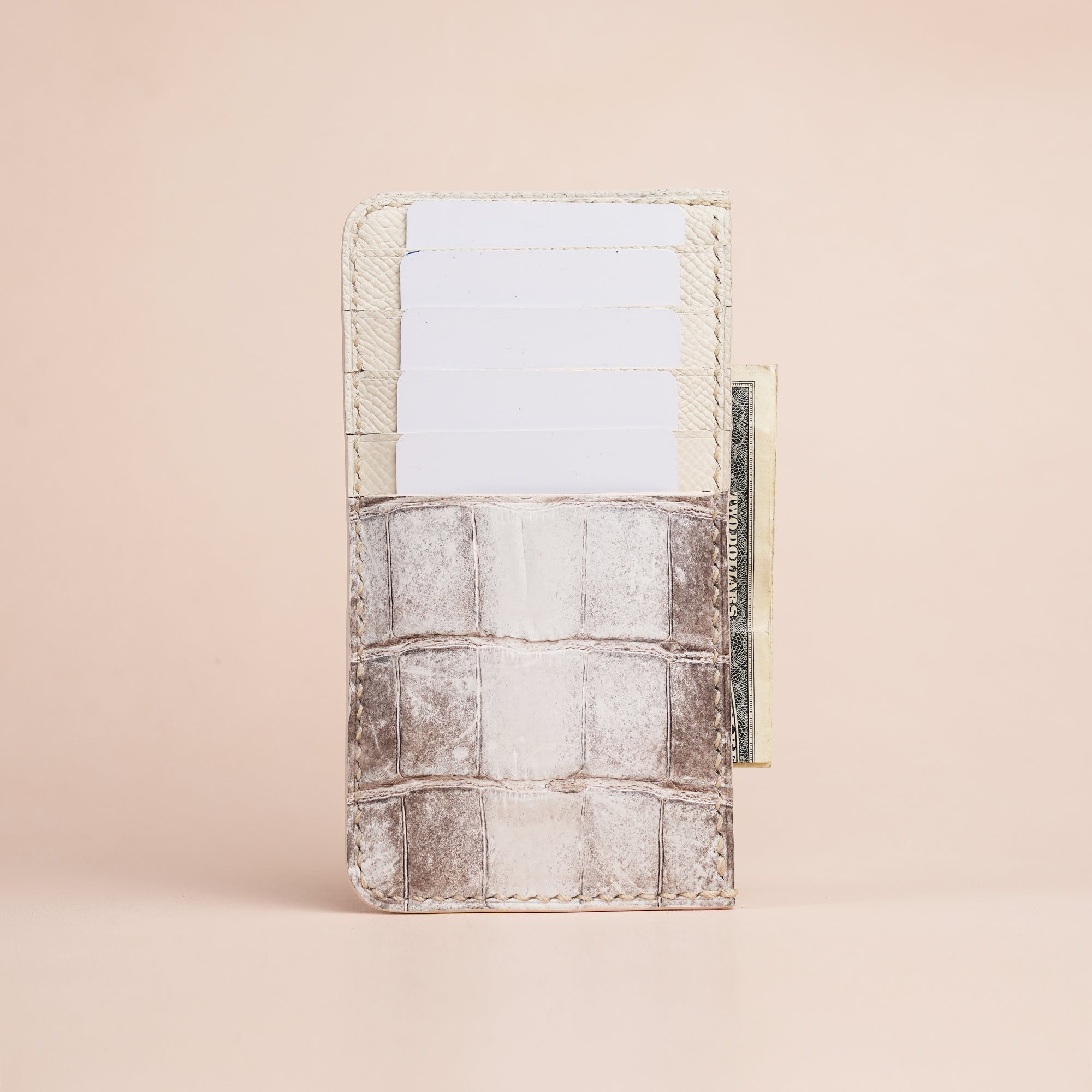
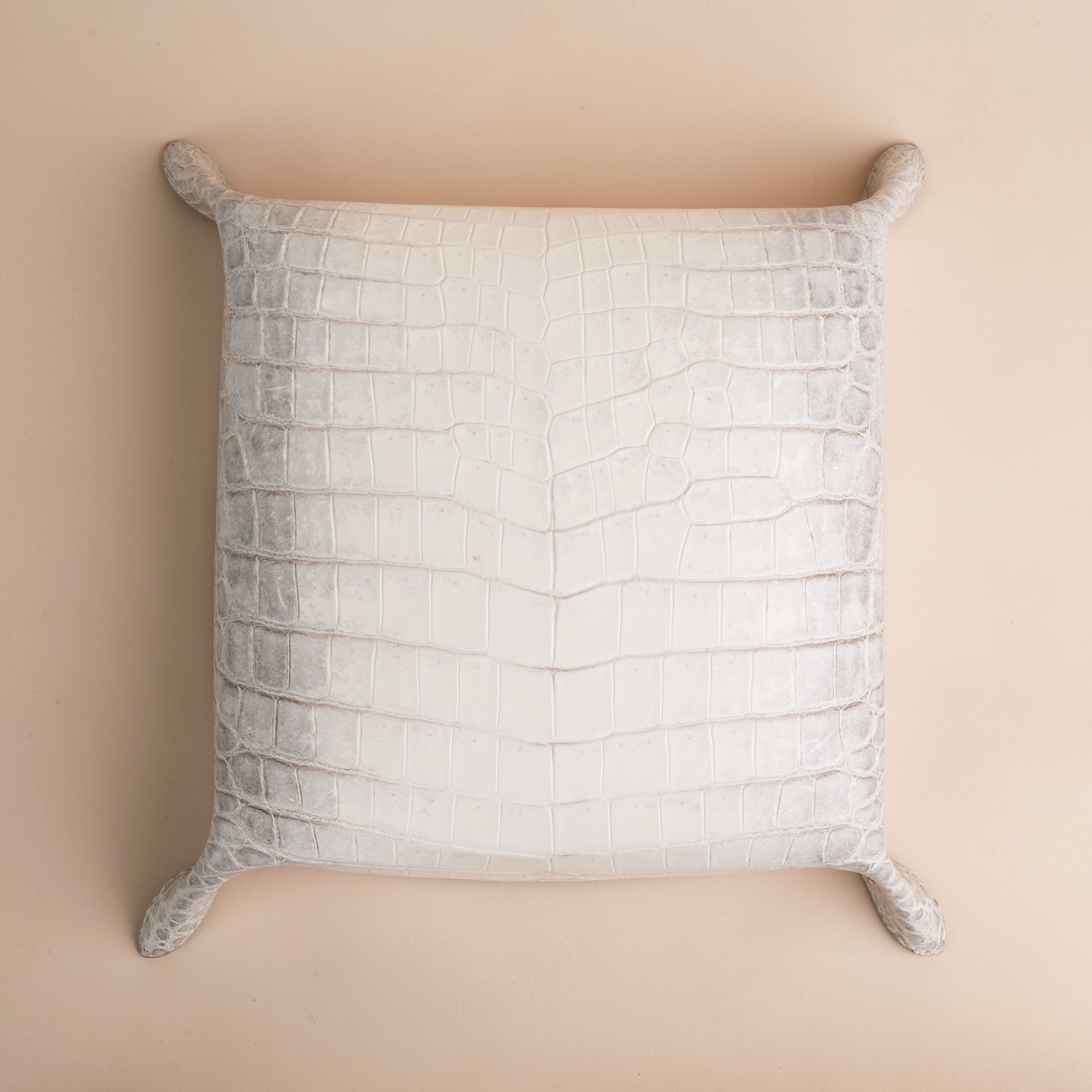
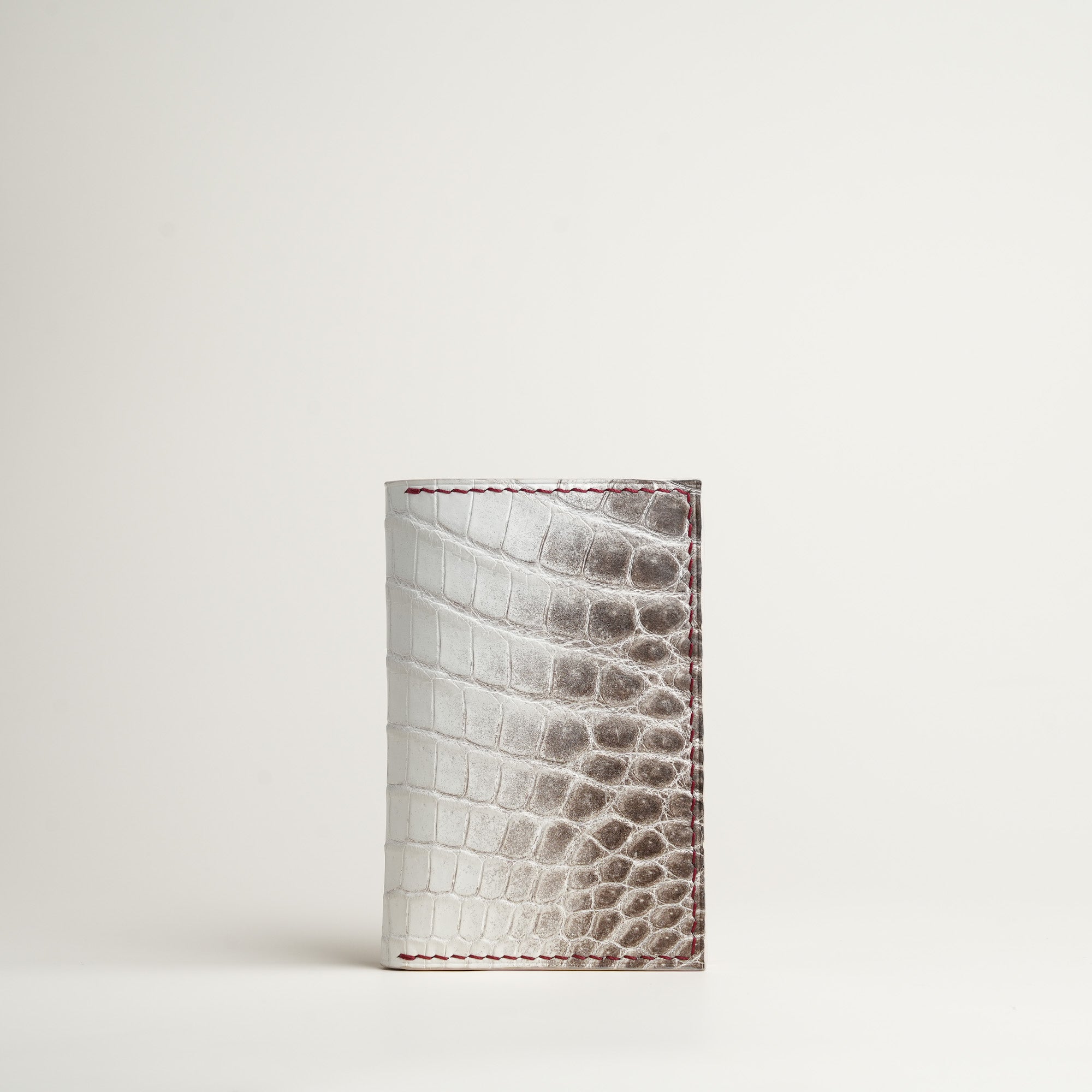
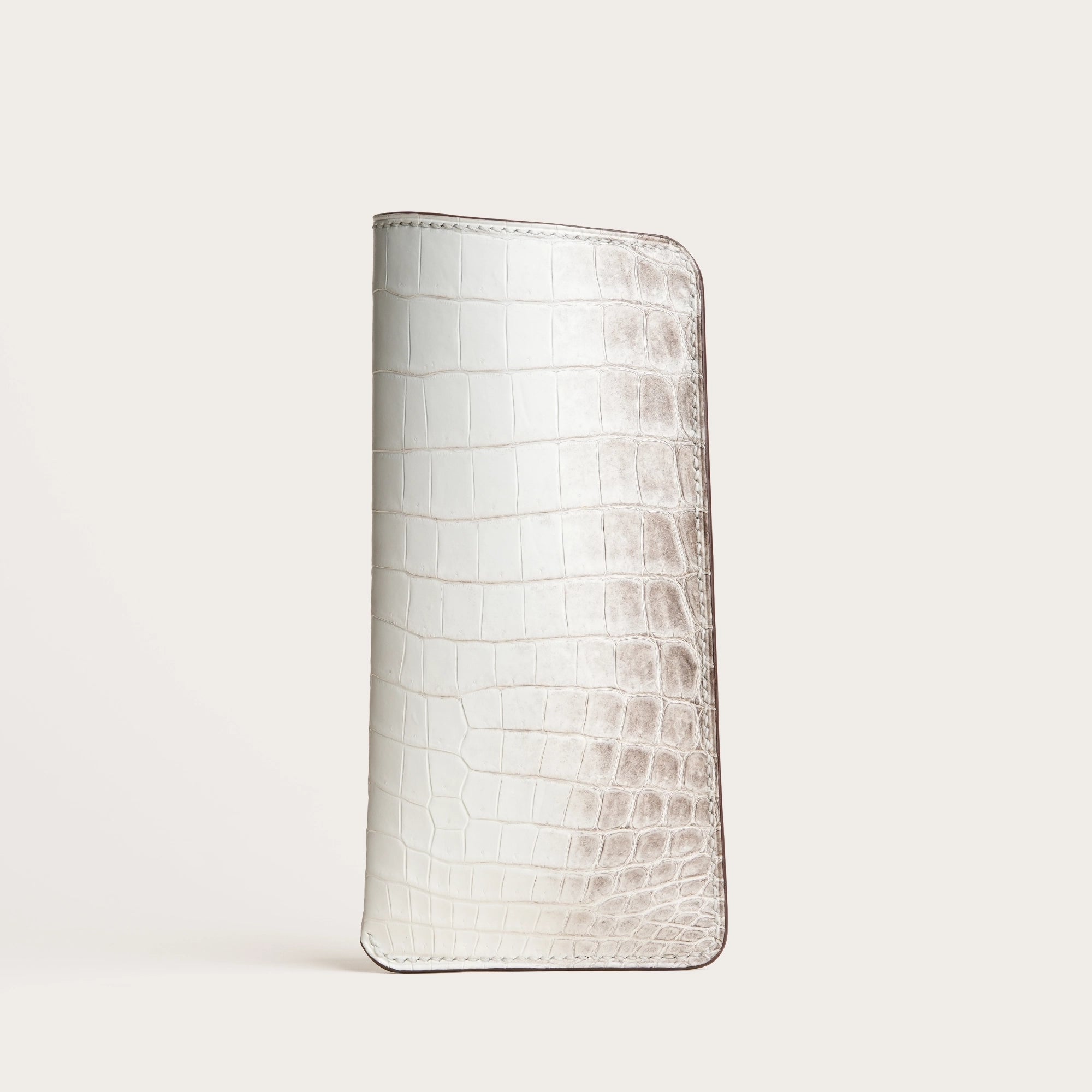
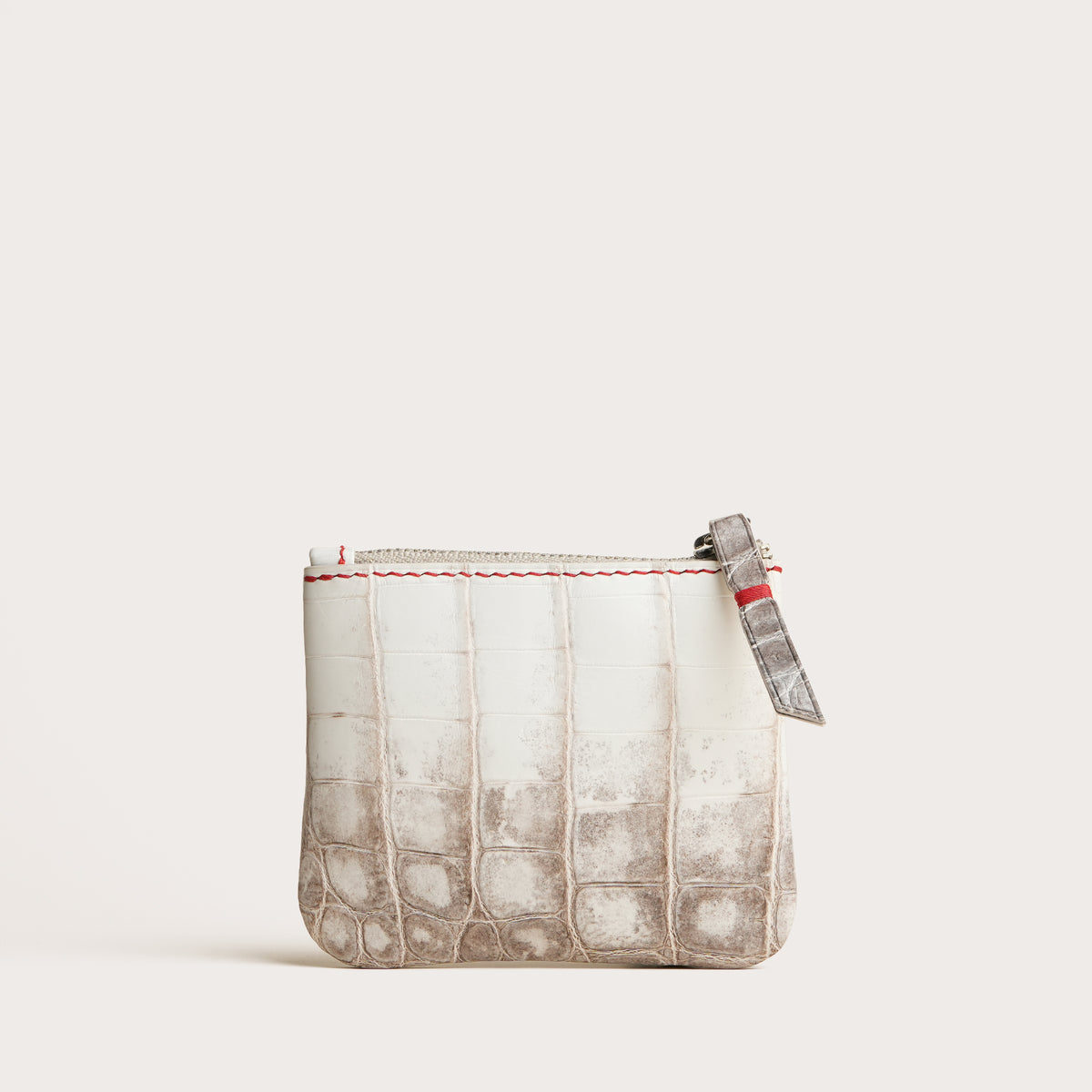
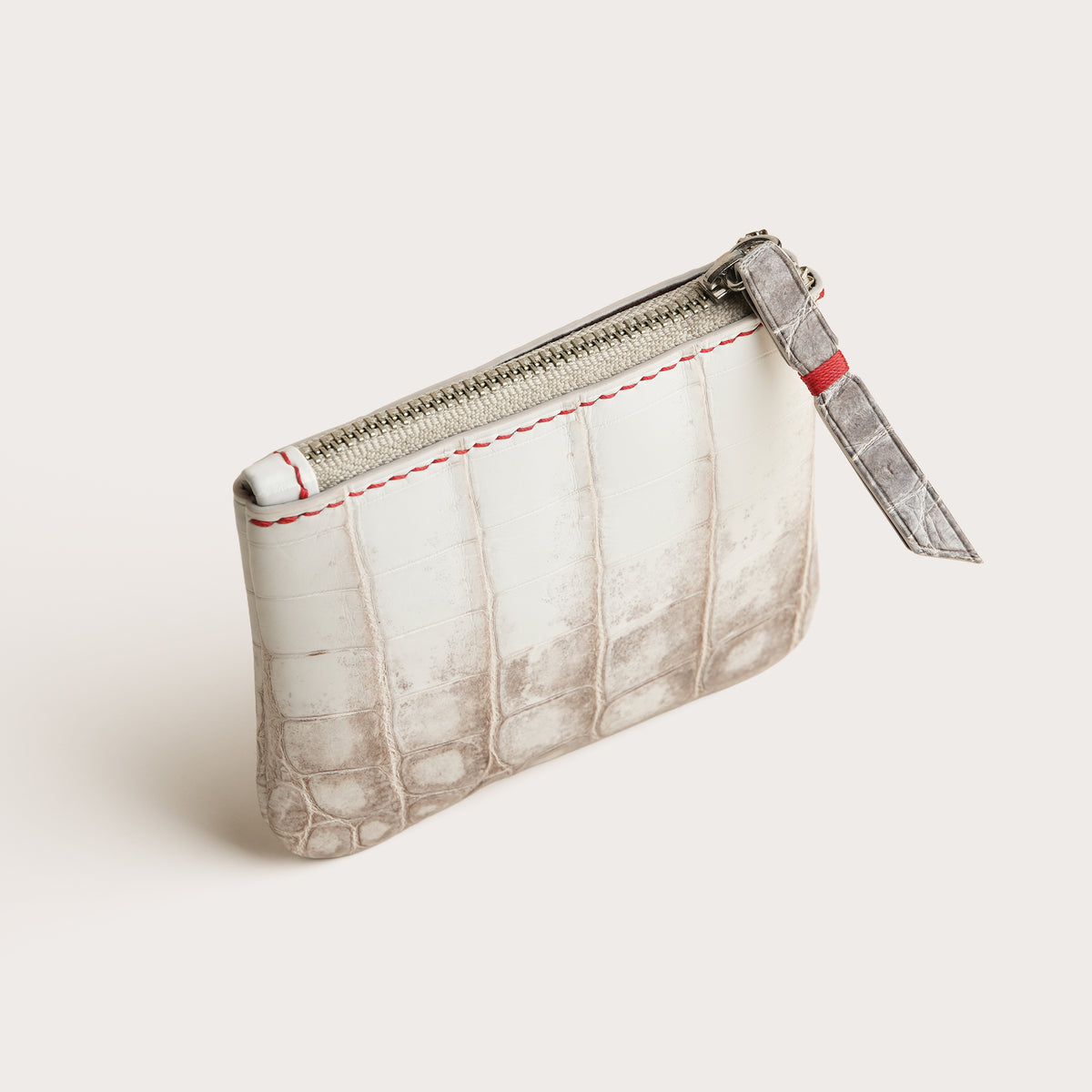
"Himalayan" is actually the name of a highly complex artisanal dyeing technique. It is a finish, an artistic choice, rather than a species. The name comes from the visual effect of the leather. The dye transitions smoothly from a smoky grey on the outer edges to a pure, snowy white in the center. This gradient mimics the look of the majestic, snow capped peaks of the Himalayan mountains.

The inspiration for this technique comes from a natural legend. In the wild, the albino alligator is an incredibly rare creature. For decades, collectors highly desired the pure white skins of these albino animals. However, a completely white skin lacks visual depth.
To recreate this rarity while adding a sophisticated artistic touch, master tanners developed the Himalayan finish. By adding the grey gradient to the sides, they created a material that offers both the pureness of white and the striking contrast of dark tones.
Creating this finish is incredibly difficult. The raw skin must be perfectly flawless. Any scratch or insect bite will show up clearly on the white background. The tanners must carefully bleach the skin to a pure white and then manually apply the grey dye to the edges. One small mistake ruins the entire piece. This extreme difficulty is why Himalayan leather remains so rare and valuable.
Why Alligator over Crocodile?
If you research the luxury market, you will find that most Himalayan leather products are made from Crocodile. However, at Wild & King, we do things differently. We guarantee that every piece of handmade Himalayan leather we offer is crafted exclusively from Alligator. This is not a random choice, it is a deliberate decision based on our minimalist design philosophy.
We want to empower you to verify this yourself. You do not need to be a leather expert to tell the difference between Crocodile and Alligator. You just need to know where to look.

| Feature | Himalayan Alligator (Wild & King Standard) | Crocodile (Common Market Standard) |
| Sensory Pores |
None. The scales are completely smooth and pore free. |
Visible. You will see a tiny dot (dimple) inside each scale on the belly. |
| The "White" Center |
Pure & Clean. The white center looks solid, pristine, and uninterrupted. |
Speckled. The sensory pores can look like tiny black specks or "dirt" on the pure white dye. |
| Texture |
Softer, smoother, and more refined. |
More rugged and wild. |
| Aesthetic Style |
Modern Minimalist / Quiet Luxury |
Traditional Exotic |
*Why does this matter to you? The absence of these tiny dots gives the Alligator leather a much cleaner and purer appearance. When you are applying a pure white dye, those little dots on a crocodile skin can look like tiny black specks of dirt, creating visual noise. Because Alligator skin is pore free, the white center of our wallets looks perfectly solid and pristine. This level of visual cleanliness is the ultimate expression of the minimalist style. It offers a quiet, refined luxury that does not need to shout to be noticed.
Sourced from the Masters: The Heng Long Connection
Authentic materials deserve authentic sourcing. Because the Himalayan dyeing process is so demanding, it cannot be done in a small, local workshop. To achieve the perfect, smooth transition from grey to white without harsh lines, you need world class technology and generations of tanning experience.
That is why Wild & King sources all of our Himalayan Alligator leather directly from Heng Long Leather Co. Pte Ltd in Singapore. Heng Long is globally recognized as the finest exotic tannery in the world and operates under the strict standards of the LVMH group.

When you carry a Wild & King wallet, you have the peace of mind knowing your item comes from a verified, premium source. The leather is 100% genuine, ethically sourced, and fully compliant with CITES (the Convention on International Trade in Endangered Species of Wild Fauna and Flora).
We do not use embossed calfskin or fake prints. We use the exact same tier of material chosen by the most famous luxury houses in Europe, ensuring that your handmade Himalayan leather wallet is a true investment in quality.
Care & Expert Hacks
Himalayan Alligator is the most beautiful leather in the world, but it is also the most delicate. We want you to enjoy your wallet every day, but you must understand how this material reacts to the environment.
The patina
When you first receive your wallet, the center will be a striking, snowy white. However, this color will not stay exactly the same forever. Over time, as the leather absorbs natural light and reacts to the air, the white areas will slowly shift into a warm, creamy ivory tone.

This is not a defect. It is the natural aging process of real, unpainted leather, known as patina. Many collectors actually prefer this ivory stage, as it gives the leather a beautiful, vintage character that proves its authenticity. You should embrace this change, as it means the wallet is adapting to your life.
The color transfer risk
Most Himalayan leather features a matte finish. A matte finish is incredibly soft to the touch and looks very natural, but it is highly porous. It will absorb liquids and dyes very easily.
The biggest enemy of your white wallet is dark clothing, specifically raw denim jeans. If you put a white matte wallet into the tight pocket of a new pair of blue jeans, the blue dye will rub off onto the leather. Once dark dye transfers onto white Himalayan leather, it is almost impossible to remove without destroying the finish. You must be mindful of what fabrics your wallet touches.
The W&K Expert hack
Accidents happen. You might be at a cafe and a drop of cold water falls from your glass onto the white section of your wallet. Because the leather is porous, it will soak up the water quickly and create a dark spot.

Here is the expert hack from our craftmans: Do not wipe it.
If you take a napkin and rub the wet spot, you will spread the water, damage the matte finish, and push dirt deeper into the scales. Instead, take a clean, dry tissue paper. Place it gently flat over the water drop and press straight down. Let the tissue absorb the liquid vertically. Once you have absorbed as much as possible, leave the wallet in a cool, shaded room to dry naturally. Never use a hairdryer, as heat will warp the alligator scales.
Is Himalayan Alligator Right for You?
We believe in honest relationships with our customers. This material is an absolute masterpiece, but it requires a specific lifestyle.
You should choose Himalayan Alligator if:
- You follow a minimalist, quiet luxury lifestyle and prefer materials that speak for themselves without flashy logos.
- You frequently wear tailored clothing, such as suits, dress trousers, or light colored fabrics that will not transfer dye.
- You appreciate the art of craftsmanship and are willing to treat your accessories with care and respect.
- You enjoy the unique process of natural leather aging and look forward to the subtle shift from white to ivory.
You should skip Himalayan Alligator if:
- You need a "beater" wallet that you can throw onto dirty tables or drop into a gym bag without thinking twice.
- Your daily wardrobe consists mostly of dark, raw denim jeans or unwashed dyed fabrics.
- You live or work in highly humid, wet environments where the wallet will frequently be exposed to rain or heavy sweat.
- You want a material that will look exactly the same on day 1000 as it did on day 1.
Frequently asked questions
Is Himalayan Alligator leather waterproof?
No, it is not. The matte finish is porous and will absorb water easily. While a small drop of clean water will dry and disappear if handled correctly, you should actively keep this leather away from liquids, oils, and heavy sweat to prevent permanent dark stains.
Does Himalayan leather scratch easily?
Alligator skin is naturally very strong and durable. The matte surface actually hides micro scratches much better than a shiny, glazed finish. However, the white color makes deep scuffs more visible. You should keep it away from sharp objects like house keys or coins in your pocket.
What are the shipping and return policies for this premium item at Wild & King?
We stand behind the quality of every handmade item we craft. Because we sell directly to you without any intermediaries, we offer the fairest prices and clear support. Before you make your decision to own this masterpiece, please review our straightforward policies.
You can find detailed information regarding our delivery times on our Shipping Policy page. If you need to return an item, our guidelines are clearly stated in our Refund Policy. For order modifications, please read our Cancellation Policy.
Conclusion
Himalayan Alligator leather is a material that speaks in whispers, not shouts. It defines luxury through its natural texture, its flawless gradient, and its clean, pore free surface.
By choosing authentic Alligator sourced from the masters at Heng Long, Wild & King ensures that your wallet is not just a functional accessory, but a genuine piece of art. We selected this specific leather because its clean aesthetic perfectly aligns with our minimalist vision.
This is a material for the connoisseur, someone who understands that true value lies in the authenticity of the material, the skill of the artisan, and the history it carries. Treat it with the respect it deserves, and it will remain a timeless companion in your daily life.
Explore our [King Collection] or discover other [Wallets] crafted with the same dedication to quality.
Our Collection
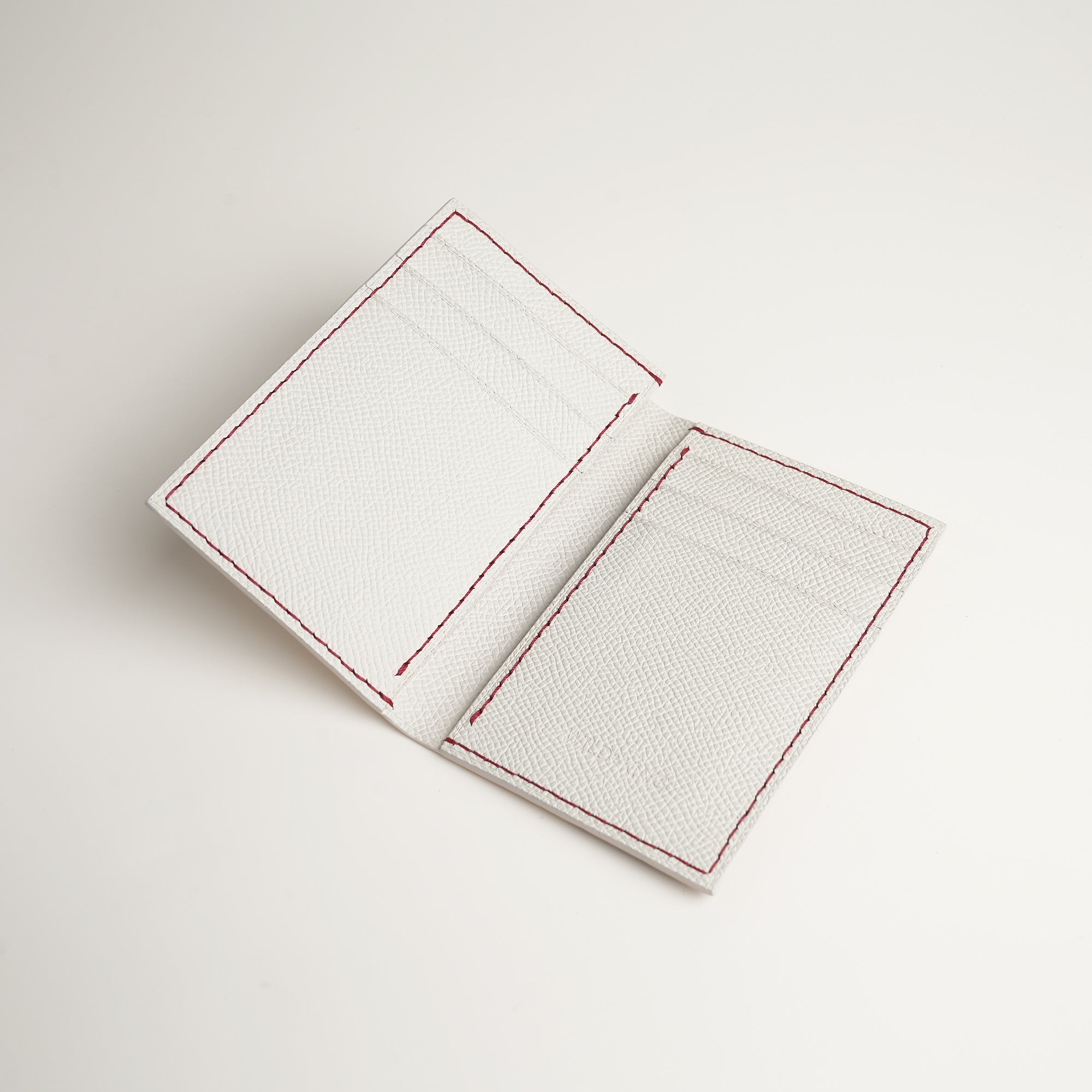
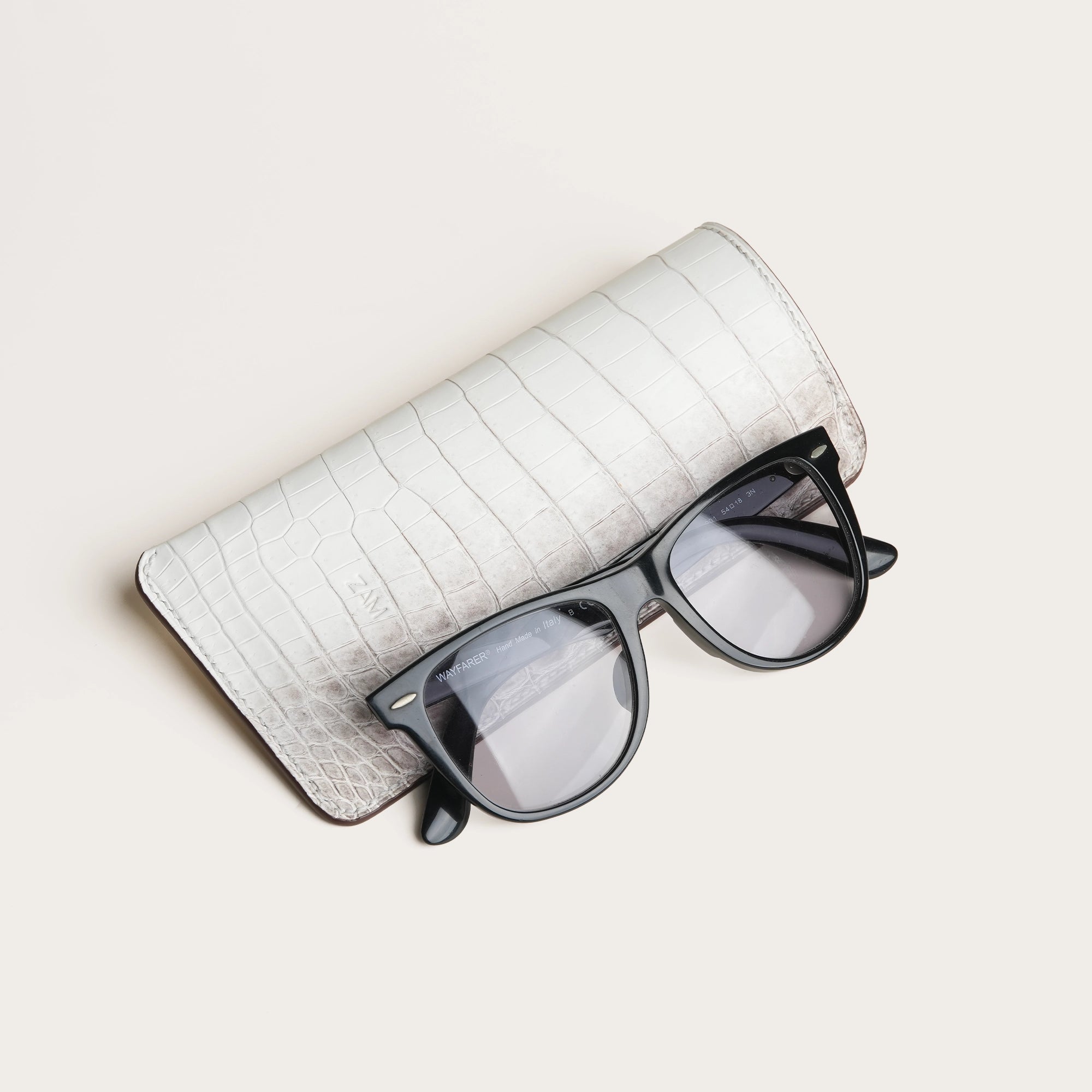
Himalayan Leather Goods




Need help?
Frequently Asked Questions
What is the difference between Full-Grain, Top-Grain, and Genuine Leather?
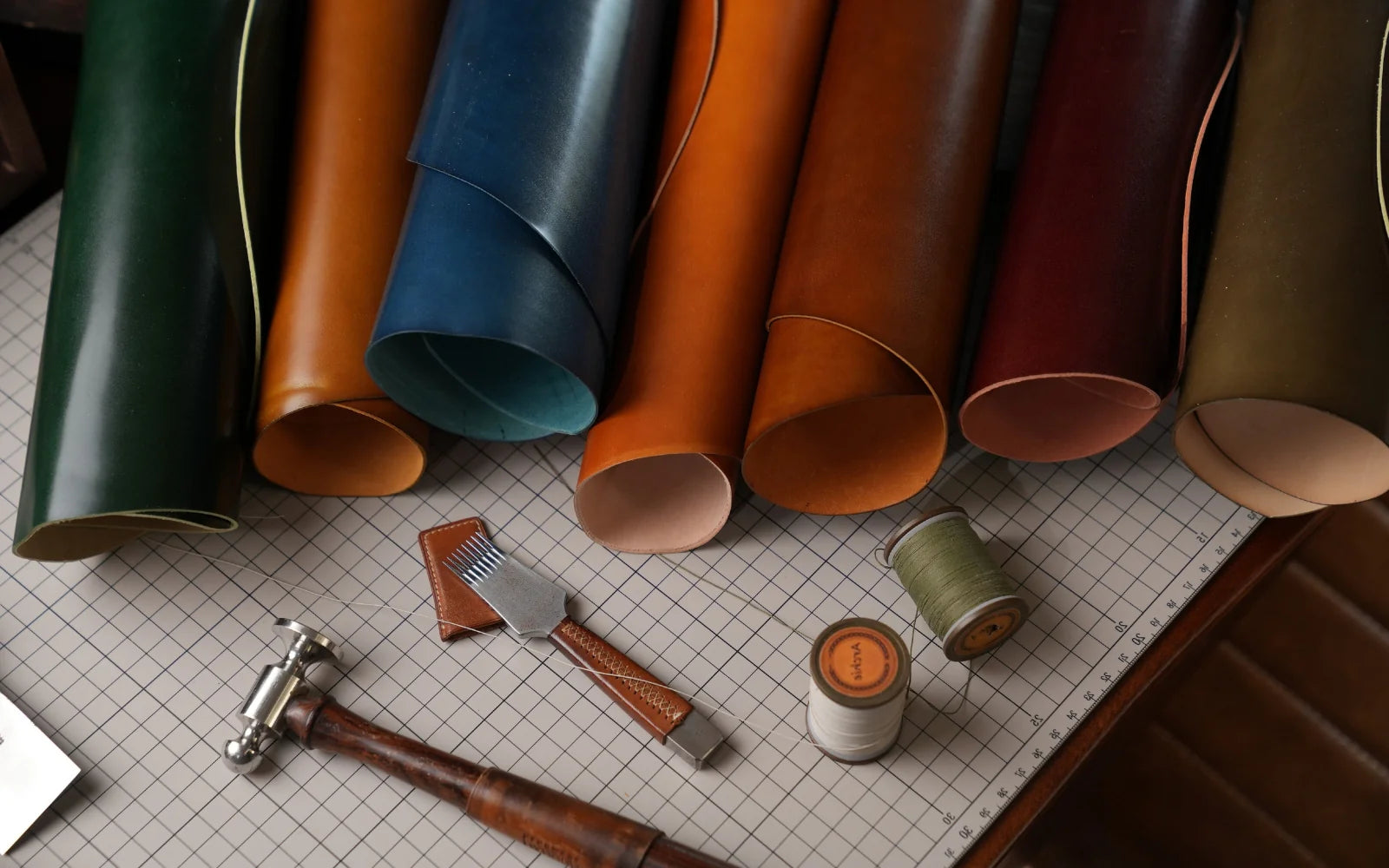
Understanding leather grades is the foundation of choosing a quality men's leather wallet. Genuine leather and top-grain leather are often sanded down to remove imperfections, losing their natural strength. Full-grain leather retains the entire outermost layer of the hide, keeping the fibers densely packed for maximum durability. At Wild & King, we strictly handcraft our products and do not distribute mass-produced third-party brands. Every piece in our workshop, from our classic bifold to our minimalist card holders, is made exclusively from 100% full-grain leathers, including Italian Pueblo, Habana, and premium exotic hides.
Do you ship overseas?
For an everyday carry (EDC) item that lasts a lifetime, you need a material that balances structural integrity with a slim profile. Many users look for a wallet that can survive decades of use. Here is a breakdown of our top-performing artisan materials to help you choose the best fit for your lifestyle:
| Leather Material | Core Characteristic | Patina Development | Scratch Resistance | Best Wallet Style |
|---|---|---|---|---|
| Pueblo (Italy) | Rustic matte texture | Very Fast | Medium | Vintage bifold wallets |
| Habana | Waxy "pull-up" effect | Fast | Medium | Heritage / Workwear EDC |
| Epsom | Embossed rigid structure | None (Color stays true) | Very High | Modern minimalist cardholders |
| Lizard | Beaded scales & slim profile | Slow | High | Elegant front pocket wallets |
| Himalayan, Alligator, Crocodile | Pronounced scales & tough | Slow | Very High | Statement luxury pieces |
Is exotic leather like Crocodile or Ostrich actually better for wallets, or is it just about looks?
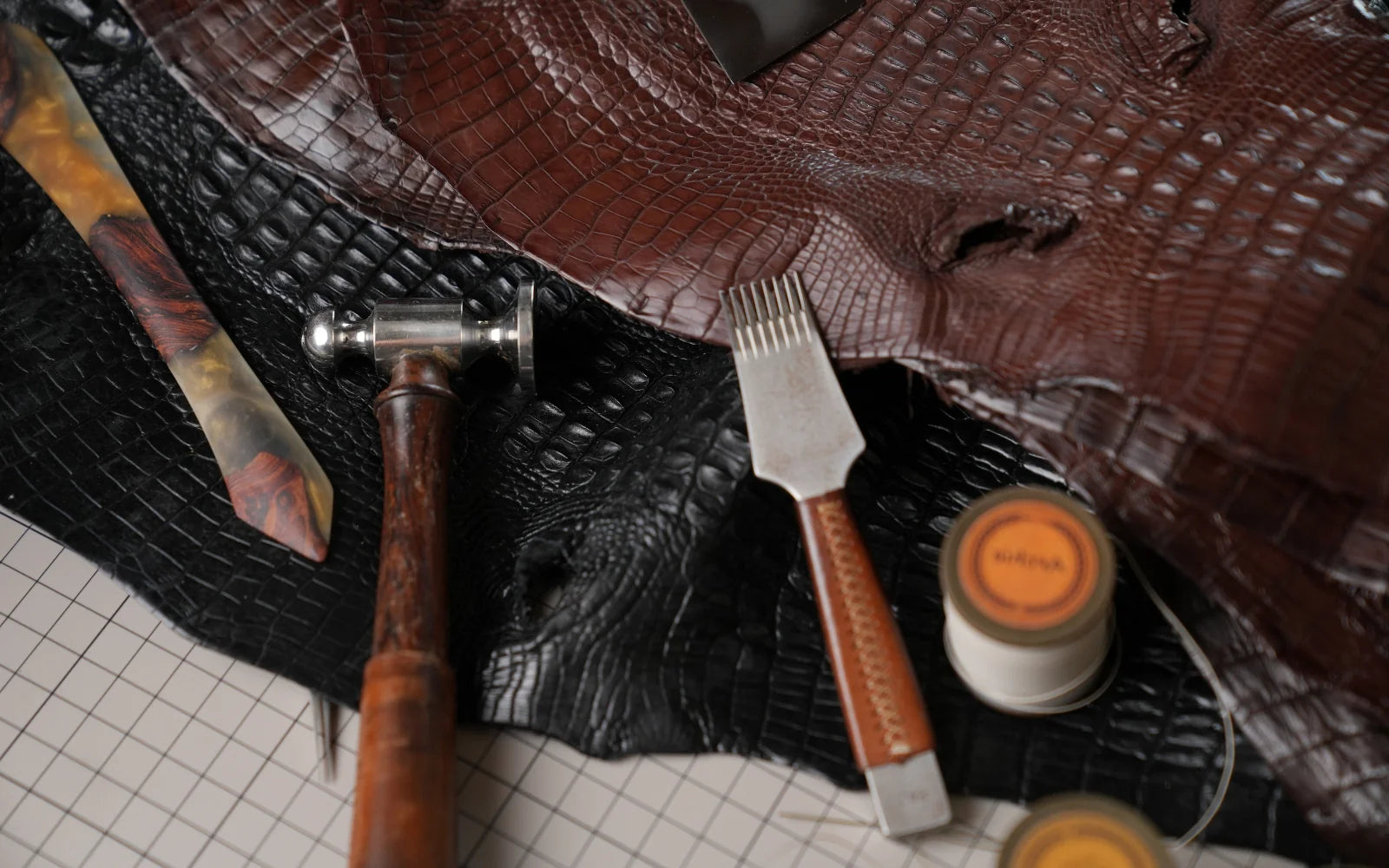
It is not just about aesthetics; exotic leathers offer exceptional real-world performance. Crocodile leather is incredibly tough and provides excellent scratch resistance. Ostrich leather, on the other hand, contains deep natural oils making it softer and lighter than standard cowhide. When these robust exotic leather materials are combined with a traditional hand-sewn saddle stitch, the resulting wallet is structurally superior to machine-stitched luxury fashion brands, ensuring it will never unravel even under heavy daily use.
Which leather develops the best patina for an everyday carry (EDC) wallet?
A rich patina is the hallmark of a high-quality leather good that ages alongside its owner. If you want your custom leather wallet to develop a unique, glossy protective glaze over time, vegetable-tanned leathers are your best option. Our Pueblo and Habana leathers are specifically chosen for their rapid and gorgeous patina development. They absorb natural oils from your hands, healing superficial scuffs and turning a simple minimalist wallet into a deeply personal artifact.
How can I tell if a handmade leather wallet is made from genuine full-grain leather when buying online?
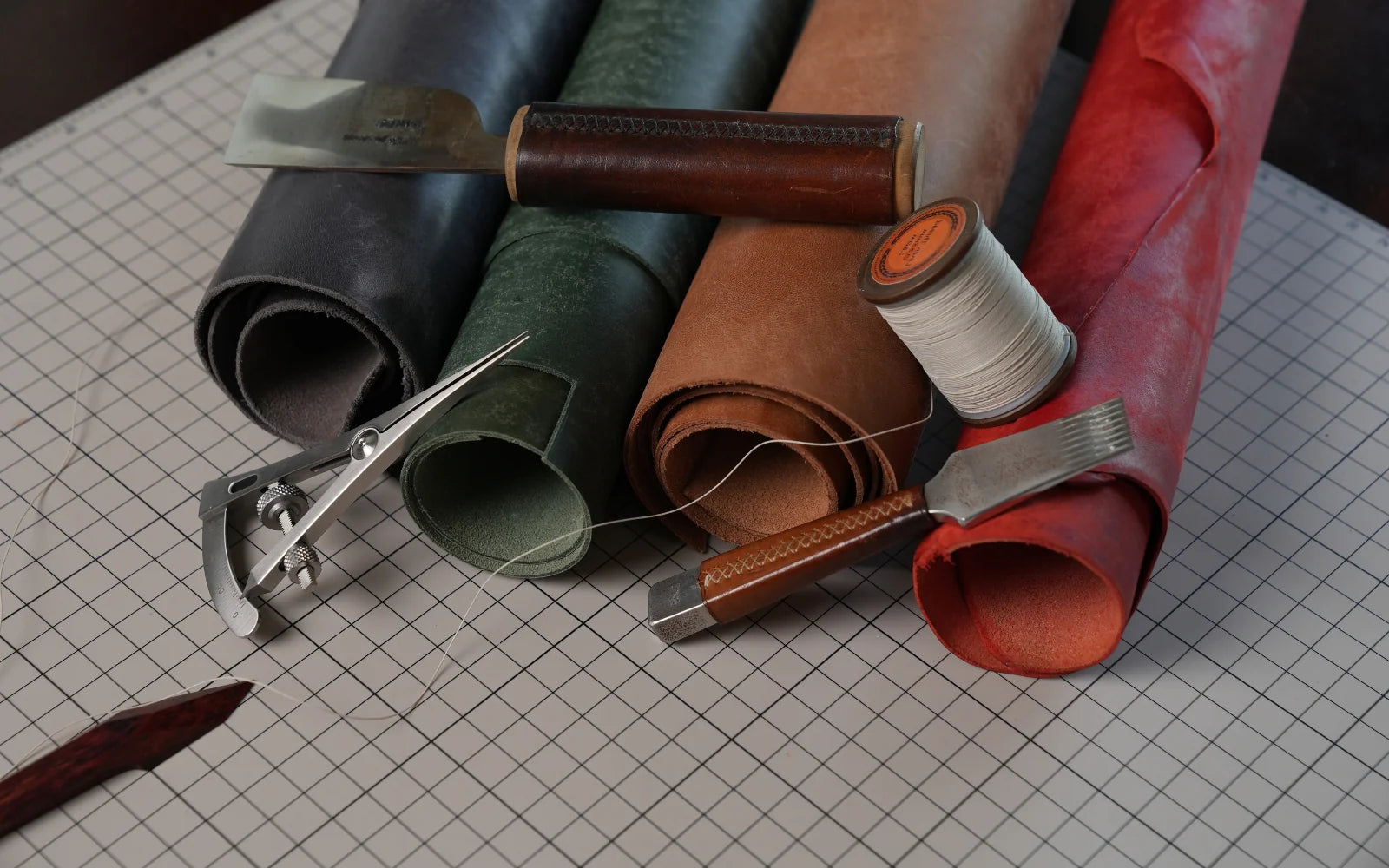
Buying online can make it difficult to judge quality. To ensure you are investing in true full-grain craftsmanship rather than plastic-coated substitutes, look closely at the product photos, specifically the edges. Industrial wallets use thick, rubbery edge paint to hide weak layers. Artisan workshops showcase their full-grain leather by naturally burnishing the edges with beeswax and friction. Additionally, look for brands that explicitly detail their tanning processes and leather origins (like Badalassi Carlo for Pueblo), which is a strong indicator of authentic handmade leather craftsmanship.